


/file/publisher-c1a3f893382d2b2f8a9aa22a654d9c97/2023/07/76b73ca5bcaf4ef9b8ed35cf1c597b16.jpg)

Gender equality icon Mary Shanti Dairiam still fighting the good fight
MALAYSIANSKINI | At 83 years old, one of the foremost women’s rights activists in Malaysia and the world Mary Shanthi Dairiam still shows no signs of slowing down.
Over the decades, the former teacher’s passion to eradicate gender inequality which started in the late 1970s after volunteering with the Federation of Family Planning Associations influenced so many men and women.
It was during this time that her journey as an activist truly began as it served as the beginning of her involvement with other women’s groups locally and internationally.
She founded the International Women's Rights Action Watch (IWRAW) Asia Pacific in 1993, and she was also involved in lobbying for the enactment of the Domestic Violence Act (which was eventually passed by Parliament in 1994) since the mid-1980s.
At the global level, she has served on several influential panels including...
MALAYSIANSKINI | At 83 years old, one of the foremost women’s rights activists in Malaysia and the world Mary Shanthi Dairiam still shows no signs of slowing down.
Over the decades, the former teacher’s passion to eradicate gender inequality started in the late 1970s, becoming a volunteer and, subsequently, a staff member with the Federation of Family Planning Associations influenced so many men and women.
It was during this time that her journey as an activist truly began as it served as the beginning of her involvement with other women’s groups locally and internationally.
She founded the International Women's Rights Action Watch (IWRAW) Asia Pacific in 1993, and she was also involved in lobbying for the enactment of the Domestic Violence Act (which was eventually passed by Parliament in 1994) since the mid-1980s.
At the global level, she has served on several influential panels including the United Nations Gender Equality Task Force and the Committee on Elimination of Discrimination against Women.

Most recently on June 22, she further added a feather to her cap with the launch of her book titled 'Promoting the Equality of Women: IWRAW Asia Pacific's Journey'.
The book offers not only an insight into the organisation and the work they do but also into Shanti’s journey in becoming the notable woman that she is today.
Also present at the launch was Women, Family and Community Development Ministry Nancy Shukri.
The beginning
“I grew up in a cultural environment that segregated boys and girls – attended an all-girls school and college, sat in different sections of buses and trains in South India in the 1950s and early 1960s, and experienced segregated seating arrangements even in church worship.
“But I had been sent to an English-medium convent missionary school as my parents felt it would add to my ‘refinement’,” read an excerpt from her book.
“Yes, there was conservatism, there was segregation of the male and the female,” began Shanti during an interview with Malaysiakini via Zoom recently.
Even though she grew up in a loving family, with women being encouraged to further their studies, certain freedom was more the prerogative of males.
“Despite my mother being a professional, she was a headmistress in a high school, there was an approach where I could study whatever I wanted but earning a living or making money should not be my ambition.
“My elder brother was sent to do his engineering because they said a technical field would bring him better chances of a lucrative job,” shared Shanti, who has two other sisters who also became teachers.
Shanti was encouraged to study English literature at university and even got her master's degree in English literature.
However, as she explained, studying English literature was a kind of refinement, not necessarily something that would help you earn a living. It would, however, help you get a good husband who would take care of you.
“So, I grew up with that conservatism. It was very benevolent - there was no abuse and no restricting or spending money on me for my education. I didn't realise that at that time because there was a lot of affection and love surrounding me.
“But later, I began to realise, my brother and I were brought up equally only in terms of the kind of resources spent on us, but we were not considered to be equals,” she shared.
Shanti was born and educated in India but moved to Malaysia in the mid-60s after marrying a Malaysian, with whom she had two daughters.
A former lecturer at the University of Madras in India, Shanti found that her advanced degree was not fully recognised in Malaysia. She unwillingly settled for a Chinese private school and at the Mara Junior Science College where she was placed at a lower pay grade.
Fortunately, she found fulfilment in volunteer work with the Federation of Family Planning Associations and when a vacancy for a full-time position opened up, she grabbed the opportunity.

In her book, Shanti wrote how she volunteered with the National Council of Women’s Organisations in their law reform and ending violence against women campaigns in the 1970s and 1980s.
She would later join the formed Women’s Aid Organisation (WAO) in 1984 which she described as the “beginning of my engagement with women and the law and the agenda of ending violence against women”.
As she eloquently detailed in her book: “The global environment, through the efforts of the UN and the Decade of Women (1975-1985), along with the UN World Conferences in the early 1990s, legitimised and globally supported the rising activism of women at the national levels. My awakening, therefore, came at an opportune moment. There was much to do. And so, the journey began!”
Looking out for something different
Shanti realised the insidious nature of the segregation of gender roles when she went into the clinics and saw women coming for contraceptives.
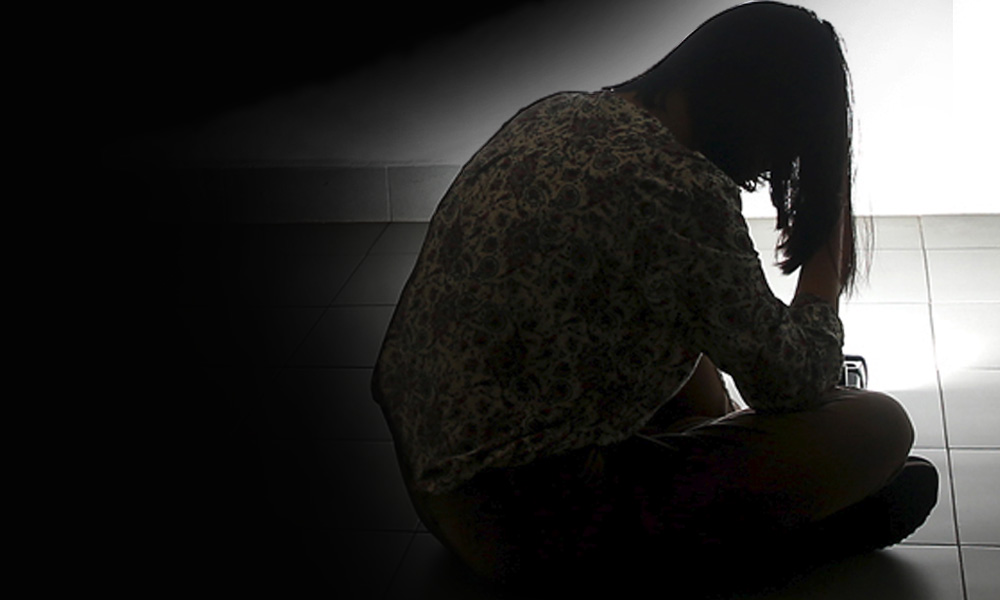
“I saw that women are not autonomous; they couldn't choose even to accept contraception on their own. There was physical abuse, there was sexual abuse, and there was emotional abuse.
“This was in the 1980s and there was no law on domestic violence at that time, and there was no remedy of any kind, nor could they escape from abusive marriages. I felt that we needed something more to help these women - better laws, international standards, and universal standards. That compelled me to look out for something different,” Shanti recalled.
She had read about the findings of the Committee on the Elimination of All Forms of Discrimination against Women (Cedaw) in which giving women access to better healthcare or earning better income from social and economic conditions alone will not help them.
“Women have to be seen as equals,” said Shanti, who now saw that she had a mission by working with an NGO.
“I began to see the very insidious nature of conservatism, patriarchy, and the separation of rules for women and men. The valuation of women and men was different which could even end in an abusive situation but there was no remedy for women at that time I started working at the Federation of Family Planning Associations,” Shanti said.
Ignorance of rights
There were no laws on domestic violence back then, Shanti noted. Abuse and violence against women were not something that anyone talked about.
“In Malaysia, we only started talking about violence against women in the late 1980s and then we had the Domestic Violence Act which was enacted in 1994,” said Shanti.
However, while women have made great strides globally, shattering glass ceilings everywhere, you still have women in power saying things like it was okay for a husband to beat his wife gently.
“There is a lot of ignorance you see,” said Shanti, who applauds the work done by organisations such as the Women’s Aid Organisation (WAO), All Women’s Action Society (Awam) as well as the Crisis Centre for Change (WCC) in Penang to help victims of domestic violence.
She said that WAO, in particular, has been running a shelter and finding ways of making women more independent if they want to leave their abusive husbands.
However, she feels that more work needs to be done to raise awareness of society to accept the equality of women.
“We are addressing the individual problems of individual women and helping them re-establish their independent life. That is necessary.
“I am not saying it is not unimportant but at the same time, the acceptance that women are humans with human rights and entitlements and that they are equal citizens like our constitution says in Article 8. It says we are equal but that is not the reality.
“The Constitution doesn't go further to say how you make them equal. It’s a declaration that we are equal but how does equality happen?” she asked.
Even in schools, Shanti pointed out that there are no extracurricular programmes where boys and girls are taught about equality.
Shanti recalled during her teaching career when it was election time at various student associations, it was the boys who stepped up to stand for president while the girls would stand for secretary or treasurer.
“I spoke to the girls, and I asked why they didn't offer themselves up as president of the association. They said they did not want to become unpopular among the boys if they competed with them. The school never encouraged the children to think differently and that both boys and girls could be equal,” noted Shanti.
She said that to date, there is no attempt to change this mindset in government schools.
“Society has still not accepted the equality of women and men and that is why you have ministers talking like that. Ignorance and thinking this is the norm and women must comply. Otherwise, you are not feminine enough.
“You must be feminine otherwise you can't be controlled by men. That's part of life that's the normative value, that's how society organises itself to have that hierarchy between male and female. We haven’t broken that barrier yet,” Shanti explained.
Education is important
She believes that education (in and out of school) plays a part in changing this perception of gender roles. Society must do away with the thinking that men must lead and women must be followers.
“We must not subscribe to that,” added Shanti, who said although there are so many women who are highly educated, it does not lead to more women in decision-making positions.
There are still very few senior managerial positions in the corporate sector and not enough representation in Parliament.
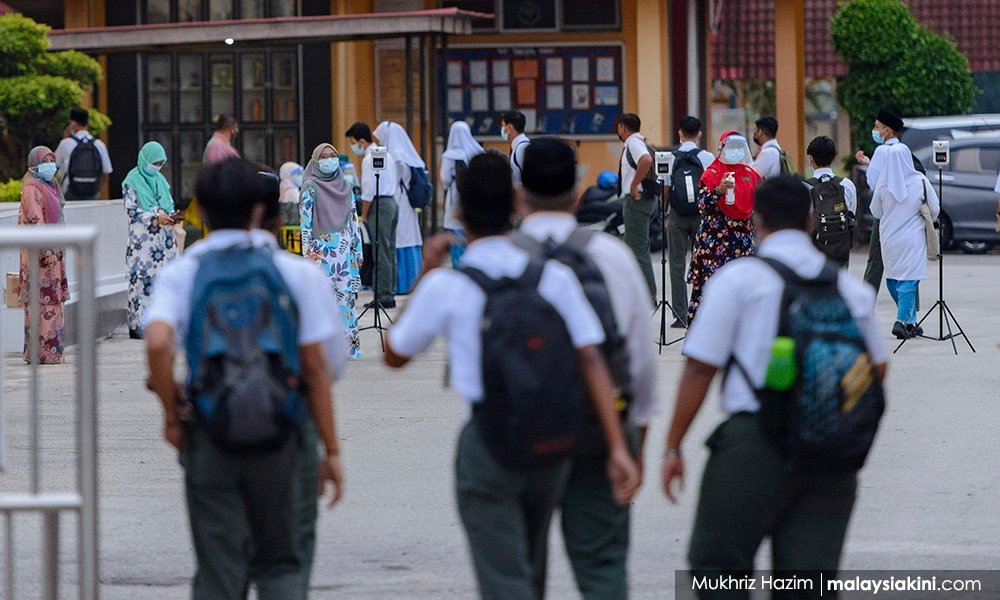
She feels that the government should have public campaigns, especially in schools, so that at a young age, children will know that there is a constitutional guarantee of equality between women and men.
“We must make that practical and real. To accept that,” stressed Shanti.
However, she notes that violence against women is prevalent all over the world.
“Finland and Norway, which come out as having more equality than in any other part of the world, are still dealing with domestic and sexual violence, as much as here in Malaysia.
“That is how women are kept under control. Sexual harassment, and public harassment… women were made to feel that they cannot play a big role. They don't want to go out alone, so they are vulnerable there in that sense,” explained Shanti.
She added that society must show that violence against women cannot be accepted, and laws regarding sexual harassment and domestic violence need to be properly enforced.
“I think the police have improved a lot from the early days and they are taking domestic violence seriously. Women can go to them and report. There is still a long way to go before the law can be used as a deterrent for men not to abuse their wives,” said Shanti.
When asked what kind of direction she feels the Women, Family and Community Development Ministry needs to take to help combat this gender equality effectively, Shanti noted the hard work the ministry is doing, the most recent is the sexual harassment law.
“But I still don’t think they understand the gender ideology that is holding both men and women back. They need to do a lot more awareness raising.
“One of the things that women’s groups are proposing to the government and especially to the ministry is that there must be an equality law focusing on men and women. That equality law will look at any kind of discrimination against women as well as positive steps that a government must take to bring about equality. Just to have a law which says we are all equal and the constitution is already saying that is not enough.
“The social and other barriers that prevent this equality from becoming a reality and put in place whether it's an awareness, raising education, affirmative action to bring more women into decision making. That law should compel all institutions to do that.
“So, we have proposed it. We started discussing the details of the content of this law, but it kind of was put aside once the Anti-Sexual Harassment Act came into discussion,” explained Shanti.

The reason is that it would be difficult to handle discussions for two sets of laws at the same time. The law on equality was supposed to be picked up the following year after the Anti-Sexual Harassment Act 2022 (Act 840) discussions were over.
Issues such as the gender pay gap and not enough women in senior positions or a diverse range of occupations, as well as job segregations, were to be discussed.
“There must be something to compel every institution to look at the structure within their institutions and see where the gaps are. To put in place measures to minimise the gaps as much as possible. These are positive steps to take.
“So, we are waiting for the ministry to push for this equality law to compel all institutions to take action,” concluded Shanti.
Shanti’s book is available online for now. Read it here.
MALAYSIANSKINI is a series on Malaysians you should know.
Three friends offer weekend healing with food and K-Pop culture
Meet the stroke survivor behind Kafe Basikal Tua
Autism Cafe Project: Born out of a father's love for his son
Sofea Helmy’s uphill battle to support local music talents
Family Feud host Jayaram wants youth to know education options
/file/publisher-c1a3f893382d2b2f8a9aa22a654d9c97/2023/06/32299c98fd3eec7b3d64d17f7c640e30.jpg)
/file/publisher-c1a3f893382d2b2f8a9aa22a654d9c97/2023/06/9bef9c8fd4957f6c51080bd709f15d28.jpg)
/file/publisher-c1a3f893382d2b2f8a9aa22a654d9c97/2023/05/936b92cf9a4040d63e3b82f15f2cbbbf.jpg)
/file/publisher-c1a3f893382d2b2f8a9aa22a654d9c97/2023/05/e5c5edb7c1d78d7e2dff97ea70de35e9.jpg)
/file/publisher-c1a3f893382d2b2f8a9aa22a654d9c97/2023/05/979c3a628b7dcbb6ed8b133622fc3e65.jpg)


Are you sure you want to delete this comment?
This action cannot be undone.