


/file/publisher-c1a3f893382d2b2f8a9aa22a654d9c97/2023/06/9bef9c8fd4957f6c51080bd709f15d28.jpg)

Filmmaker aims to preserve Kelabit culture through children's books
MALAYSIANSKINI | Sometimes it takes a village to save the culture of a dwindling community.
This is why Kelabit author Sarah Lois Dorai published three primer books alongside writers David Lian Labang and Lillian Lipang Bulan, intending to document the language and culture of their community - which now numbers only in the mere thousands.
A primer is a basic textbook used to...
MALAYSIANSKINI | Sometimes it takes a village to save the culture of a dwindling community.
This is why Kelabit author, Sarah Lois Dorai published three primer books alongside writers David Lian Labang and Lillian Lipang Bulan, intending to document the language and culture of their community - which now numbers only in the mere thousands.
A primer is a basic textbook used to teach reading, such as an alphabet book or basal reader. It can also refer to books discussing subjects at the most basic level of understanding.
The books are “Anun Inih Lem Bubuh Tepu’?” (What Is Inside Grandpa’s Fishtrap?) by David Lian Labang; “Doo’ Ribed Kijan!” (Kijan Is Beautiful!) by Lillian Lipang Bulan and David Lian Labang; and “Inih Lun Ruyung Kudih!” (This Is My Family!) by Dorai and Lillian.
The books were published on Dec 19, 2022, and the entire process of getting the material and getting it printed took six months.
While she was doing this, Dorai was also on a Chevening scholarship to study for a Master’s Degree in Film and TV Production with Directing at the University of York.
Her mother Lillian, and her husband Fabian Joseph were also roped in.
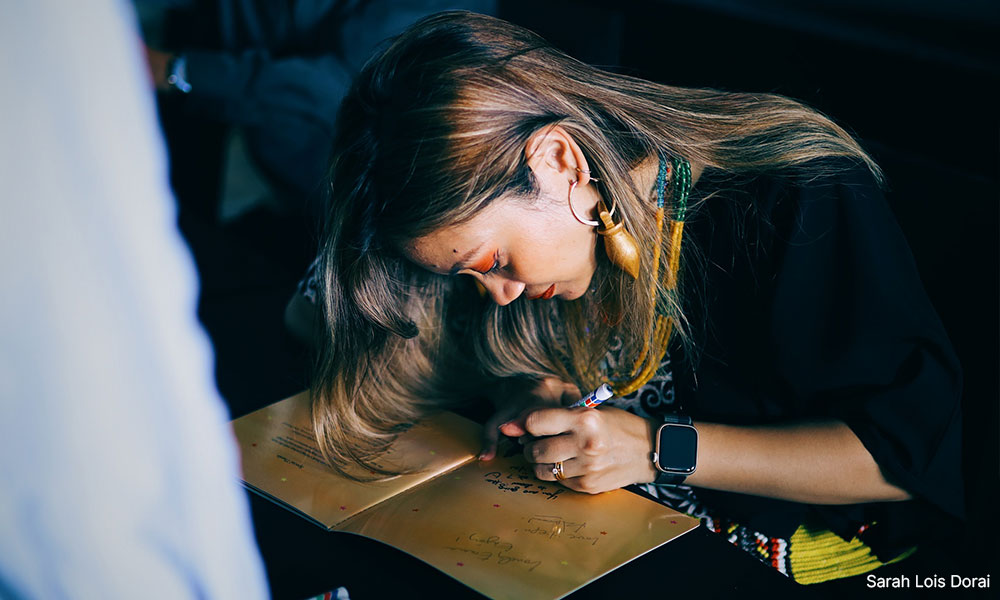
Dorai co-founded the Kuala Lumpur-based publishing house Sceptre Seven Press and undertook the book project with her husband - with a particular focus on indigenous folk.
Collaborating with her family is familiar ground for Dorai.
With her work’s discernible focus on Kelabit culture, Dorai also directed a music video for cousin and musician, Alena Murang.
As a result of her work, she racked up five film festival awards at the New York International Film Awards and the Buenos Aires Music Video Festival.
“Everybody had something to bring to the table. My mother is a published author and she had experience with writing, editing and self-publishing. I relied on a lot of her advice, but content-wise, I wanted to figure out how to do it myself.
“My husband runs a production company so he has that business experience, understands how to handle money and marketing - things like that. I felt that it would make more sense to have someone who has this kind of knowledge in the business.
“It was good to have that sort of collaboration and it was also easier to work with family in this instance because I just had access to them all the time,” reflected Dorai in an interview with Malaysiakini.
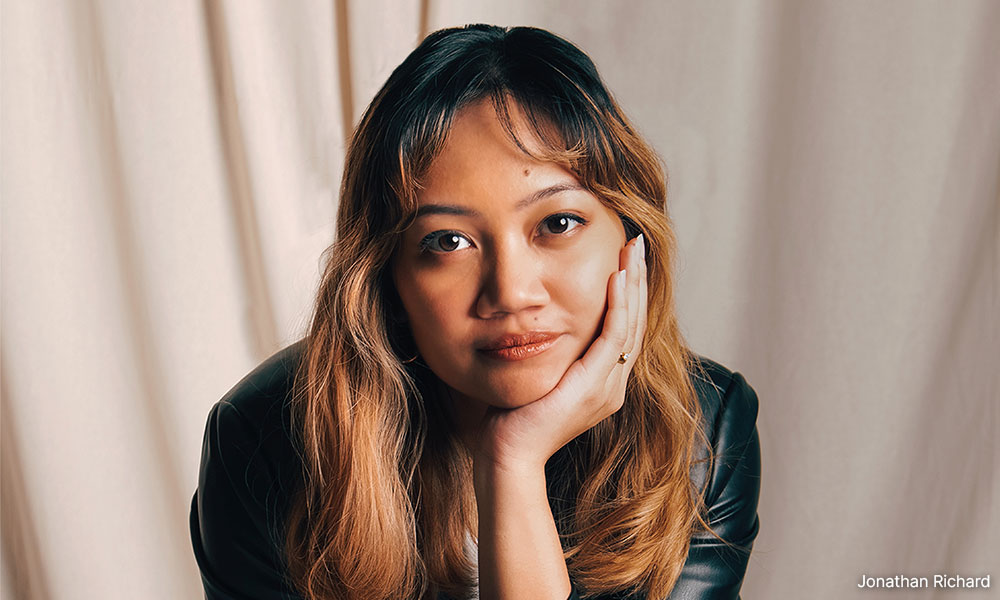
She added that while her experience as a filmmaker did not help her tremendously in the creative process of producing the book series, it did lend her a better foundation in project management.
Why bilingual books?
Dorai, who is half-Indian and half-Kelabit, noted that others before her have previously produced books in the Kelabit language and she wanted to veer down a different path.
This is why I made them bilingual Kelabit-English books, she said.
She explained that the first book of the series was initially written in a bare-bones manner.
Lian Labang had written out what would eventually be “Anun Inih Lem Bubuh Tepu?” (What Is Inside Grandpa’s Fishtrap?) on a sheet of A4 paper with some clipart from Microsoft PowerPoint.
“That was used in daycare for small kids, using these materials to teach little kids Kelabit. When he posted photos of the materials online, I looked at them and thought these are really good materials just to be wasted like that.
“There’s a new generation of Kelabits, who grew up in the cities or have mixed parentage. Even though we got to read this material, we don’t know what it means if we don’t have our parents translate it for us.
“I thought if we had a bilingual book, it would be much more helpful to people who don’t speak the language but want to,” explained Dorai.
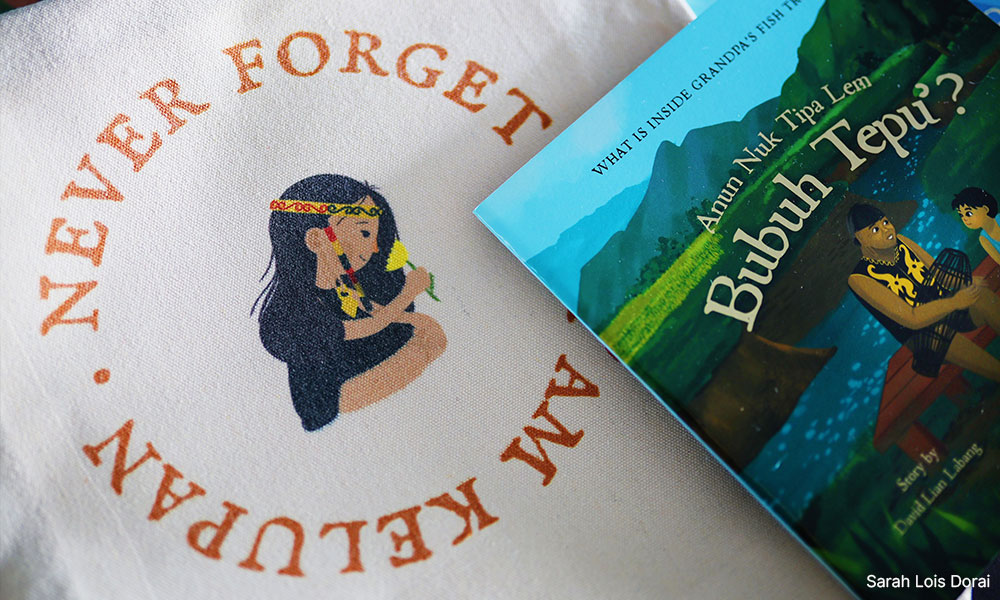
As a language, Kelabit, like many other indigenous languages, is suffering from a decline in use as well as not having a standardised and codified form of spelling.
This left Dorai to refer to taking a more unconventional route, referring to local versions of Bibles within the Kelabit community.
“Usually, how do the Kelabit do it when they need to produce something? They will gather a large committee and decide on spelling. However, the “city girl” in me thought that was going to take too long,” quipped Dorai with a laugh.
“I said, ‘I don’t care what anyone is going to say, I’m going to decide between me and my mum what the spelling is going to be’. There’s no formal dictionary that we could follow. At the moment, the community is working on producing a Kelabit Bible so I checked what they used for the Bible.
“A large majority of Kelabits are Christians and I imagine that a lot of them would use it as a basis for the language, so I thought that would make sense,” she explained.
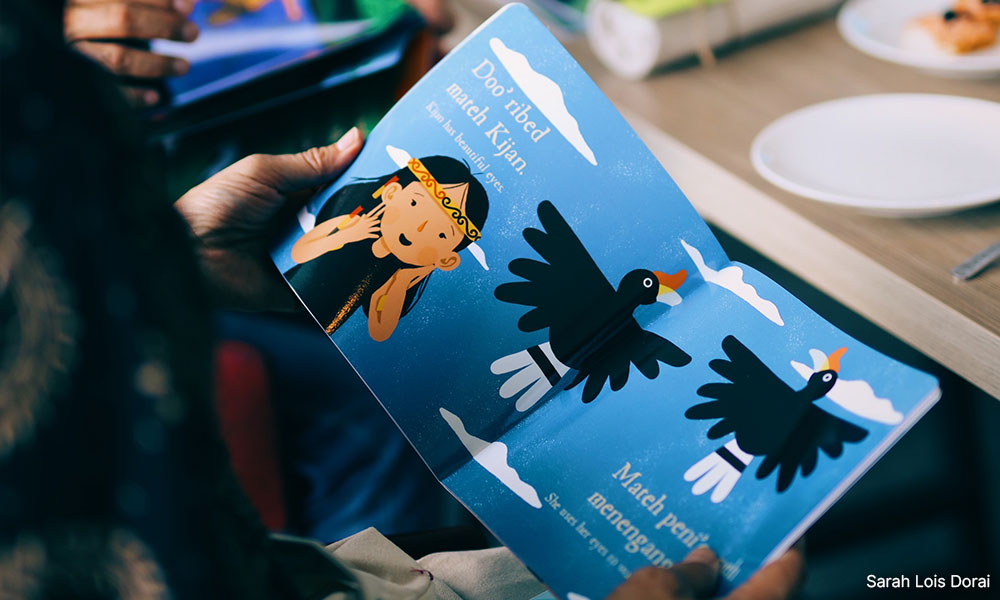
The filmmaker said that the book has received a warm response from a younger generation of Malaysians - both in and out of the Kelabit community.
“Many of the Kelabits - especially those around my age or who already have kids - are excited about it. We got orders from some Kelabits who aren’t in Malaysia, which was interesting because I think when you’re uprooted from your home, you always try to find some kind of connection.
“Everyone has that instinct that you want to pass (your culture) down to your kids,” she said.
“For me, doing this was very personal to me. I think that those kinds of work are what touches people. It has to start from a place where it means something to you and that’s why I put a lot of myself into it - although it’s kind of simple,” added Dorai.
The children’s books are available to be purchased on Sceptre Seven Press Instagram Shop (@sceptresevenpress).
MALAYSIANSKINI is a series on Malaysians you should know.
/file/publisher-c1a3f893382d2b2f8a9aa22a654d9c97/2020/01/b7b1ede75363e6acd2dfa8acdf329cf2.jpg)
/file/publisher-c1a3f893382d2b2f8a9aa22a654d9c97/2023/05/b6059c1fae5726f16d4f452001af9253.jpg)
/file/publisher-c1a3f893382d2b2f8a9aa22a654d9c97/2023/05/bc65aafa76d7cc2882122229f57d4789.jpg)
/file/791/0ccac2270ffb9d79216a4fc3f2c51dfe.jpg)
/file/publisher-c1a3f893382d2b2f8a9aa22a654d9c97/2021/03/c91e6c1d9270ce8fe899758ec62ec471.jpg)
/file/publisher-c1a3f893382d2b2f8a9aa22a654d9c97/2023/05/11c76e0ab73d9b7f6c9f95cb03ff5bcf.jpg)
/file/publisher-c1a3f893382d2b2f8a9aa22a654d9c97/2023/05/936b92cf9a4040d63e3b82f15f2cbbbf.jpg)


Report this comment
Are you sure you want to delete this comment?
This action cannot be undone.