


/file/publisher-c1a3f893382d2b2f8a9aa22a654d9c97/2023/09/e9038263b0d5fb322555618f1e8fa79d.jpg)

Historian lauds discovery of ancient Buddhist temple in Bukit Choras
He told Malaysiakini that the discovery by the National Heritage Department and Universiti Sains Malaysia's Global Archaeology Research Centre (GARC) offered more concrete evidence of the Malay Peninsula’s history...
Historian Ranjit Singh Malhi has lauded the announcement of the discovery of the largest Buddhist temple structure in Bukit Choras, Yan, Kedah, which is believed to date back 1,200 years.
He told Malaysiakini that the discovery by the National Heritage Department and Universiti Sains Malaysia's Global Archaeology Research Centre (GARC) offered more concrete evidence of the Malay Peninsula’s history.
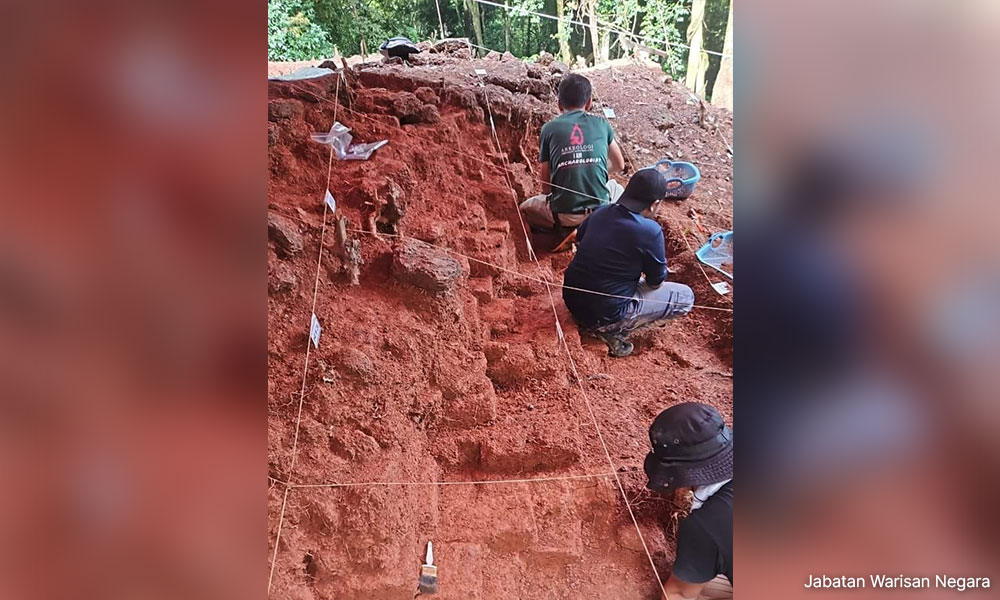
"The recent discovery of a large ancient Buddhist temple structure in Bukit Choras provides additional evidence that the Indian culture has been a powerful civilising force on the Malay kingdoms and society in the Malay Peninsula from the first century until the 14th century CE.
"The Malays were largely Hindu-Buddhists before embracing Islam," he said.
According to Ranjit, the initiative by the National Heritage Department - in collaboration with local universities - to undertake excavation works was most definitely a step in the right direction in unearthing the early history of our nation.
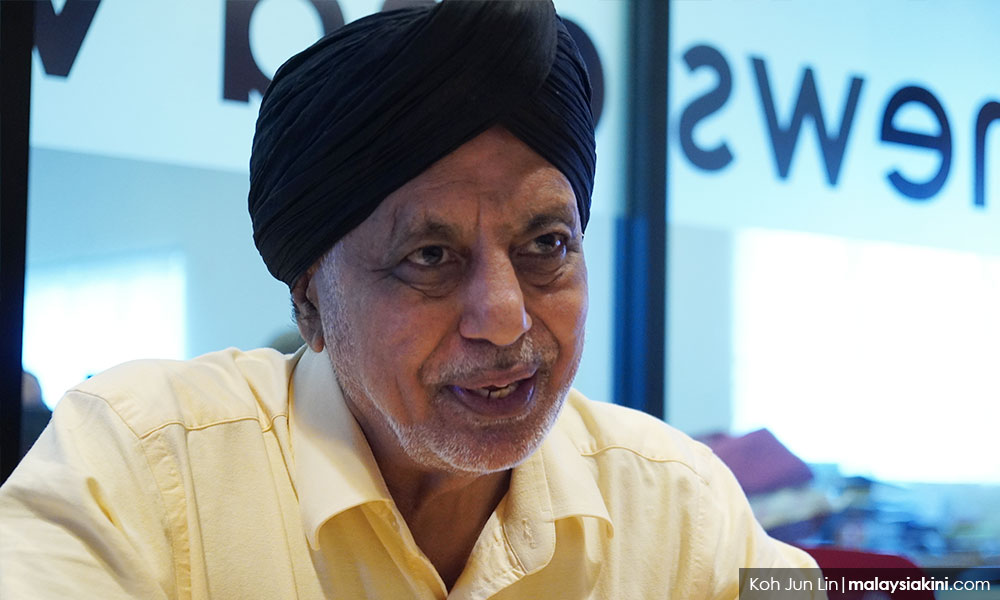
"As a multi-ethnic nation, Malaysia must take pride in its multi-cultural and multi-religious heritage," he added.
Ranjit said that from about the second century CE, Indianised Malay city-states or small kingdoms such as Ancient Kedah (Kedah Tua), Gangga Nagara (Kinta Valley) and Langkasuka (modern Pattani district) began to emerge on the Malay Peninsula.
The site is believed to have been built between the 8th and 9th century CE - making it contemporaneous with the Bujang Valley and Srivijaya civilisations.

The announcement which was reported recently, indicated that a team led by GARC chief researcher Nasha Rodziadi Khaw has also discovered two well-preserved life-sized statues made of stucco (a type of plaster).
The statues resemble ancient Srivijaya Kingdom artefacts discovered in Sumatra and West Java, Indonesia.
The discovery was hailed by National Heritage Department commissioner Mohd Azmi Mohd Yusof as the most significant archaeological discovery in the country since the Covid-19 pandemic.
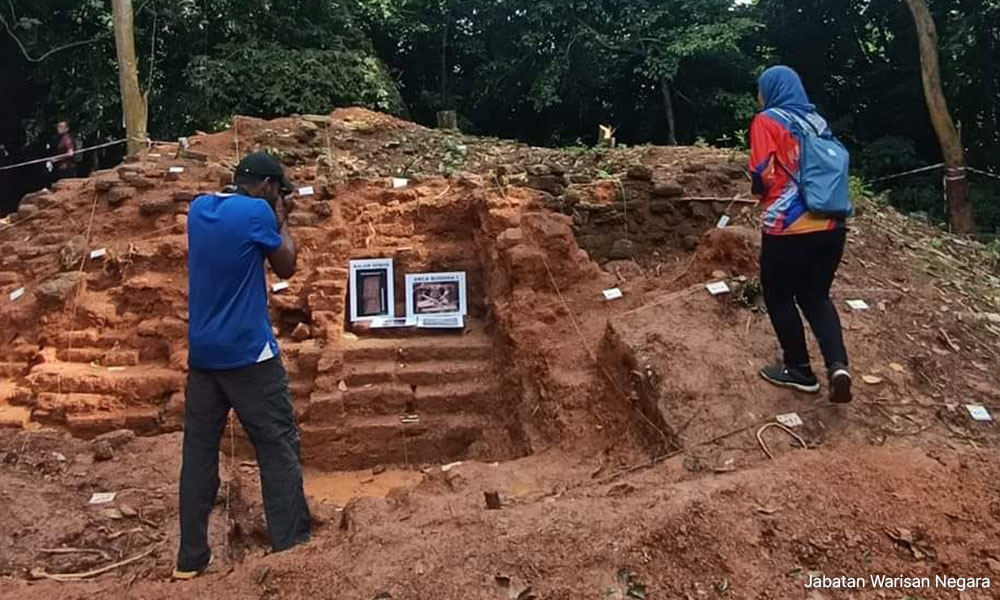
He also said that most of the artefacts are still intact and the temple still retains its full structure, adding that they had also discovered inscriptions in Pallava and fragments of pottery.
/file/publisher-c1a3f893382d2b2f8a9aa22a654d9c97/2023/08/272d28e865340848dca3cc27a62e67d9.jpg)
/file/1163/204c5f62d49005c1723b941299ea6e1f.jpeg)
/file/publisher-c1a3f893382d2b2f8a9aa22a654d9c97/2021/08/ac8fe0d74a058e2ec06e9b6e2bf308eb.jpg)
/file/publisher-c1a3f893382d2b2f8a9aa22a654d9c97/2020/02/50371298fe3718f57140913f6a9e2b7e.jpg)
/file/publisher-c1a3f893382d2b2f8a9aa22a654d9c97/2019/08/f54e6ff3659e5a021f084fd8828f5485.jpg)
/file/publisher-c1a3f893382d2b2f8a9aa22a654d9c97/2023/07/0427df65074210ab74057ea507bbcdb6.jpg)


It will soon be airbrushed by the Little Napoleons or Propessars.
Report this comment
Are you sure you want to delete this comment?
This action cannot be undone.