
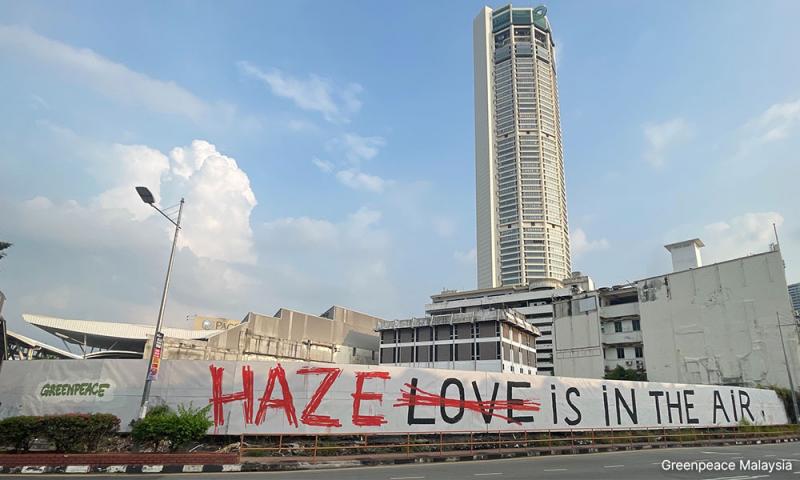
With a return of unhealthy Air Pollutant Index (API) readings due to the haze, environmental watchdog Greenpeace has called on Asean states to enact a domestic transboundary haze law in their respective countries.

In a statement today, Greenpeace said it is important to enact domestic transboundary haze pollution legislation to ensure that companies are not contributing to haze locally and abroad.

"Enacting a domestic Transboundary Haze Act is necessary to act as a deterrent, especially as there are bad apples in the industry.

“It can provide legal grounds for each country to institutionalise checks and balances to ensure their own companies operate responsibly,” said Greenpeace Southeast Asia regional campaign strategist Heng Kiah Chun.

In particular, Greenpeace urged the Asean states to take three critical steps:

  1. Develop a regional legal framework to hold corporate entities accountable for domestic forest fires due to peatland clearance and agricultural residue burning.

  2. Mandate all companies known for clearing out forests to publicly disclose and publish concession maps to be shared across all Asean member states to improve transparency in their supply chains.

  3. Agree on a standardised air quality indicator to be used in all Asean member states to monitor and track air pollution based on a common methodology and act accordingly.

The issue of transboundary haze has repeatedly cropped up in the region for the past 30 years and the calls for transboundary agreements are not new.

In September 2019, then-energy, science, technology, environment and climate change minister Yeo Bee Yin said her ministry was ready to draft the Transboundary Haze Act to punish Malaysian companies that cause haze in other countries.

Today, five areas in Peninsular Malaysia have continued to record unhealthy API readings as of 9am and there has been an increase in unhealthy API readings since last Friday (Sept 29).

The Department of Environment said this is due to transboundary haze billowing from Indonesia.

The Health Ministry has since advised the public in areas with “unhealthy” API readings to take preventive measures to reduce the impact on their health.

Health director-general Dr Muhammad Radzi Abu Hassan said measures that can be taken include reducing outdoor physical activities and using face masks when outdoors.