


/file/publisher-c1a3f893382d2b2f8a9aa22a654d9c97/2020/06/5b18691f66b46e8b3c332f87e65d0a38.jpg)

MCMC: Beware of scammers 'hacking' your mind
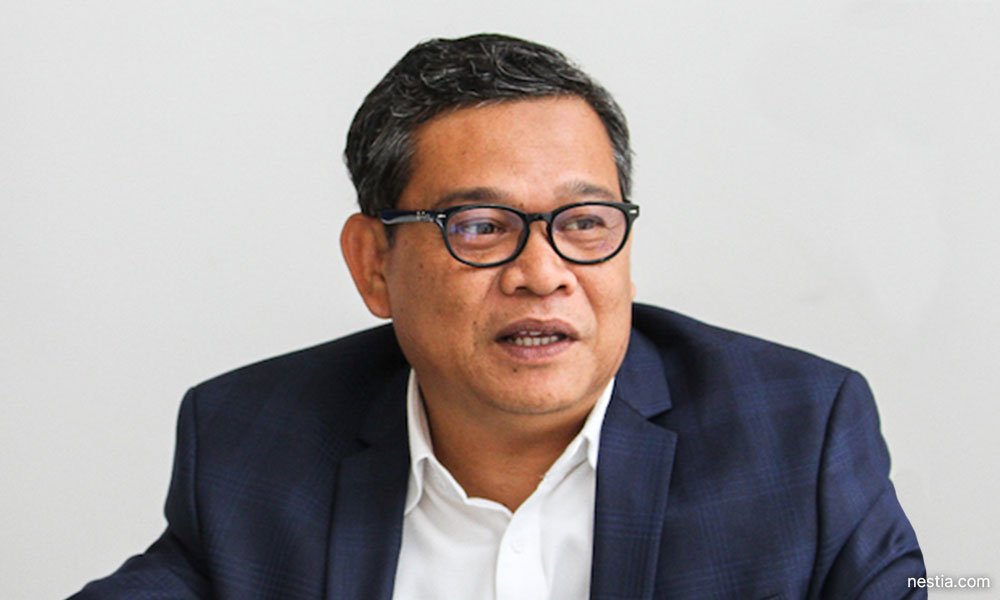
Malaysian Communications and Multimedia Commission (MCMC) chief regulatory officer Zulkarnain Mohd Yasin said cognitive hacking occurs when victims are unable to rationalise and act according to their emotions, thus opening up opportunities for scammers to strike...
People not only need to be alert of suspicious calls in dealing with scams but must prevent scammers from “hacking” their minds to ensure that they do not become a victim of the crime.
Malaysian Communications and Multimedia Commission (MCMC) chief regulatory officer Zulkarnain Mohd Yasin said cognitive hacking occurs when victims are unable to rationalise and act according to their emotions, thus opening up opportunities for scammers to strike.
He added that criminals may have information about their victims from data mining, which gives them an advantage in analysing their victims through digital traces to manipulate their thoughts and attitudes.
"Scammers now don't hack the device but they hack our minds so that rationality will be silenced or stuck until the emotions that affect us cause doubt because our mind has been hacked.
"What is important when we receive a suspicious call is to pause. This is because their tactics are intimidating and ask us to take immediate action in a state of fear and in a state of silence, rational thought does not occur," he said in the ‘Ruang Bicara’ MCMC programme produced by Bernama TV last night.
Zulkarnain said when faced with such a situation, individuals need to stop for a moment and think, end the call and ask for a third party's opinion or do a self-check to verify suspicious calls.
"Humans are usually in a hurry, so in matters involving something that is uncertain or even doubtful, we should stop and check. Those are the two things we have to train ourselves to do," he added.
Fake news
Commenting on fake news, he said every media agency has a big role and responsibility in controlling the content provided to overcome the spread of inaccurate information by irresponsible parties.
Referring to the Covid-19 pandemic period, which witnessed the spread of unauthentic information that had an impact on public health, he said the matter should not be taken lightly because it could threaten national security.
"We have to educate the public, we have to talk about the need to deal with this fake news because there are some who see this as a joke... maybe from the point of view of ordinary people this is something funny.
"We shouldn't look at this for ourselves and remember that children as young as nine or even six years old have been exposed to social media, so their minds can also be influenced, that's what we're worried about," Zulkarnain said.
/file/publisher-c1a3f893382d2b2f8a9aa22a654d9c97/2023/07/9631d4dd9d832a1949f9cc8672e6e4a1.jpg)
/file/publisher-c1a3f893382d2b2f8a9aa22a654d9c97/2023/08/2c1ccb0640d38b572d7ea043286e3c46.jpg)
/file/publisher-c1a3f893382d2b2f8a9aa22a654d9c97/2020/06/686fe3b45b40ffd0092207bc6354a928.jpg)
/file/publisher-c1a3f893382d2b2f8a9aa22a654d9c97/2021/05/ff4d6f0dd84e47bd46054e2b7059eeef.jpg)


Are you sure you want to delete this comment?
This action cannot be undone.