


Review laws giving foreign embassies immunity - PSM
PSM has urged the government to review the Employment Act 1955 to provide justice to Malaysians who work at foreign embassies and consulates.
Its deputy chairperson, S Arutchelvan, said this is also to prevent diplomatic officers from 'hiding behind' immunity laws after violating the rights of local workers.
"Our country's laws should be updated to give every Malaysian, including those working for foreign countries and organisations, to sue the latter in Malaysia, and limit their immunity...
PSM has urged the government to review the Employment Act 1955 to provide justice to Malaysians who work at foreign embassies and consulates.
Its deputy chairperson, S Arutchelvan, said this is also to prevent diplomatic officers from 'hiding behind' immunity laws after violating the rights of local workers.
"Our country's laws should be updated to give every Malaysian, including those working for foreign countries and organisations, to sue the latter in Malaysia, and limit their immunity, especially pertaining to contract violation and unfair dismissal," Arutchelvan told a press conference in Kuala Lumpur today.
He opined that the Diplomatic Privileges (Vienna Convention) Act 1966, and International Organisations (Privileges and Immunities) Act 1992 were in violation of the Federal Constitution, which guarantees the rights for all to make a living, and equal justice to all.
Also present at the press conference were Mazlina Musa, and Nadarajan Manickam from the Union Network International-Malaysia Labour Centre (UNI-MLC).
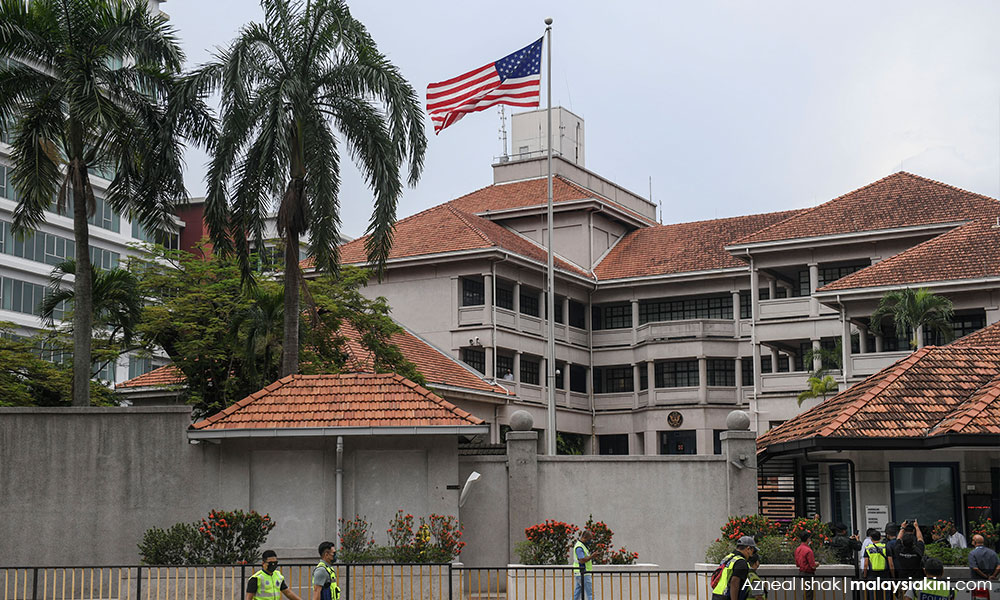
Arutchelvan (above) was commenting on the Industrial Court awarding RM66,000 to a security guard over his unlawful dismissal from the United States Embassy in Kuala Lumpur 15 years ago.
In his ruling delivered on April 27, Industrial Court chairperson Amrik Singh said the US Embassy failed to provide evidence of misconduct against L Subramaniam.

According to the written ruling, Amrik noted that the US Embassy’s legal team spent a large portion of its submissions stating the Industrial Court had no jurisdiction to hear the case, rather than providing evidence over Subramaniam’s alleged misconduct linked to unauthorised leave of absence.
Amrik pointed out, however, that the issue of the US Embassy enjoying absolute immunity does not apply here as Subramaniam’s contract of employment from Sept 20, 1998, until his unlawful termination on April 4, 2008, does not involve the handling of confidential information that has an impact on US sovereignty.
In August, the US government applied for a judicial review on Aug 9 at the Kuala Lumpur High Court against the award given by the Industrial Court, and early this month, the High Court granted leave to the US Embassy in Malaysia to challenge the ruling.
Elaborating, Arutchelvan said this was an example of how foreign embassies and consulates abuse immunity laws to violate the rights of Malaysians.
"The case has dragged on for over 15 years and went up until the Federal Court. There was a verdict, but the embassy is still defying the court's order in the name of immunity.
"Now, the embassy has filed a judicial review at the High Court, citing it is protected by immunity laws, and that the courts do not have the power to act on cases involving Malaysians working in foreign embassies.
"This is just one embassy. We have similar cases involving other embassies and consulates," said Arutchelvan.
"We urge the Malaysian government to emulate the United Kingdom which last year proposed amendments to the State Immunity Act 1978, to enable embassy and consulate workers to bring their work-related cases to the court."




Report this comment
Are you sure you want to delete this comment?
This action cannot be undone.