


/file/publisher-c1a3f893382d2b2f8a9aa22a654d9c97/2023/10/ce272f8c0f377c1725f04c8d04ff7f10.jpg)

Ex-MTUC chief: Don’t expect workers to be productive if they’re hungry
INTERVIEW | Veteran trade unionist Syed Shahir Syed Mohamud is well aware that the workers' movement in Malaysia has changed in the half-century since he began his involvement.
Nonetheless, he still feels that there is a place for labour organisations and that the core battles are still the same.
“First of all, you have the issue of survival and quality of life. You can't expect workers to be productive if they're hungry. And you cannot leave it up to the employers’ good grace to improve the workers’ salary, because most of the time they are thinking about themselves and their profits, not the workers.
“At the same time, the unions must...
INTERVIEW | Veteran trade unionist Syed Shahir Syed Mohamud is well aware that the workers' movement in Malaysia has changed in the half-century since he began his involvement.
Nonetheless, he still feels that there is a place for labour organisations and that the core battles are still the same.
“First of all, you have the issue of survival and quality of life. You can't expect workers to be productive if they're hungry. And you cannot leave it up to the employers’ good grace to improve the workers’ salary, because most of the time they are thinking about themselves and their profits, not the workers.
“At the same time, the unions must return to their old visibility and we must deliver an improved livelihood for our workers. People will only come to you if you can help solve their problems.
"If they don’t understand the benefits of organised labour, and we are not visible or effective, then they won’t turn to us,” said Syed Shahir (above) in an interview with Malaysiakini.
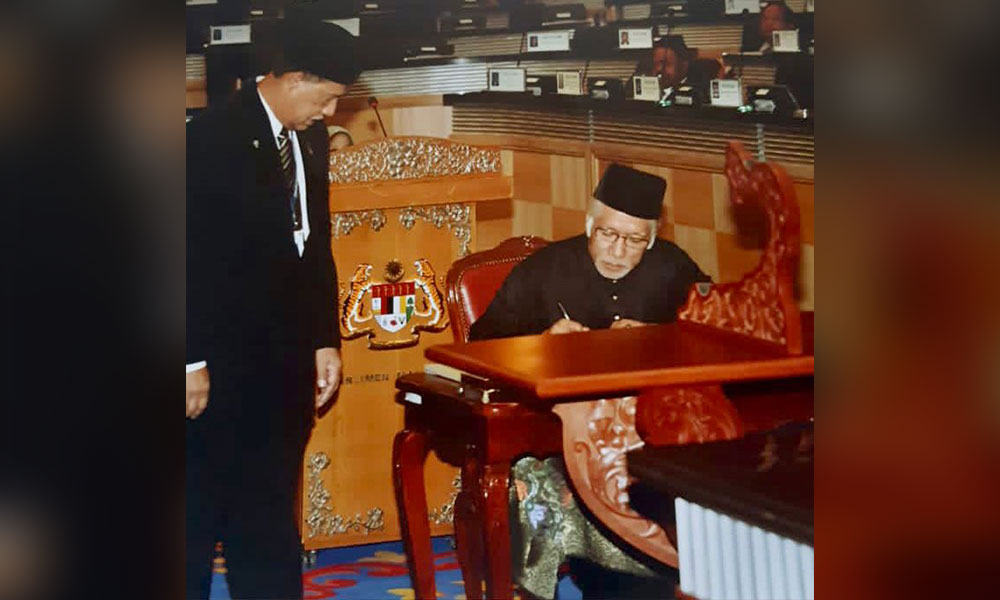
Syed Shahir served as the Malaysian Trade Union Congress (MTUC) president from 2005 to 2010 and also had a three-year term in the Dewan Negara from 2012 to 2015. Now 72, he recalled how he got started back in the early 1970s.
“There was workers' action in an engineering company if I'm not mistaken; they were going to take strike action, and they wanted this circular to be sent out. But it was in Mandarin and they wanted someone to help.
“So, they told me what was the content and I helped translate. Soon I found myself in the National Union of Transport Equipment and Allied Industries Workers which was newly established.
“It was a very different era. National union leaders like PP Narayan and V David were respected figures. They were in the limelight at the time, and there was a lot of media coverage and they could mobilise support. So I wanted to be part of it, to defend and uplift the Malaysian workers,” he said.
READ MORE: Ex-MTUC chief: Factionalism, low membership hurting workers movement
Syed Shahir cited the 1967 nationwide teachers' strike which helped bring about equal pay for women, as well as pension, housing, and health benefits for all teachers.
“Many industries were well represented by unions, including civil servants, pilots, and so on. The National Union of Plantation Workers alone had more than 100,000 members,” he shared.
Youthful candidacy
Aside from joining the workers’ movement, the Raub native was also a youth leader of Parti Sosialis Rakyat Malaysia (PSRM) and was fielded by the party in the Batu Talam constituency in the 1974 Pahang state assembly election.
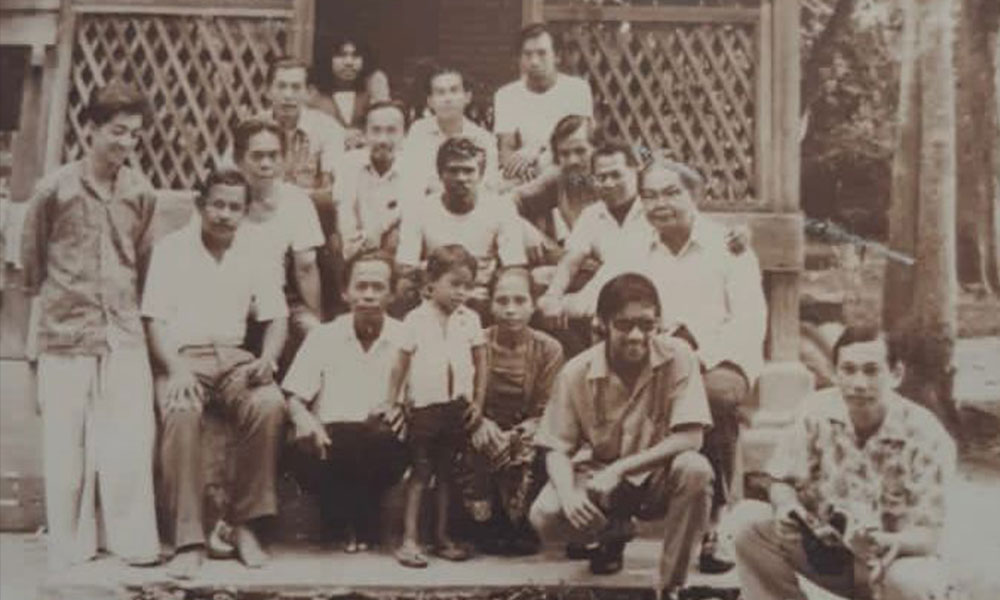
“Maybe at that time, we were romantic and idealistic. That was during the Vietnam War and we wanted to fight against imperialism. Stand up for the common man. We were not going into the election to win the election, which of course I lost to Umno.
“We just wanted to use it as a platform to explain our message to the people, the workers that they are the foundation of Malaysia’s success and economy, and deserve a voice,” he recalled.
According to Syed Shahir, who still serves as Institut Pemberdayaan Pekerja Selangor chairperson, there was also a difference in how the government looked at the role of unions under the first three prime ministers of Malaysia.
“They had a different perspective of the roles of the union and accepted that it was part of the bigger society and had a role in ensuring that the workers progressed with the nation. That changed under the fourth prime minister Dr Mahathir Mohamad who was not sympathetic to the unions,” he said.
Syed Shahir’s PSRM was heir to the Socialist Front which had been the main opposition to the Alliance in urban areas in the 1950s. In the early years following independence, it was quite common for unionists to be linked to political parties of the left, but he feels that is another link that has evaporated over time.
He stayed with the party as it shed its socialist tag to become Parti Rakyat Malaysia and then merged with Parti Keadilan Nasional to form PKR. Indeed, he contested two general elections under PKR, losing in Kelana Jaya to Loh Seng Kok in 2004 and being defeated in Pandan by Ong Tee Keat in 2008.
Keeping the labour movement relevant
He also concedes that the present Pakatan Harapan coalition does not have the same connection to the labour movement as the party he first joined.
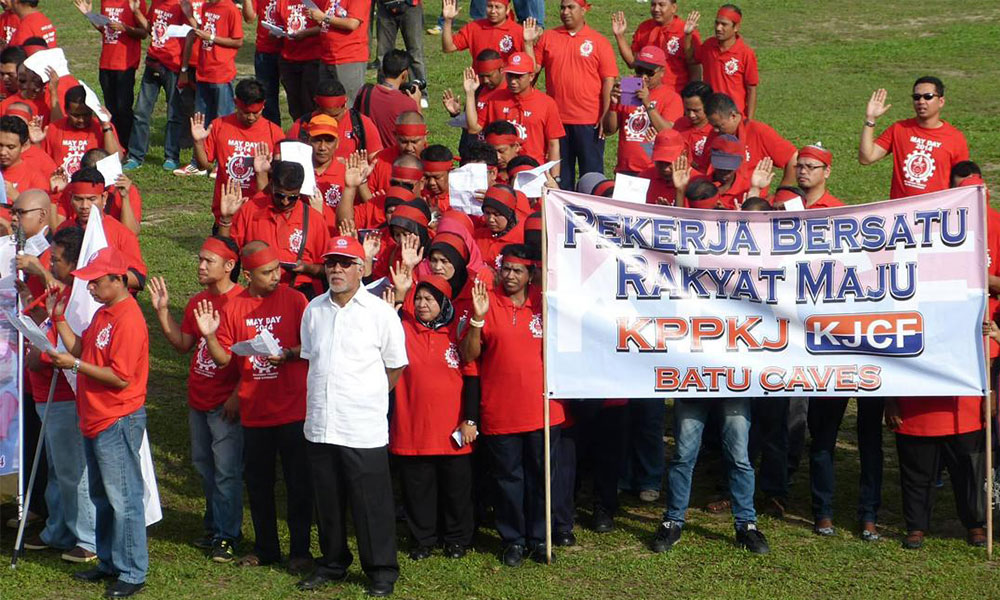
“If you look at the human resources ministers from DAP like M Kulasegaran and the present one V Sivakumar, I think you’ll find that not much has changed for the workers. First of all, the ministry is not viewed as a powerful one such as finance, defence, education or home.
“Secondly, on key issues like wages, we are moving too slowly. The human resources ministers seem swayed by the talk of the employers that increasing the minimum wage too fast would damage their industries.
"This is the standard argument. There was a Bank Negara study in 2017, which said a living wage in the Klang Valley should be around RM2,700. How can we expect workers to thrive, if we are plodding along with minimum wage at RM1,500?” said Syed Shahir, who is working on a book about the living wage.
He called on the Harapan government to add incentives to employers who raised the minimum wage.
“Who is advocating for workers in today’s Malaysia? The opposition Perikatan Nasional is bad, PSM is too small, the MTUC and unions must stop factionalism and focus on improving livelihood,” said Syed Shahir.
He said that the union movement had not really adapted to the changing conditions in the Malaysian economy, pointing out that aside from people aspiring to be professionals, there are many who enter the corporate world as well as small-medium enterprises.
Even the principle of why workers need unions has not reached many Malaysians in the new millennium, he added.
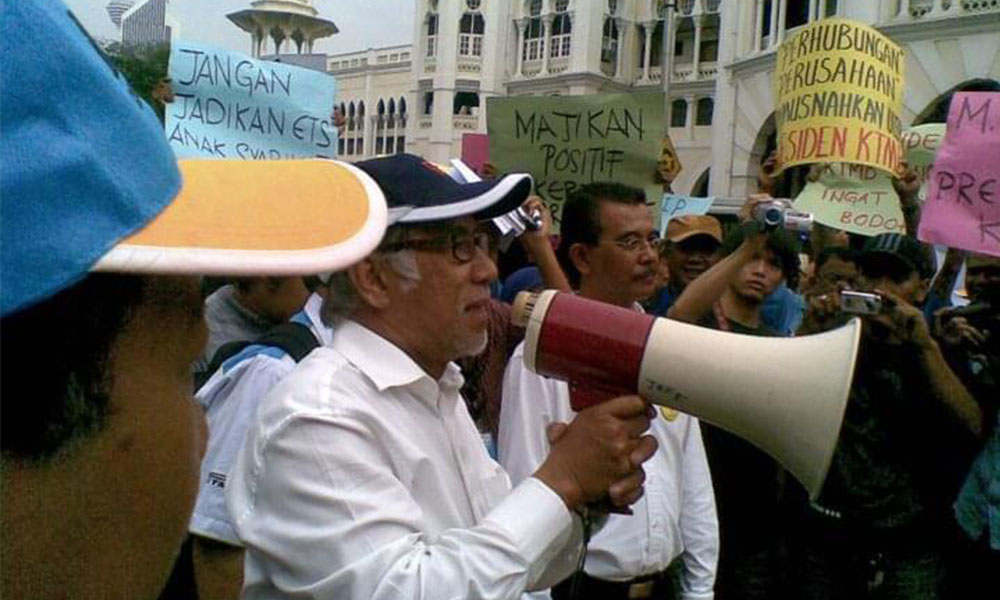
“You have the Grab driver, the fruit seller selling from stalls, so many Malaysians are part of the gig economy. At the same time, conventional labourer jobs are being given to foreign workers so that unionism has become much smaller in the public consciousness.
“We must find a way to organise and galvanise these forces so that workers are not exploited. We need to defend Malaysians, but also be conscious that foreign labourers are very vulnerable to being exploited by our employers,” said Syed Shahir.
He suggested that MTUC needs to take the lead in modernising its approach.
“If young Malaysians are on TikTok, then go to TikTok and make short instructional videos. What are my rights? Am I entitled to Socso payouts? What do I do if I am laid off?
“If we don’t find ways to think creatively, we will become less and less relevant,” concluded the veteran.
/file/publisher-c1a3f893382d2b2f8a9aa22a654d9c97/2023/10/237ec44af808ce9acf5b97e7a89fc919.jpg)
/file/publisher-c1a3f893382d2b2f8a9aa22a654d9c97/2021/05/700fa8d00e0afd4b99cef79179b0b425.jpg)
/file/publisher-c1a3f893382d2b2f8a9aa22a654d9c97/2023/02/db03877ee08ffb896778528a32804f69.jpg)
/file/publisher-c1a3f893382d2b2f8a9aa22a654d9c97/2023/05/5c52dfd564429ede7adf96f4e2f47b57.jpg)


Report this comment
Are you sure you want to delete this comment?
This action cannot be undone.