


/file/publisher-c1a3f893382d2b2f8a9aa22a654d9c97/2023/11/6cea39fec8414efe4059a15e2029b4ed.jpg)

BOOK REVIEW | Common people make all the difference, author shows in new book
Writer, researcher, and political analyst James Chai‘s book, ‘Sang Kancil: A Tale about How Ordinary Malaysians Defied the Odds’, is a heartwarming collection of stories about regular people who overcame insurmountable odds to contribute to and shape society as we know it.
One cannot help but be inspired by the stories of Anne Ooi - also known as Aunty Bersih, cancer researcher Dr Serena Nik-Zainal, audit officer Nor Salwani Muhammad, activists Fahmi Reza and Peter Kallang, and Gurdwara Sahib Petaling Jaya, who stepped up when it mattered despite being the underdog, like the titular mousedeer.
Writer, researcher, and political analyst James Chai‘s book, ‘Sang Kancil: A Tale about How Ordinary Malaysians Defied the Odds’, is a heartwarming collection of stories about regular people who overcame insurmountable odds to contribute to and shape society as we know it.
One cannot help but be inspired by the stories of Anne Ooi - also known as Aunty Bersih, cancer researcher Dr Serena Nik-Zainal, audit officer Nor Salwani Muhammad, activists Fahmi Reza and Peter Kallang, and Gurdwara Sahib Petaling Jaya, who stepped up when it mattered despite being the underdog, like the titular mousedeer.
In an interview with Malaysiakini, Chai, 30, said he started writing the book at the beginning of 2022. He said the book was a project to motivate himself because he had become quite disillusioned with the state of affairs in Malaysia.
Chai said he was a first-time voter during the watershed 14th general election but its promise of change was abruptly ended. This was made worse by what followed.
“You have been told your whole life that change is impossible, it cannot happen. Then, all of a sudden, you have this huge change. People tell you it’s historic, once in a lifetime, that kind of stuff, right?
“But then, it stopped really quickly because of the Sheraton Move, and then the pandemic came and there were so many changes of government.
“Everything was just out of whack. So, a lot of my friends, including myself, we’re not that hopeful anymore in this country. I think a lot of people left this country for Singapore and so on.
“So, I needed to write about the country to find what sources of hope I could,” Chai explained.
He started by focusing on ordinary people who achieved great things that shaped society.
Common people make all the difference
In January 2022, the huge floods that hit the country saw great devastation but also the selfless acts of everyday people like the volunteers from Gurdwara Sahib Petaling Jaya.
“The story of Gurdwara Sahib Petaling Jaya was a story that stuck with me for a very long time. The Aunty Bersih story was also something that is very familiar to me but I didn’t know how to write about these stories.
“So, the first group of people that I interviewed was the Gurdwara folks, who were still at that time operating at full throttle, even though the flood was over,” Chai recalled.
This is what made him realise he needed more stories to prove his point.
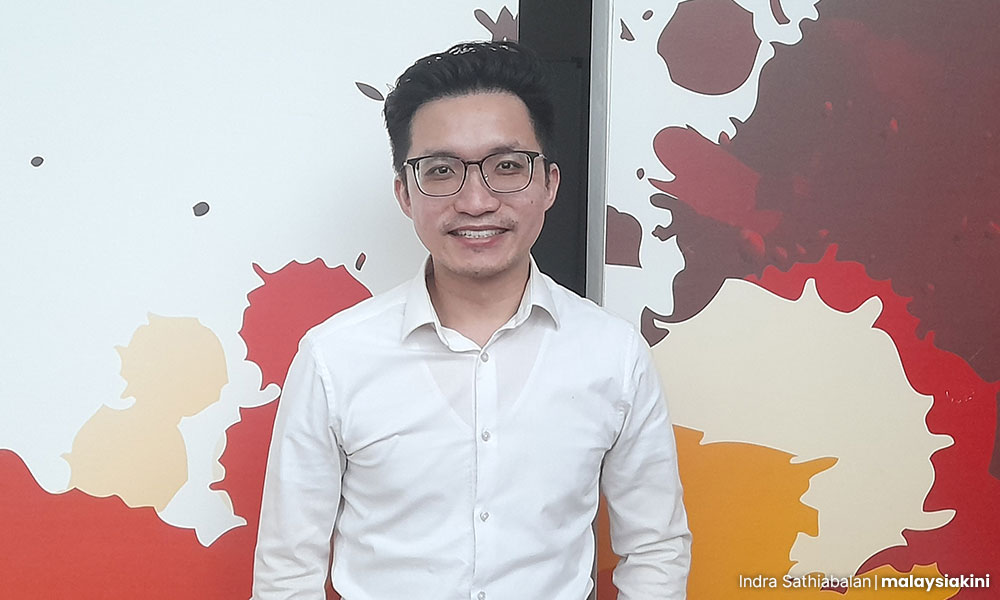
“My main argument is that it is ordinary people who drive most of the change in society rather than what we are told, which makes it seem like only the great men in history are the ones that make the huge changes.
“Malaysians always think that we need a saviour to come and save us. We need to wait for a new Mahathir (former prime minister Dr Mahathir Mohamad) to come. Or if Muhyiddin (former prime minister Muhyiddin Yassin) could not do the work, we need a new person, and only that person will change everything for us.
“I knew that thesis wasn’t true and I needed to find ways of proving it, right? So I started collecting these stories about ordinary folk,” said Chai.
“They were put into very difficult situations but they were bigger than themselves. The Gurdwara Sahib Petaling Jaya, they were put into a flood, trying to do what the government was supposed to be doing.
“Aunty Bersih was put into a huge protest against an unjust government. They arrested and intimidated her.
“Therefore, how did these people triumph in the end? And what can we learn from them?” Chai asked.
Don’t forget heroes
He cited the example of Serena, who was bestowed the prestigious Josef Steiner Award, also known as the “Nobel Prize for Cancer Research”.
“The story probably made the news for one day, and then people forgot about it. I wanted to see whether there was anything deeper in her story or not.
“Sometimes it’s luck that I uncovered things like how she also had to battle a lot of discrimination to get to where she is.
“At the same time, for a Malaysian to be the first-ever Asian female or the first-ever female to win that prize must mean something. That probably shaped society much more than many of the things that politicians do,” Chai said.
BOOK EXCERPT: “Life deals you a set of cards. Where you grew up, who your parents are, what rare disease you have…it is completely chance. Of course. I worked hard and tried to do my best, but I cannot deny that privilege played a huge role in giving me what I have today.” - Chapter 3: Dr Serena Nik-Zainal, Pg 84

Chai also incorporates research and theories as to why the actions of those he wrote about made an impact, breaking it down in notes at the end of each chapter.
This is because Chai wanted his book to fulfil readers’ minds and nourish their hearts.
“The main driver for the book is always the theories within. But if I just write about these individual theories, nobody’s going to read it, right?
“The only way that these people would feel like these things are true is if they were led in by a story, they were moved by it, they were convinced by it, and only then you serve them the theory behind all of this,” Chai elaborated.
To that end, the book includes a “self-help” portion that provides readers with the main takeaways of the stories within - that they too can take action and societal changes are not out of reach.
Not all had happy endings
Not all the stories end on an optimistic note. Ooi, known as Auntie Bersih, barely remembers the impact she had on Malaysians.
She was photographed walking alone with flowers in her hands, after she was soaked by water cannons which used irritants to disperse protestors, during the first Bersih rally.
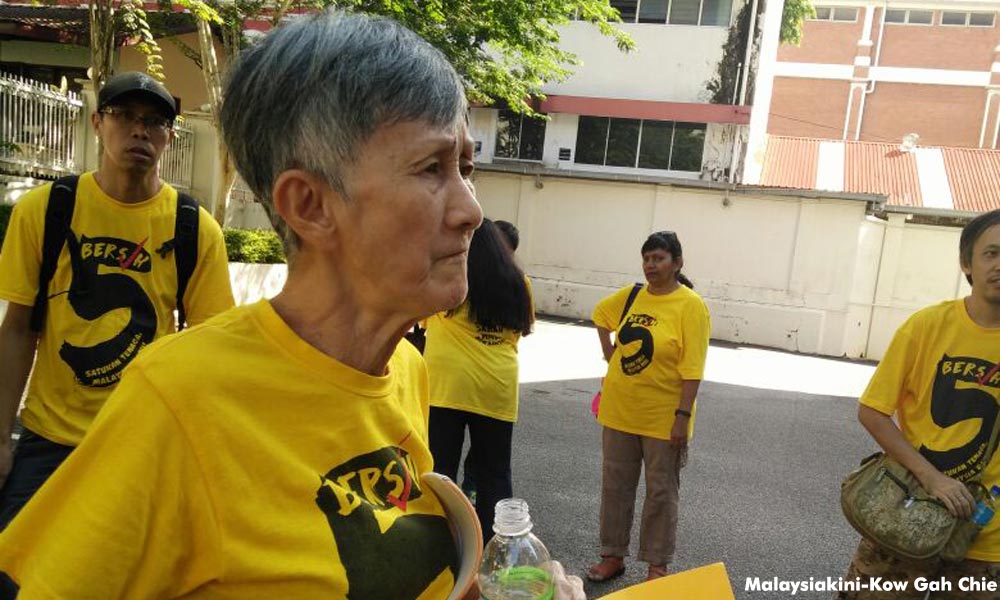
“In a way, she represented the ordinary person. Many people know her as Aunty Bersih. Nobody knew what her real name was.
“But I think her story was the first story I wanted to tell. Because she was your classic underdog, right? She was just a retired teacher. Not a lawyer, not a human rights activist, not a politician, not an attorney-general.
“She probably is very far out from all of those categories. Therefore, she is the most relatable person that we can find,” explained Chai.
In the book, Chai described Ooi as being extremely thrifty, bows down to no one, and does not like it when people tell her not to do something when she knows what she is doing is right.
“I needed to follow a lot of people who know about the Bersih incident and the protests, including her family members, to recall that period.
“She has Alzheimer’s and she has lost her memory. She’s also very weak. That’s why I think it needed to end like that, that story. Because that’s the reality of how things have changed.
“Throughout her adult life, she believed in certain values. She worked towards that direction. She raised her kids well. She taught her kids and grandchildren about the value of helping the poor. So she lived her life the way that she wanted to, with principles.
“When she started losing her memory, the world kind of forgot about her. But it probably didn't matter that much to her anyway because it was not about getting credit for her,” Chai shared.
BOOK EXCERPT: “I think it’s the weakness of Anne they see, People realize there is a David and Goliath situation. You got this frail, elderly woman who is holding a flower – a universal symbol of peace. What’s so dangerous about a flower? She’s victimized by an unjust, brutal, authoritarian government that is deeply corrupt. People associate themselves with the photo because they too feel weak and unable to fight against the government and bring about change. They see themselves in Anne – they think,” We are Anne.” This, more than anything, gives them hope.” - Anne Ooi aka Aunty Bersih’s son-in-law Philip, Chapter 2: Aunty Bersih (Anne Ooi), Pg 27
The untold stories
Meanwhile, Chai said he was quite wary about the chapter featuring graphic artist Fahmi Reza, who is known for his artwork lampooning political figures.
“My main argument is that the ordinary, everyday people are the ones that count, not the ones who are flashy and shiny.
“So, Fahmi was the one who was the furthest (from that concept) that we did. Because he’s very well-known to a lot of people. But I think his story, especially his early story, his origin story, is probably not as well-known.
“So many people would know of him but not many people know him as a person, and not many people know why he did what he did,” said Chai.
That is why the book gives readers glimpses into Fahmi’s early adult life when he was helpless, unemployed, and trying to figure out how best to act on his principles.
When Fahmi was locked up and beaten up due to his activism, he also discovered things that strengthened him.
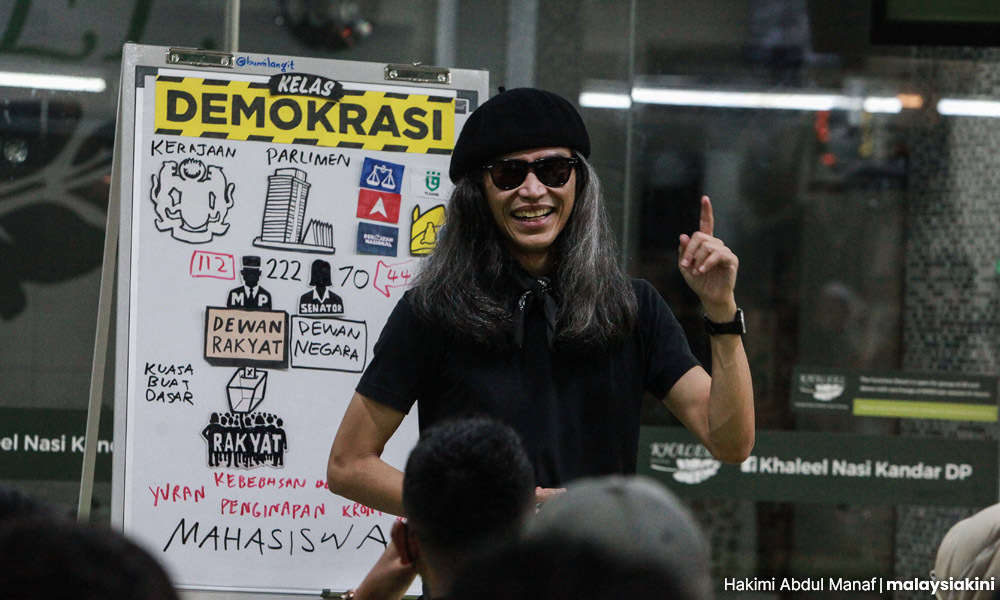
“I think that was very important for people to read it, to understand that he is like anyone else. He had to go through that cycle to get the courage he needed.
“Until today, he’s still doing what he does, activism in different ways. Sometimes we underestimate the ability of artwork to shape how we think about society.
“No matter how many numbers you show me about 1MDB, it probably wouldn’t garner as visceral a reaction from me compared to when I saw Najib’s (former prime minister Najib Abdul Razak) face as a clown,” said Chai.
The chapter on Fahmi was the first one he submitted to Penguin Books and that helped him land the book deal.
BOOK EXCERPT: “He still remembers the day in the Pudu Jail cell alone in February 2004. Cold cement touched his body, sending a wave of premonition to his panicked mind. Between the dark and hopeless moments, he heard the protesters’ faint chants through the walls demanding his immediate release. Leave no one behind.” - Chapter 5: Fahmi Reza, Pg 162
Change is gradual, not instantaneous
Chai believes that shaping society requires continuous effort.
“The book is not trying to say that these are the successors and that they solved the problem once and for all. If you look at the Nor Salwani chapter, there was a surprising turn towards the end,” he pointed out.
Nor Salwani is a National Audit Department officer who was among those who helped expose the 1MDB financial scandal by secretly keeping a copy of the original audit report of the troubled sovereign wealth fund.
Chai said her story dispels the myth that civil servants won’t rock the boat for fear of losing their perks and pensions. In Nor Salwani’s case, doing the right thing mattered more.
“You would’ve thought this was a straightforward case but, in the end, the accused were acquitted. And while the prosecution wanted to appeal, they didn’t follow through.
“So, there were many imperfect endings, which I think is just a reflection of what reality is. And I think if something didn’t turn out the way that we wanted it to be 100 percent, it didn’t mean that we did not make progress towards that direction,” explained Chai.
BOOK EXCERPT: “Nor Salwani had chosen to defy in the interest of the truth, even though it came at enormous risks. There was no guarantee that the Najib government would fail, or that her team would not betray her, or that her new boss would not turn against her and put her in jeopardy. She did it anyway because it was the right thing to do.” - Chapter 4: Nor Salwani Muhammad, Pg 108
There were also people who thought that the 2018 fall of the BN regime, which ruled since independence, should not have happened because the change that followed was not what they expected it to be, he said.
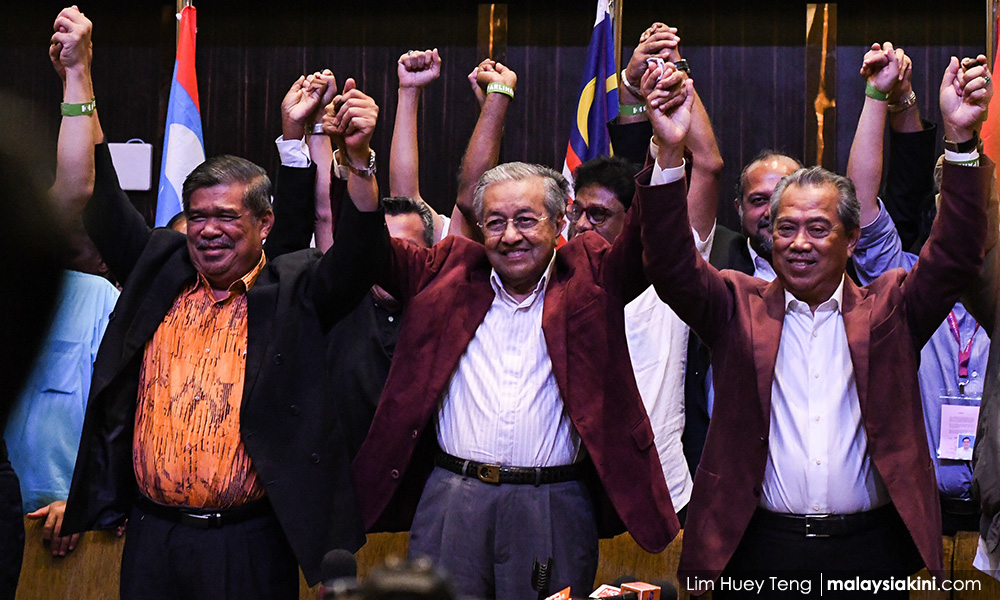
“But that’s not what change is, change happens gradually. 2018 was an important time where we started that moment of change,” Chai said, adding that it does not mean there had been no progress just because we did not get the reforms we hoped for.
“This book tries to say that if society is indeed not perfect according to your ideals, the way to change is not to wait for another five years and then vote for another government or politician.
“It’s to know that there are actions you can take now that can shape society quite substantially.
“I think that is the main message that I wanted to bring to Malaysians as well, who are very accustomed to feeling like we don’t have the ability, we need to wait for a saviour to come,” said Chai.
ALSO READ: BOOK REVIEW | Sang Kancil - a rare book of hope and deliverance
Citing another example from his book, he pointed out that villages in Baram, Sarawak would not still be intact today if not for the actions of an ordinary man.
“That was because a person, an ordinary retiree like Peter Kallang, decided that he was not going to stand for it and that he was going to fight to the very end. I think everyone can play a role in shaping society to the way that we want it.”
BOOK EXCERPT: “It’s everyone’s job to imagine the world we want to live in,” Peter said. “When we started this fight against Baram Dam, everyone said we would lose, but we did not give up. Hope, imagination, and determination can change the world.” - Chapter 6: Peter Kallang, Pg 202
‘Sang Kancil: A Tale about How Ordinary Malaysians Defied The Odds’ will be launched officially at Eslite, Starhill tomorrow at 2pm.
/file/publisher-c1a3f893382d2b2f8a9aa22a654d9c97/2023/11/ab5ce56163160b980761b69d1a21e1bf.jpg)
/file/publisher-c1a3f893382d2b2f8a9aa22a654d9c97/2023/11/0408491be6ff2ca6cf70504dc18b7449.jpg)
/file/publisher-c1a3f893382d2b2f8a9aa22a654d9c97/2023/10/ba030d96c60fac97619cda67046daf66.jpg)
/file/publisher-c1a3f893382d2b2f8a9aa22a654d9c97/2023/10/299afd5ea46c8c4505576a5c487661e6.jpg)
/file/publisher-c1a3f893382d2b2f8a9aa22a654d9c97/2023/06/2c84327da9696a31bcab96ab60ad05a3.jpg)
/file/publisher-c1a3f893382d2b2f8a9aa22a654d9c97/2023/10/468e9c5dd18b132b51a3f6b3ae19dbc4.jpg)


Are you sure you want to delete this comment?
This action cannot be undone.