


/file/publisher-c1a3f893382d2b2f8a9aa22a654d9c97/2023/11/40c95b2b9e77413098cdbac5d1fec6df.jpg)

Migrant quota fraud: Nepal embassy says it trusted M'sian govt's vetting
The phenomenon of “jobless Nepali workers with job contracts” has baffled the Nepal Embassy in Kuala Lumpur as it started receiving complaints of unemployment from its citizens, said its second secretary Prem Bahadur Budthapa.
He said the embassy is equally baffled to learn the contracts used to get migrant worker import quotas were fake, reported in a Malaysiakini’s exposé this week, and that the number of workers supplied overstripped demand.
This is because all the applications for workers were vetted and cleared by three Malaysian ministries before they arrived at the embassy for attestation, he said.
“The documents that have been cross-checked by relevant government organisations indicate they bear the approval of the...
The phenomenon of “jobless Nepali workers with job contracts” has baffled the Nepal Embassy in Kuala Lumpur as it started receiving complaints of unemployment from its citizens, said its second secretary Prem Bahadur Budthapa.
He said the embassy is equally baffled to learn the contracts used to get migrant worker import quotas were fake, reported in a Malaysiakini’s exposé this week, and that the number of workers supplied overstripped demand.
This is because all the applications for workers were vetted and cleared by three Malaysian ministries before they arrived at the embassy for attestation, he said.
“The documents that have been cross-checked by relevant government organisations indicate they bear the approval of the Malaysian government - a validation we should acknowledge and trust.
“I cannot understand the ‘fake contract’ (scandal) because we attest the applications only after the Foreign Ministry’s approval.
“How does an oversupply occur when they (ministries) allocate quota to the companies to import workers from foreign countries?” Prem asked.
Before the applications reach the Foreign Ministry, the Human Resources Ministry and Home Ministry manage them through an inscrutable process that was red-flagged in the Auditor-General's Report 2022 published Wednesday.
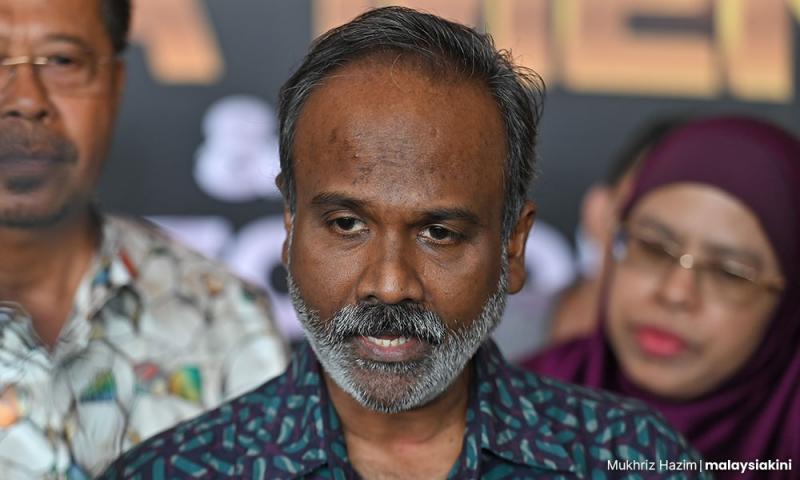
Yesterday, Human Resources Minister V Sivakumar pledged to overcome the inefficacies highlighted in the report which he attributed to previous weaknesses.
The Human Resources Ministry and Home Ministry operate One-Stop Centres and the Foreign Worker Central Management System (FWCMS) interchangeably, depending on the applications, to vet and approve migrant quota applications.
Prem was responding to Malaysiakini’s exposé that revealed how fake contracts purported to be worth millions of ringgit with non-existent companies, were used to get quotas to import more than 1,000 workers.
In one syndicate, a group of six companies obtained quotas to recruit a total of 1,625 migrant workers and among them, Star Domain Resources had secured quotas to import 980 workers.
More than 100 complaints a month
The report exposed how lax vetting by the government caused hundreds upon hundreds of workers to arrive to find there were no jobs waiting for them.
The embassy said it received complaints involving 301 cases brought in by Star Domain Resources and viewed all the cases as wage violations of unpaid salaries and not unemployment.
He said the embassy does not consider them "jobless" because they signed contracts with their employers, even though the service contracts between the employers and purported clients may be fake.
“Persons who come for work from Nepal have labour contracts and a company visa, so, therefore, are not jobless.
“We have been receiving more than 100 complaints on unpaid wages from workers who arrived in Malaysia this year,” he told Malaysiakini.
Prem said the Labour Department had also blacklisted Star Domain Resources and found new employers for the Nepali workers.
Despite coping with the deluge of applications with a small team, Prem said the embassy did carry out random checks on company applications which have already received Malaysian government approvals.
“Sometimes we visit the company, inspect workers’ hostels and we interview existing workers to check the company’s track record.
“These checks are done on applications which have been approved by the Malaysian government agencies,” he added.
Second probe on Nepali recruiter's death
Meanwhile, Prem said police had conducted a second investigation into the death of Nepali recruiter Rinji Rai, 47, who had died in Kuala Lumpur in April when he came to check on the status of workers he recruited.

Prem said a second police investigation was opened following a request from the Nepal Prime Minister’s office and the coroner, who is the Sessions Court judge, will decide the cause of death and whether to hold a public inquiry (inquest).
According to Prem, the police verbally informed him of this development but did not provide the information in black and white.
“Once I receive it (the official confirmation from the police), I will send it to the prime minister’s office and the foreign affairs ministry,” he said.
Malaysiakini’s earlier checks with the police found that the latter had ruled out foul play.
In April, Rinji was found dead in a workers’ hostel toilet in Nilai, just three days after he arrived in Kuala Lumpur to resolve the work visa issue of his recruits employed by Star Domain Resources.
This week, there have been calls for the Attorney-General’s Chambers to initiate an inquest into Rinji’s death and because it was linked to the migrant worker recruitment scandal, it should not be treated as a trivial matter.
/file/publisher-c1a3f893382d2b2f8a9aa22a654d9c97/2023/11/1646ca105f242117439800b38cd85db2.jpg)
/file/publisher-c1a3f893382d2b2f8a9aa22a654d9c97/2023/11/5721c4527ec81913c5febe98c03a07ef.jpg)
/file/1330/6cc371ca0c9a23ba5466df632bef74d0.jpeg)
/file/publisher-c1a3f893382d2b2f8a9aa22a654d9c97/2023/11/bca7155e3798036720c749b4b3b57f0d.jpg)
/file/publisher-c1a3f893382d2b2f8a9aa22a654d9c97/2019/09/7288e827415d24b18e2352b3ff6dd749.jpg)
/file/1079/4741b597bc51eb8a5e9fbf68db40d9b4.jpg)
/file/publisher-c1a3f893382d2b2f8a9aa22a654d9c97/2023/11/40c95b2b9e77413098cdbac5d1fec6df.jpg)


Report this comment
Are you sure you want to delete this comment?
This action cannot be undone.