


/file/publisher-c1a3f893382d2b2f8a9aa22a654d9c97/2022/07/3c8cf519d87c6a4190a5a8ab91f1a908.jpg)

Price control on rice to be decided next week - PM
Prime Minister Anwar Ibrahim today said the issue of price control on rice will be one of the main agenda to be discussed by the National Action Council on Cost of Living (Naccol) next week.
He said the meeting, scheduled earlier, had to be postponed to next week to include more urgent matters such as rice price control.
Prime Minister Anwar Ibrahim today said the issue of price control on rice will be one of the main agenda to be discussed by the National Action Council on Cost of Living (Naccol) next week.
He said the meeting, scheduled earlier, had to be postponed to next week to include more urgent matters such as rice price control.
“We are postponing the Naccol meeting to next week, where we will decide on the controlled price for rice.
“Although the price cannot be very low, I’m sure it can be reduced. We have to look into where the supply comes from, who the contractors are and how much profit they make,” he said in his speech at the Madani Cheapest Sales programme in Bandar Perda, Bukit Mertajam today.
He also advised the “middlemen” against profiteering as it will cause prices in the market to soar.
The prime minister said the geopolitical issues in the Suez Canal also put pressure on the price of goods, hence affecting global trade.
“We understand the action by the Houthi in Yemen, but this also causes costs to rise. This route is blocked due to the people’s anger against Israel and the war in Gaza.
“However, we will not make this an excuse. The government will find ways to reduce the burden on the people through initiatives such as the Rahmah Sale and Madani Cheapest Sale, in addition to giving assistance such as the Rahmah Cash Aid and the eBelia Rahmah,” he said.
Reducing people’s burden
Earlier, the prime minister went on a walkabout to meet traders and visitors at the Madani Cheapest Sale. He also launched the sale of Madani white rice at a price of RM30 for a 30kg packet.
According to Anwar, the price of white rice is cheaper as sales made at a platform like the Madani Cheapest Sale remove the role of middlemen.
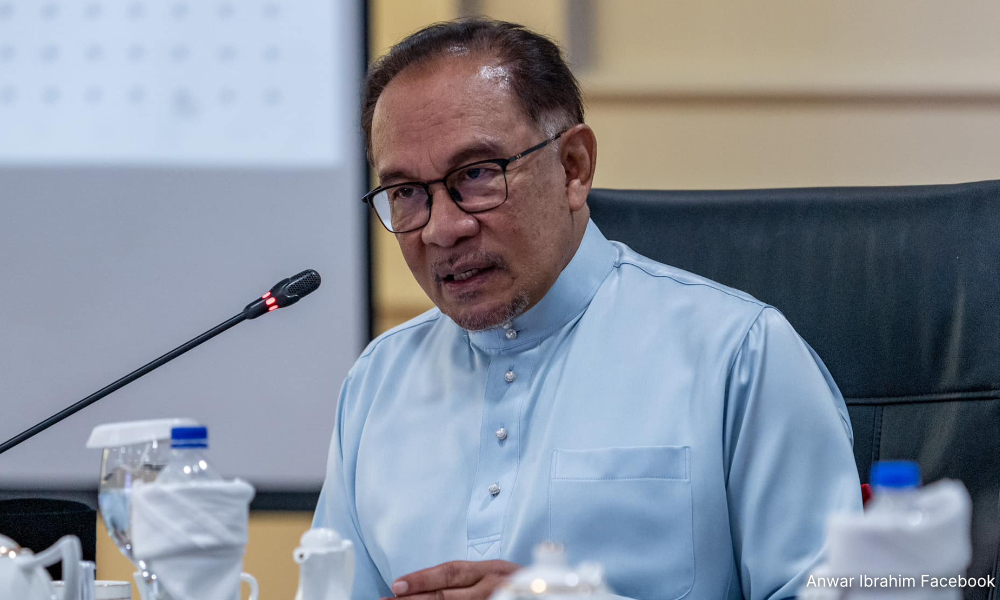
“Our inflation rate is generally low, but the people are still complaining, so we must find a way to reduce their burden,” he said.
Meanwhile, on the salary increase for civil servants, Anwar, who is also the finance minister, said a study on it will be completed this year.
“We are studying whether to raise the salary of civil servants because there has been no raise for the past 10 to 12 years,” he said.
/file/publisher-c1a3f893382d2b2f8a9aa22a654d9c97/2023/10/a082e9424027a8d895c02e68a49ff191.jpg)
/file/publisher-c1a3f893382d2b2f8a9aa22a654d9c97/2023/09/bf3002427946568bfb16d6df417f563c.jpg)
/file/publisher-c1a3f893382d2b2f8a9aa22a654d9c97/2023/10/76f8f300216b3388a3962305c606f281.jpg)
/file/publisher-c1a3f893382d2b2f8a9aa22a654d9c97/2023/11/a2f0eae661e11cf0fc56cc50ba2aee58.jpg)
/file/publisher-c1a3f893382d2b2f8a9aa22a654d9c97/2023/12/efbb77a0f34ed7eb007cba2efc491c13.jpg)
/file/publisher-c1a3f893382d2b2f8a9aa22a654d9c97/2023/11/376ce6b656350008c08f255ca82570fb.jpg)


Report this comment
Are you sure you want to delete this comment?
This action cannot be undone.