


/file/publisher-c1a3f893382d2b2f8a9aa22a654d9c97/2024/06/1786c51a3950eb20e4d1de818b9dd5c3.jpg)

China premier's visit to M'sia will strengthen bilateral ties: Analysts
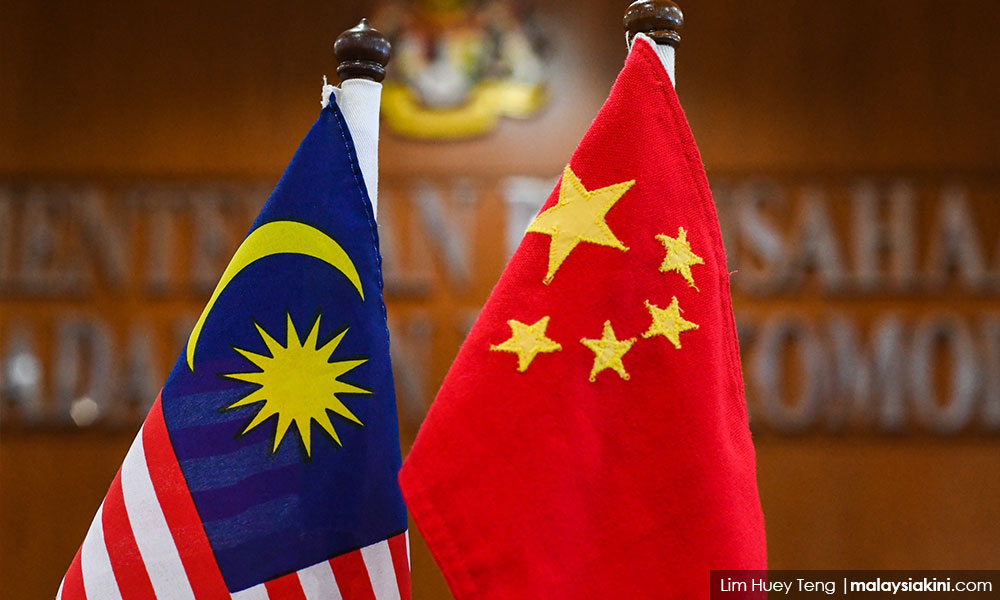
China Premier Li Qiang's visit to Malaysia next week presents a significant opportunity to strengthen the robust ties developed between the two countries over the past 50 years and explore new avenues for collaboration.
Pacific Research Centre of Malaysia principal adviser Oh Ei Sun highlighted the substantial growth of Malaysia-China relations, which have evolved from diplomatic ties to extensive economic interactions in trade and investment.
"China is Malaysia's largest trading partner and Malaysia has consistently been...
China Premier Li Qiang's visit to Malaysia next week presents a significant opportunity to strengthen the robust ties developed between the two countries over the past 50 years and explore new avenues for collaboration.
Pacific Research Centre of Malaysia principal adviser Oh Ei Sun highlighted the substantial growth of Malaysia-China relations, which have evolved from diplomatic ties to extensive economic interactions in trade and investment.
"China is Malaysia's largest trading partner and Malaysia has consistently been China's largest trading partner in Southeast Asia.
“This strong foundation provides a solid basis for even closer cooperation," he told Bernama.
Li (above), who assumed office last year, is scheduled to visit Malaysia from June 18 to 20.
Oh, a senior fellow at the Singapore Institute of International Affairs, elaborated that Li’s visit offers potential for enhanced collaboration, particularly within the Belt and Road Initiative (BRI) framework, to facilitate joint projects that mutually benefit both nations.
"For instance, the High-Speed Rail (HSR) connecting Malaysia and Singapore requires investment and technology for construction, which could mutually benefit both countries. If the railway were linked to China, trade facilitation would be greatly enhanced," said the Sabah Malaysia-China Friendship Association president.
In the realm of technology, Oh emphasised Malaysia's interest in leveraging China's assistance to advance its artificial intelligence (AI) capabilities, acknowledging China's expertise in this field. He also proposed that more Chinese universities establish branch campuses in Malaysia.
"I was teaching at Universiti Malaya last semester and saw a lot of Chinese students there, so I think it is time for more Chinese universities to open their branch campuses here.
“We from the Malaysian side should also open university branch campuses in China, which would upgrade our educational engagement," he said.
Zaid Ahmad from Universiti Putra Malaysia's Human Ecology Faculty noted that Li’s meeting with Prime Minister Anwar Ibrahim serves as a platform to reinforce mutual commitment to diplomatic principles that prioritise respect, particularly respecting Malaysia's sovereignty as a nation.
He concurred with Oh that such visits present substantial opportunities to bolster cooperation in digital technology development, such as AI, from which Malaysia can benefit.
"This visit not only strengthens bilateral relations in the education and digital technology sectors but also enhances Malaysia's ability to develop and implement AI technology domestically," he said.
Strategic understanding
Geostrategist and senior fellow at the Nusantara Academy of Strategic Research (NASR) Azmi Hassan highlighted that Li’s official visit underscores his dedication to solidifying the 50-year Malaysia-China diplomatic relations at both leadership and governmental levels.
He stressed that Malaysia should use this familiarity to boost cooperation with China, especially through BRI and swiftly conclude negotiations for Asean-China Free Trade Area (ACFTA) 3.0.
"We require AI technology, and through ACFTA 3.0, China can aid us at competitive or lower costs than Western countries.
“Thus, it's crucial for us to establish a comprehensive and strategic understanding between Malaysia and China," he said.
Malaysia and China formally established bilateral relations on May 31, 1974, through a joint statement signed by Malaysia's second prime minister Abdul Razak Hussein, and China's then premier Chou En-Lai.
– Bernama
/file/publisher-c1a3f893382d2b2f8a9aa22a654d9c97/2023/10/ecd0f8b28088b8000a2fd5d408712443.jpg)
/file/publisher-c1a3f893382d2b2f8a9aa22a654d9c97/2024/06/818db70ae1127798facae40686ab3287.jpg)
/file/1212/c93e2b3f9dcf99c5d847d16f53ddc515.jpeg)
/file/publisher-c1a3f893382d2b2f8a9aa22a654d9c97/2024/02/9e844c984e985a3d2ab5e66bbb5cc135.jpg)


Are you sure you want to delete this comment?
This action cannot be undone.