


/file/publisher-c1a3f893382d2b2f8a9aa22a654d9c97/2024/06/55677025e73d4d86e5c5cad4acf0bc5f.jpg)

Citizenship amendments must be retroactive - Family Frontiers
A network of Malaysian mothers fighting for their children’s right to citizenship urged the government to ensure that proposed amendments to the Federal Constitution will be applied retroactively.
Family Frontiers exco member Suri Kempe cited upcoming debates on the Constitutional Amendment Bill 2024, expected to take place in the Dewan Rakyat session later this month.
A network of Malaysian mothers fighting for their children’s right to citizenship urged the government to ensure that proposed amendments to the Federal Constitution will be applied retroactively.
Family Frontiers exco member Suri Kempe cited upcoming debates on the Constitutional Amendment Bill 2024, expected to take place in the Dewan Rakyat session later this month.
“Unfortunately, if the bill is passed, these amendments will not be applied retroactively.
“This means children born overseas to Malaysian mothers (and foreign fathers) before the (amended) law is passed will not benefit from the amendments and they will remain as non-citizens.
“The amendments will only apply to children born (to Malaysian mothers overseas) after the amendments are gazetted,” said Suri at a press conference held in Kuala Lumpur with several representatives from the Malaysian Citizenship Rights Alliance.
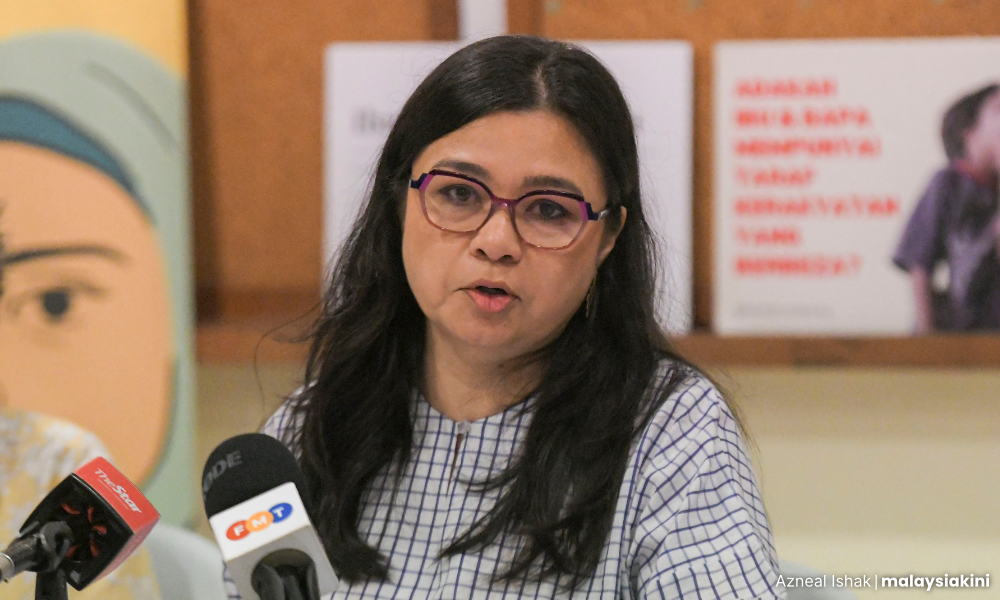
Part of the proposed amendments include provisions under Article 14 and Article 15 of the Federal Constitution on citizenship rights.
Suri said Family Frontiers through the group’s network has recorded 40 rejected citizenship applications under Section 15(2) of the Federal Constitution, 34 of which were submitted by mothers currently residing abroad and married to a foreign spouse.
She noted that the mothers were also not informed by the National Registration Department of the reasons for the rejection, contrary to the reported promise by Home Minister Saifuddin Nasution Ismail in March this year.
"We are not sure if residing abroad is a reason for the rejection because residency (in Malaysia) is not a pre-condition for their applications,” said Suri, adding that the most recent rejection recorded by Family Frontiers was dated last month.
In March, Saifuddin touted a “super majority” of 80 percent approvals from 3,903 citizenship applications under Article 15(2) of the Federal Constitution involving individuals under 21.
He said the rest were rejected because they were “incomplete and didn’t pass the security screening process”.
Mothers’ woe
Family Frontiers vice-president Chee Yoke Ling said the retroactive aspect of the amendments is still subject to the outcome of an ongoing legal challenge in the Federal Court.
In 2022, Family Frontiers and six Malaysian mothers appealed against a Court of Appeal’s decision which overturned a High Court ruling in their favour - that children born overseas to Malaysian mothers and foreign fathers are automatically entitled to receive Malaysian citizenship.
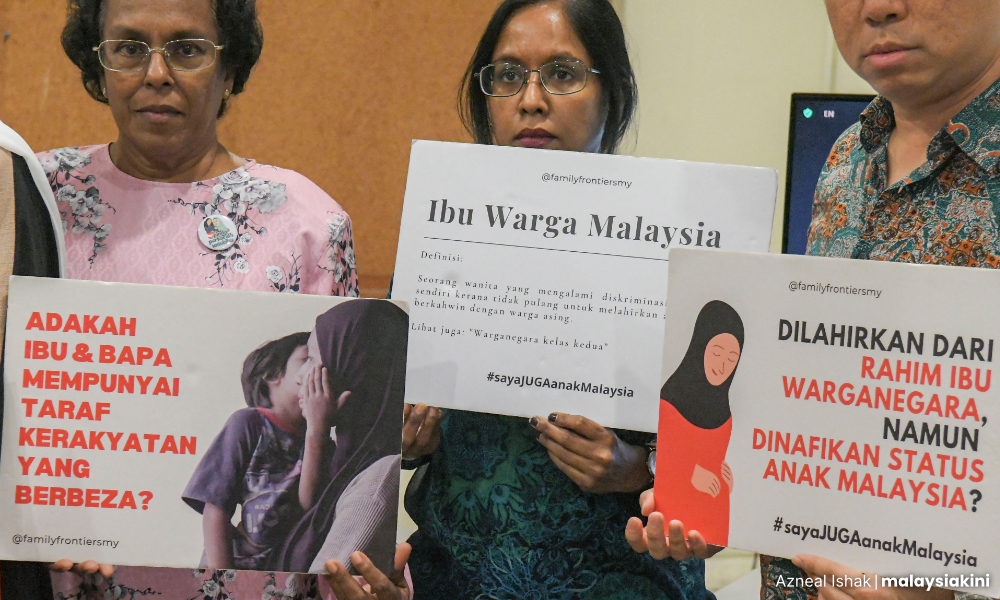
"The High Court decision said that women are entitled, it is our right to pass on citizenship.
"With that type of decision, there is no limit to the time, and it applies to all children (with pending citizenship applications),” said Chee.
Further, Suri said there are ongoing engagements with experts and lawmakers to push for the incorporation of their proposals into upcoming debates on the citizenship amendment bill, including the possibility of additional scrutiny by a Parliamentary Select Committee.
“We believe in the parliamentary process. We have faith in it,” she added.
At the press conference, several mothers whose citizenship applications for their children have been rejected shared a common plight of not being informed of grounds for the rejection.
They said the rejections came despite their applications being made upon the advice of Malaysian missions in their countries of residents, including on the necessary procedures.
On Sunday, Saifuddin said priority to solving citizenship applications was given to cases involving illegitimate and adopted children under Article 15A of the Federal Constitution.
This was because applications involving the two categories were the highest, followed by children born abroad to Malaysian women married to foreigners.
/file/publisher-c1a3f893382d2b2f8a9aa22a654d9c97/2024/06/b022849170f448aea0d40c3b1eda7a4f.jpg)
/file/publisher-c1a3f893382d2b2f8a9aa22a654d9c97/2019/10/bed6e9a84635842334eb3e0b216d1584.jpg)
/file/publisher-c1a3f893382d2b2f8a9aa22a654d9c97/2024/02/64dd48f7d10fee3982217d8f32b7666b.jpg)
/file/publisher-c1a3f893382d2b2f8a9aa22a654d9c97/2024/03/a653a53599b5d1712086739681e83665.jpg)
/file/publisher-c1a3f893382d2b2f8a9aa22a654d9c97/2024/04/a0bb7115e25714eb3de72ad0c967fd33.jpg)
/file/publisher-c1a3f893382d2b2f8a9aa22a654d9c97/2021/07/5b7a143287301b9c9fe45c2010a00bdb.jpg)


Are you sure you want to delete this comment?
This action cannot be undone.