


/file/publisher-c1a3f893382d2b2f8a9aa22a654d9c97/2024/05/6489662f754b7e756f916e383d65da3d.jpg)

Behind the silent roar in e-hailing driver 'assault' case
INTERVIEW | The recent alleged assault implicating one of Johor Regent Tunku Ismail Sultan Ibrahim’s escorts sparked questions about police mishandling the case and concerns about media censorship.
What is certain is that discrepancies over the incident might not have come to light were it not for the role played by the Malaysian Deaf Advocacy and Wellbeing Organisation (Dawn).
INTERVIEW | The recent alleged assault implicating one of Johor Regent Tunku Ismail Sultan Ibrahim’s escorts sparked questions about police mishandling the case and concerns about media censorship.
What is certain is that discrepancies over the incident might not have come to light were it not for the role played by the Malaysian Deaf Advocacy and Wellbeing Organisation (Dawn).
Dawn issued a statement claiming that the alleged victim, Ong Ing Keong, had come under pressure to drop the case from the police.
In an interview, Dawn’s co-founder and secretary-general Anthony Chong told Malaysiakini that his group was established to help empower and educate the deaf and mute community on how to protect themselves.
He suggested that the incident might just be the tip of the iceberg, with the deaf and mute community in the country long being “voiceless” due to the rarity of sign language interpreters.
This makes it difficult for them to communicate when dealing with public departments such as police stations or hospitals, leading to miscommunication and misunderstandings.
Report process was ‘fishy’
Chong recounted in the interview that upon first hearing about Ing Keong’s experience at the police station, he felt that “something was wrong”.
“After I (roughly) understood the situation, I still felt a bit unclear... I thought about it and felt that something seemed off,” Chong said.
He then personally asked Ing Keong to explain the incident and concluded that the police’s behaviour during the reporting process might have been “improper”, which prompted him to write a statement to clarify the situation to the public.
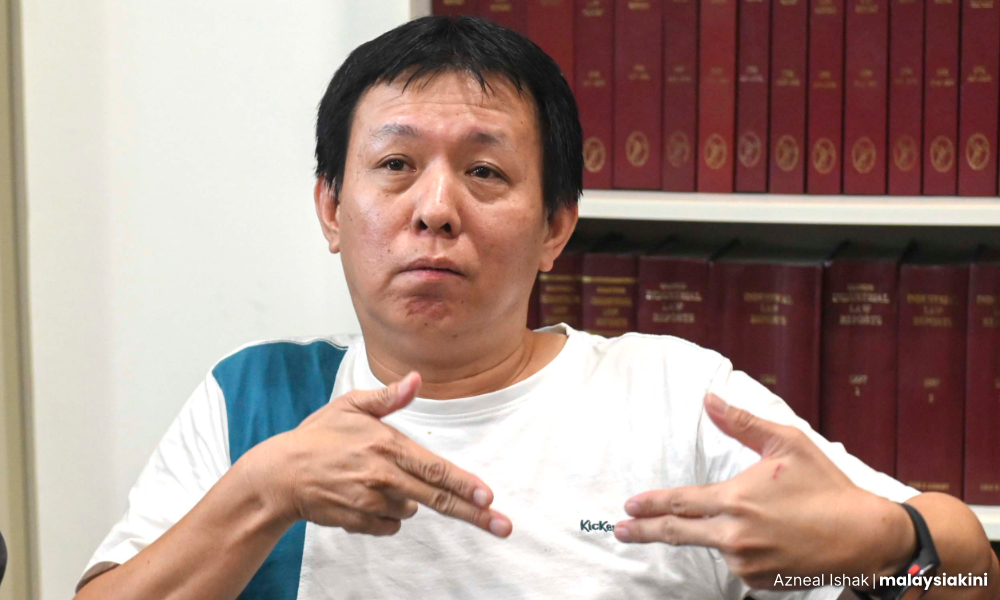
Dawn’s statement on May 30, the day after the assault, claimed that the police had pressured Ing Keong, demanding that he hand over his phone to continue the investigation.
The statement also highlighted for the first time that the police had prepared three reports for Ing Keong to sign without any translation or explanation.
Chong said that deaf individuals often feel helpless and afraid when dealing with the police and, trusting their authority, they tend to follow instructions and sign documents.
“The deaf don’t know how to protect themselves, so they become very scared and think that as long as they sign, following what the police say, (then) everything will be fine,” he said.
“I hope that deaf individuals can improve their situation and protect themselves. Through workshops or talks… we can provide them with knowledge.
“For example, what are the police's standard operating procedures; what should we do first when we have a car accident and need police assistance,” said Chong on Malaysiakini’s Chinese podcast, available on YouTube, Spotify, and Apple Podcasts.
Chong used sign language during the interview with help from interpreter Jonah Ong while Malaysiakini journalist Low Choon Chyuan hosted the episode.
Communication issues abound
Chong said that he does not intend to make judgments over the assault case but he believes there were “communication issues” involved.
“Because I know that the VIP’s police escort or bodyguard also has a responsibility, I also know that their job is to protect the VIP.
“But our Grab driver is deaf and there were communication issues in the process that led to the Grab driver being assaulted,” he claimed.
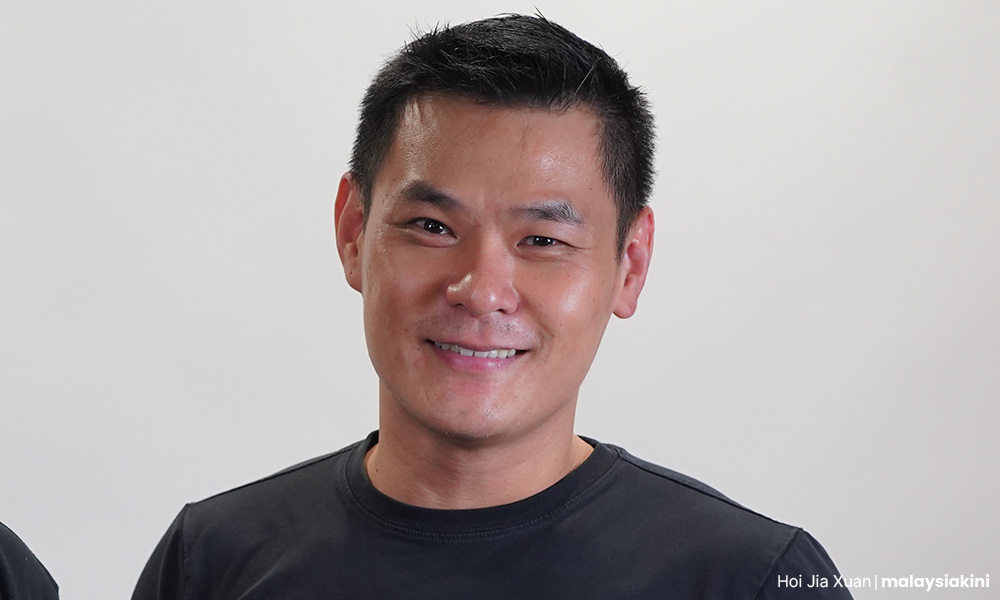
Chong said there was no interpreter present at the scene, so there could have been communication issues between Ing Keong and the police.
“I also don’t know where the communication problem occurred.
“The person who committed the assault might know what happened but the person who was assaulted might not know what happened,” he added.
Chong said that the disabilities of deaf and mute individuals are not immediately visible and this may give rise to more communication issues.
“This deficiency is not visible... but generally, when we begin to communicate with each other, during conversations, people realise that we are deaf and mute.”
He mentioned that not being understood is a daily occurrence for deaf and mute individuals, whether it’s reporting to the police, seeking medical treatment at hospitals, or dealing with government departments, where there is no sign language translation service available.
“It’s not just the police, hospitals and various service providers, especially government agencies, need to understand us. Our country has deaf and mute individuals.
“They should provide translation services. Without translation services, they cannot communicate with us deaf and mute individuals, cannot understand our needs, and this can lead to the kinds of incidents we just discussed.”
Lack of sign language support
Chong studied in the United States, where he was inspired by the detailed policies protecting the deaf community. These include regulations stipulating that in emergencies involving deaf individuals, sign language interpreters must be provided.
“I once encountered an emergency situation in the US. Before they urgently took me to the hospital, they had already called for a sign language interpreter to come to the hospital. So, when I arrived at the hospital, the sign language interpreter was already there,” he recalled.
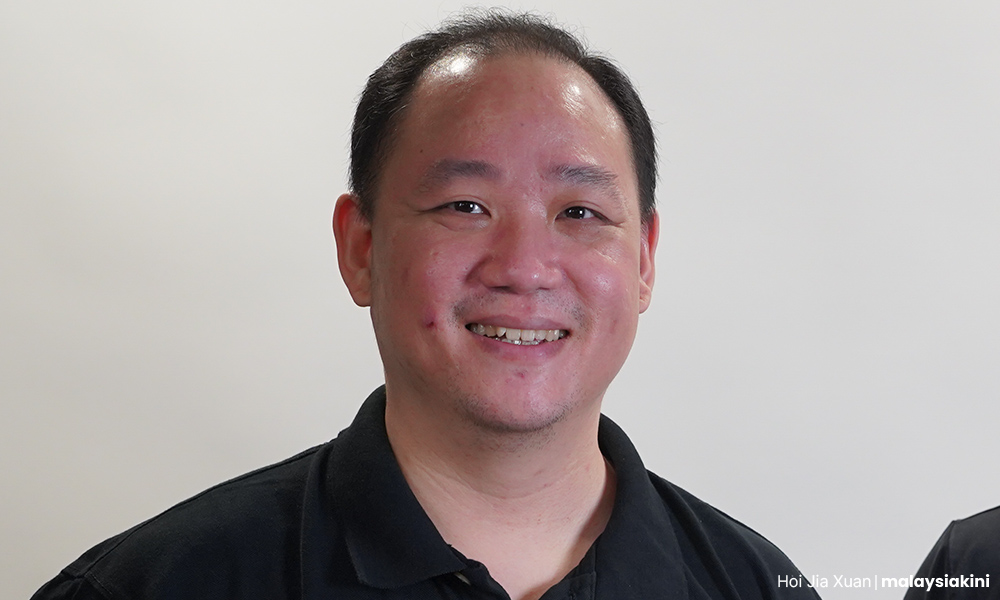
He added that the US government also mandated the presence of sign language interpreters when deaf individuals report to police stations.
If there is a communication error due to the absence of an interpreter, the officers are held accountable.
He lamented that the Malaysian government lacks policies to assist the deaf community. Here, individuals have to be “sendiri pandai-pandai”(be alert) when visiting doctors.
Besides communication challenges, deaf individuals also face many restrictions in their lives, he said.
Chong pointed out that some deaf individuals are born into hearing families and they often do not start learning sign language until primary school. Due to the late start in learning sign language, their language acquisition abilities may be limited.
Chong mentioned that it took him eight years to complete his primary education, after which he attended special education classes in mainstream schools.
He said that since his classmates and teachers were all hearing and did not use sign language, he had to rely on lip-reading to learn.
“Before, my sign language skills were not very good, so I read lips, I watched their lips, but sometimes they spoke very fast... from Form 1 to Form 5, I learned by myself.”
Despite Chong’s strong interest in learning, his handicap often frustrated teachers, so “many times, I was kicked out by the teachers.”
Different systems - KTBM v BIM
In addition, the widespread use of sign language in Malaysia differs from what is taught in schools, making it difficult for deaf individuals to learn sign language effectively.
Chong pointed out that within the Malaysian education system, special education teachers instruct deaf children in Kod Tangan Bahasa Malaysia (KTBM), a system of gestures based on Malay vocabulary.

However, the Malaysian deaf community predominantly uses Bahasa Isyarat Malaysia (BIM), which is a standardised sign language used across Malaysia and recognised as the official language for the deaf under the Persons with Disabilities Act 2008 (PWD).
“KTBM is a system of gestures, not a true language. KTBM is still used in schools to teach deaf students and teachers still believe that KTBM can help deaf students grasp Malay.
“But the reality is that most deaf students fail the Malay language subjects in their UPSR, PMR, and SPM exams.
“BIM is Malaysia’s official sign language and when deaf individuals use their grammar with sign language, they are using BIM,” explained Chong.
Interpreters’ expressions are key
Chong believed that interpreters can serve as a voice for deaf individuals, enabling them to express their concerns and issues rightly.
“For example, when we see a doctor, we often feel like they don’t take us seriously like they just give us a hasty diagnosis.
“With an interpreter, we can articulate and tell them our actual problems.”
However, Chong also cautioned against seeing interpreters as spokespersons for deaf people, saying they are only facilitators.
During interviews, Chong often becomes animated, using facial expressions, eye contact, hand movements, and gestures to convey his viewpoints.
He remarked that sign language interpreters have a high technical challenge as they must not only translate words and tones but also keep up with the emotions of deaf individuals.
“Interpreters need to follow our mannerisms, body language, gestures, and rich expressions.
“If it’s too monotonous, it’s not suitable. If the interpreter can’t match the emotional intensity, they can’t convey it,” said Chong.
/file/publisher-c1a3f893382d2b2f8a9aa22a654d9c97/2024/06/a0e1dc199c401e321b365c7e0fc43329.jpg)
/file/publisher-c1a3f893382d2b2f8a9aa22a654d9c97/2024/05/b434a89bed3f06c6155a837448f5ae68.jpg)
/file/publisher-c1a3f893382d2b2f8a9aa22a654d9c97/2024/05/38d12bc8e7ea533cd486368834f12ede.jpg)
/file/publisher-c1a3f893382d2b2f8a9aa22a654d9c97/2024/04/6570574ea2a9e115ee6738e10d5e4233.jpg)
/file/publisher-c1a3f893382d2b2f8a9aa22a654d9c97/2024/03/5682ea1e5a949675676d2b67409fe3bc.jpg)


Are you sure you want to delete this comment?
This action cannot be undone.