


/file/publisher-c1a3f893382d2b2f8a9aa22a654d9c97/2021/05/13f82ca5faedb34f8af43d6a9eadd342.jpg)

Set up legal framework for safe social media ecosystem - experts
Social media has its benefits, but there is also a dark side to it when it is misused exposing users to risks including financial losses, warranting calls for regulation on platform providers.
Many have fallen victim to online fraud, cyberbullying, misuse of personal information, violation of privacy and sex-related crimes such as child grooming, prostitution and the sale of pornography.
Malaysian Digital Foundation cyber security analyst Mohammad Ezaly Iman Ramli said laws to...
Social media has its benefits, but there is also a dark side to it when it is misused exposing users to risks including financial losses, warranting calls for regulation on platform providers.
Many have fallen victim to online fraud, cyberbullying, misuse of personal information, violation of privacy and sex-related crimes such as child grooming, prostitution and the sale of pornography.
Malaysian Digital Foundation cyber security analyst Mohammad Ezaly Iman Ramli said laws to regulate social media operators like Facebook, TikTok, X, Telegram and WhatsApp should be established to ensure control of content veering towards such criminal aspects.
In its bid to regulate social media operators, he said the government must identify the legal responsibilities of these entities, such as requiring them to reject or block advertisements promoting illegal activities including online gambling and bogus investment schemes.
“This move can save many social media users from falling victim to online crimes, in addition to creating a safe social media ecosystem that people of all ages can use,” he told Bernama.
It is learnt that regulatory frameworks for online platform providers have been introduced in countries like Australia, Indonesia, the European Union, Singapore and the UK.
Adhere to local laws
M Selvakumar, a cybersecurity expert from Universiti Sains Malaysia (USM), believes that laws to regulate social media should have been established years ago following the increased use of the platforms in daily life.
“Social media companies, most of which are based in the United States, have philosophies and principles that are different from those in Malaysia, so we need laws to ensure that the content uploaded is in line with the culture and norms of our people,” he said.
The time has come for the government to be firm with social media and make them share the responsibility of filtering uploaded content so that it does not violate the country’s laws, he added.
“Illegal content is only taken down if there is a complaint or request from the authorities. The advancement of artificial intelligence technology over the past two years can be used to filter content,” he said.
Malaysia Cyber Consumer Association president Siraj Jalil concurs, saying that the Communications and Multimedia Act 1998 and the Cyber Security Act 2024 could be amended and be used as a reference in the regulatory framework for social media operators.
“These operators should be held accountable to ensure they provide sufficient operational and technological resources to enable them to detect content that could be harmful to users,” he said.
Siraj said regulatory methods for social media operators should follow local governance, culture and practices, without referring to foreign countries, as Malaysia has its own identity.
He explained that there are no specific laws against social media platform operators other than cooperation and discretion to remove content that violates Malaysian laws.
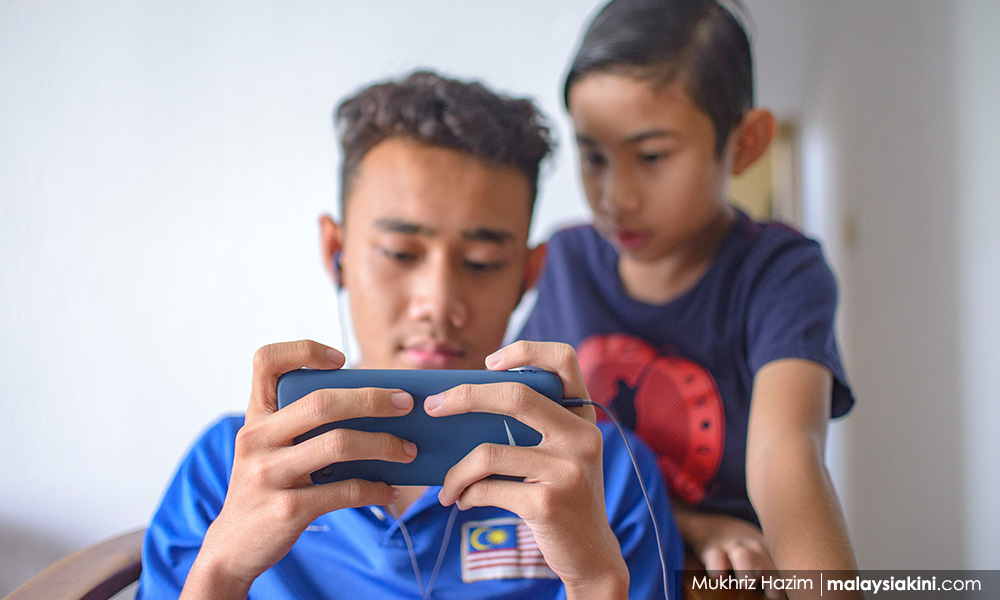
With a regulatory framework on social media providers, the government could make it compulsory for them to introduce an effective monitoring system to ensure children below 13 are not allowed to create accounts, he said.
The regulatory framework could also make it compulsory for platform providers to immediately block and report any sexual grooming activities occurring on their platforms to the authorities, he added.
“Establishing regulatory methods against social media operators will not affect users but rather protect them from becoming victims of online crime,” he said.
Rising cases
Based on police records through the Bukit Aman Commercial Crime Investigation Department, an average of 92 commercial crime cases are received daily based on the 14,051 commercial crime cases investigated as of June 2, with a total loss of RM959,041,692.
Bukit Aman Criminal Investigation Department’s Sexual, Women and Child Investigation Division (D11) principal assistant director Siti Kamsiah Hassan said rape cases involving underage girls had shown a significant increase in the last three years and most of it began from grooming via social media, including chat applications like WhatsApp.
Police statistics recorded a total of 1,590 underage rape cases throughout 2023, an increase compared to 1,388 cases in 2022 and 1,299 cases in 2021.
Based on investigations, most victims told police that they got to know the perpetrators through social media, she added.
- Bernama
/file/publisher-c1a3f893382d2b2f8a9aa22a654d9c97/2021/05/d5e6ac159e47acc3c2e99603de3a51a8.jpg)
/file/publisher-c1a3f893382d2b2f8a9aa22a654d9c97/2022/12/10a8626768294dfdc9ab5836a263fdbe.jpg)
/file/publisher-c1a3f893382d2b2f8a9aa22a654d9c97/2020/06/97104b47effb15d0aa222a8107d59d90.jpg)
/file/publisher-c1a3f893382d2b2f8a9aa22a654d9c97/2022/07/9a9a66e5a91064811924552ff98ee9ed.jpg)


Are you sure you want to delete this comment?
This action cannot be undone.