


/file/publisher-c1a3f893382d2b2f8a9aa22a654d9c97/2023/12/005c3a7a35a12b930fd26096ef0080c6.jpg)

See you in court, Umno sec-gen tells Rembia rep
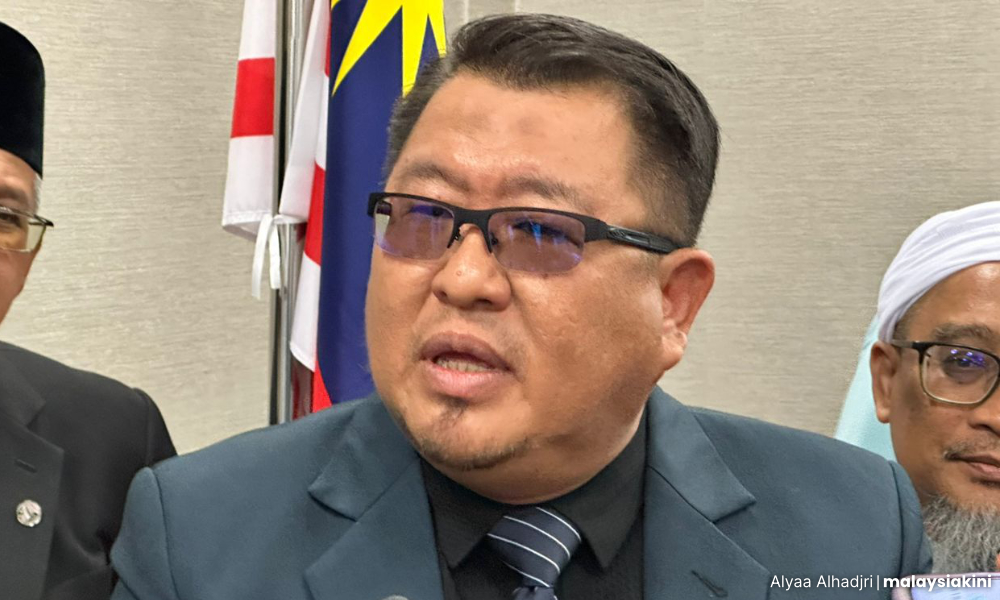
Umno secretary-general Asyraf Wajdi Dusuki has challenged Rembia assemblyperson Muhammad Jailani Khamis to a date in court over the latter’s defection to PAS.
According to Asyraf, he was called to explain to clear the confusion surrounding Jailani’s remark that he has nothing to do anymore with Umno or BN, after joining the Islamist party in June last year.
In a press conference...
Umno secretary-general Asyraf Wajdi Dusuki has challenged Rembia assemblyperson Muhammad Jailani Khamis to a date in court over the latter’s defection to PAS.
According to Asyraf (above), he was called to explain to clear the confusion surrounding Jailani’s remark that he has nothing to do anymore with Umno or BN, after joining the Islamist party in June last year.
In a press conference on Thursday, Jailani, who is serving a six-year suspension from Umno, said he defected from the Malacca government after state Chief Minister Ab Rauf Yusoh broke the promises made to the people in the 2021 state election manifesto.
In a video posted on social media, Asyraf cited and showed the original copy of the contract signed by Jailani, which stipulates that all party representatives must relinquish their membership if they go against the party’s decision, and pay RM100 million to the party as compensation.
“This is valid, as there is a precedent where the High Court ordered (former MP) Zuraida (Kamaruddin) to pay RM10 million to PKR.
“But in BN’s contract, it’s not RM10 million, but RM100 million,” he said.
Asyraf further cited provisions in the Umno constitution that stipulate a party member’s membership automatically ceases when he or she becomes a member of another party, joins another coalition which does not have Umno as a component, or decides to become independent.
“The constitution was amended before the last general election. This is what sets Umno apart from Bersatu or PAS.
“So, consider your options. Don’t look up only after you have knocked your head. See you in court.”
In an immediate response, Jailani said he was ready for a legal battle.
“I am ready to clear this up in court,” he said.
On July 16, PAS announced that Jailani had joined the Islamist party since June last year.
PAS secretary-general Takiyuddin Hassan said Jailani’s joining the party would not affect his position as an assemblyperson because the Malacca assembly had not enforced the anti-hopping law at the time.
/file/publisher-c1a3f893382d2b2f8a9aa22a654d9c97/2024/07/df292f11f868381091f6b4c5734002c5.jpg)
/file/publisher-c1a3f893382d2b2f8a9aa22a654d9c97/2024/07/23a78b2699b88b0f412c8ff1f6ccc874.jpg)
/file/publisher-c1a3f893382d2b2f8a9aa22a654d9c97/2024/06/291a59b69a4a3e04ec14a494d825ff6d.jpg)
/file/publisher-c1a3f893382d2b2f8a9aa22a654d9c97/2023/06/72d0371f4bcd8460111f29f1d642e862.jpg)
/file/publisher-c1a3f893382d2b2f8a9aa22a654d9c97/2023/09/46874693da439958159ca6ab1d60d30e.jpg)
/file/publisher-c1a3f893382d2b2f8a9aa22a654d9c97/2023/08/c51db93c47721efecac6a71a5594fe06.jpg)


Are you sure you want to delete this comment?
This action cannot be undone.