


/file/publisher-c1a3f893382d2b2f8a9aa22a654d9c97/2024/07/eaaa202a1b7c1dbf95df442beb80b07c.jpg)

Expert: Don't allow high-risk pollution sources in upstream areas
Recent water cuts caused by pollution prove we should not allow high-risk pollution sources in upstream locations, said water quality and modelling specialist Zaki Zainudin.
The professor stressed that this was critical to protect catchment areas.
“I’ve said it before that...
Recent water cuts caused by pollution prove we should not allow high-risk pollution sources in upstream locations, said water quality and modelling specialist Zaki Zainudin.
The professor stressed that this was critical to protect catchment areas.
“I’ve said it before that high-risk pollution sources should not be allowed upstream of water intakes, particularly the major intakes.
“This is in tandem with the concept of ‘catchment protection’,” he said on Facebook.
Status quo unacceptable
Zaki also dismissed the excuse that water supply disruptions due to pollution also happen in other countries and said that the acceptance of such narratives will only incur further regress.
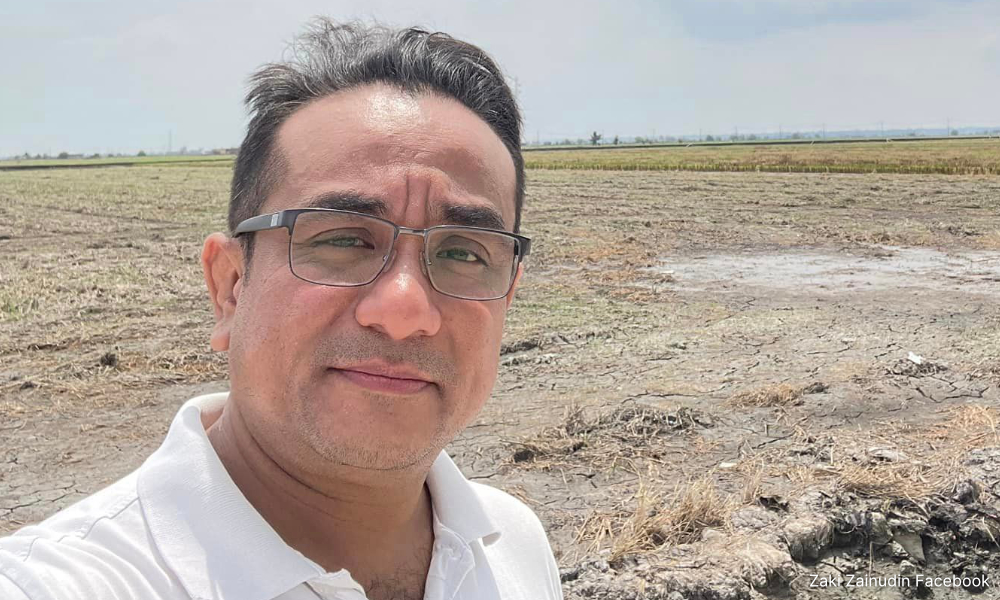
“Are these quarters trying to imply that the public should just learn to live with disruptions due to pollution and that the authorities/government should accept disruption as pollution is an inevitable fact?
“Instead of accepting such twisted narratives, we should look at examples of how some countries managed to effectively protect their water catchment areas, as prevention is better than cure,” he said.
It may even absolve the responsibility of many parties involved in catchment protection and water supply, Zaki added.
Authorities probing factory
On Thursday, Air Selangor temporarily shut down four water treatment plants in the state due to odour pollution at Sungai Kundang and Sungai Sembah, causing unscheduled water supply disruptions in several locations.
Yesterday, Environment Department (DOE) director-general Wan Abdul Latiff Wan Jaffar revealed that the alleged polluter is a factory processing acrylic material at the Jalan Kampung Orang Asli industrial area in Kuang, Rawang.
Selangor state executive councillor for environment Jamaliah Jamaluddin stated that the factory is still under investigation, even after the Selayang Municipal Council (MPS) had suspended the factory’s licence and fined the owner RM1,000.
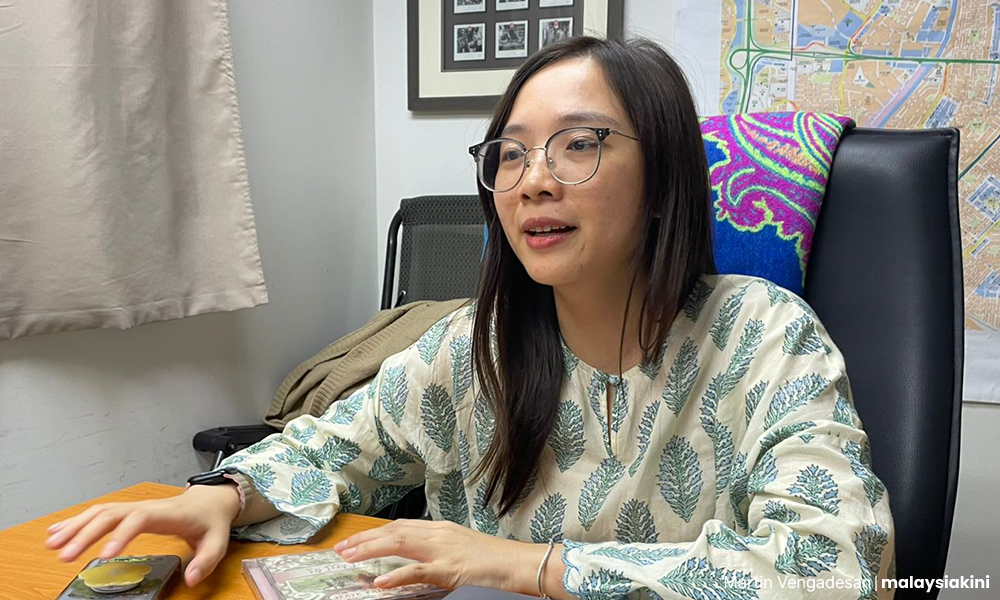
“The Selangor Water Management Authority (Luas) is completing its investigation under Section 79(1) of the Luas Enactment 1999, where those involved can be fined between RM200,000 and RM1 million and imprisoned for not more than three years.
“The DOE has also arrested two individuals to assist in its investigation under Section 25(1) of the Environmental Quality Act 1974, which carries a mandatory jail sentence of up to five years and a fine not exceeding RM10 million,” she said earlier today.
Jamaliah added that the involved agencies will meet soon to decide on follow-up actions.
/file/publisher-c1a3f893382d2b2f8a9aa22a654d9c97/2023/05/4fd3d655c807cb2654d05fd13424b5bb.jpg)
/file/publisher-c1a3f893382d2b2f8a9aa22a654d9c97/2024/07/b3122a1fd5d8577216f1e0a7eb025dba.jpg)
/file/publisher-c1a3f893382d2b2f8a9aa22a654d9c97/2020/09/8dbba42c3f56f399fbf3e8351d6e63fa.jpg)
/file/publisher-c1a3f893382d2b2f8a9aa22a654d9c97/2020/09/c22abf812a2a02bdf36ad76edb30226c.jpg)


Are you sure you want to delete this comment?
This action cannot be undone.