


/file/publisher-c1a3f893382d2b2f8a9aa22a654d9c97/2023/08/ce446673ded8a7e31a541fa45f0819da.jpg)

Bersatu's own issues hinder mediation efforts with PAS, Gerakan
Despite assurances that relations between PAS and Gerakan were back to normal yesterday, some observers say it would be difficult for Bersatu to prevent further flare-ups between the two parties.
Universiti Kebangsaan Malaysia’s Political Science senior lecturer Jamaie Hamil said unresolved internal issues within Bersatu are likely to complicate efforts to broker peace between its Perikatan Nasional partners.
Despite assurances that relations between PAS and Gerakan were back to normal yesterday, some observers say it would be difficult for Bersatu to prevent further flare-ups between the two parties.
Universiti Kebangsaan Malaysia’s Political Science senior lecturer Jamaie Hamil said unresolved internal issues within Bersatu are likely to complicate efforts to broker peace between its Perikatan Nasional partners.
“It is unclear who the (real) leader of Bersatu is right now, if it is Muhyiddin Yassin or Hamzah Zainudin,” he told Malaysiakini yesterday.
The internal polemic, he said, was evident when Bersatu “structured” its leadership by sidelining its deputy president Ahmad Faizal Azumu to make room for Hamzah.
Meanwhile, Selangor Bersatu chief Azmin Ali was offered Hamzah’s secretary-general position in a compromise.

Elaborating on the matter, Jamaie stated that some might see Bersatu attempting to play a role similar to PKR, which once acted as a mediator to cool tensions between PAS and DAP in the previous Pakatan Rakyat coalition.
However, he noted that the circumstances then and now are different.
“During the Pakatan Rakyat era, PAS and PKR had two significant but moderate leaders - Anwar Ibrahim and Nik Abdul Aziz Nik Mat.
“Both of them - especially Nik Aziz - managed to soften DAP during disputes with PAS.
“Now, when Bersatu is experiencing a leadership crisis, PAS also lacks a moderate leader to ease the conflicts in PN,” he said.
PAS acts ‘excessively’
Jamaie also added that the challenge of resolving conflicts between component parties becomes an uphill battle when it involves PAS.
“PAS is a party that is hard to control due to its extreme nature. Any party that has ever allied with PAS must have experienced this.
“There needs to be a leader with true stature to solve such issues,” he said.
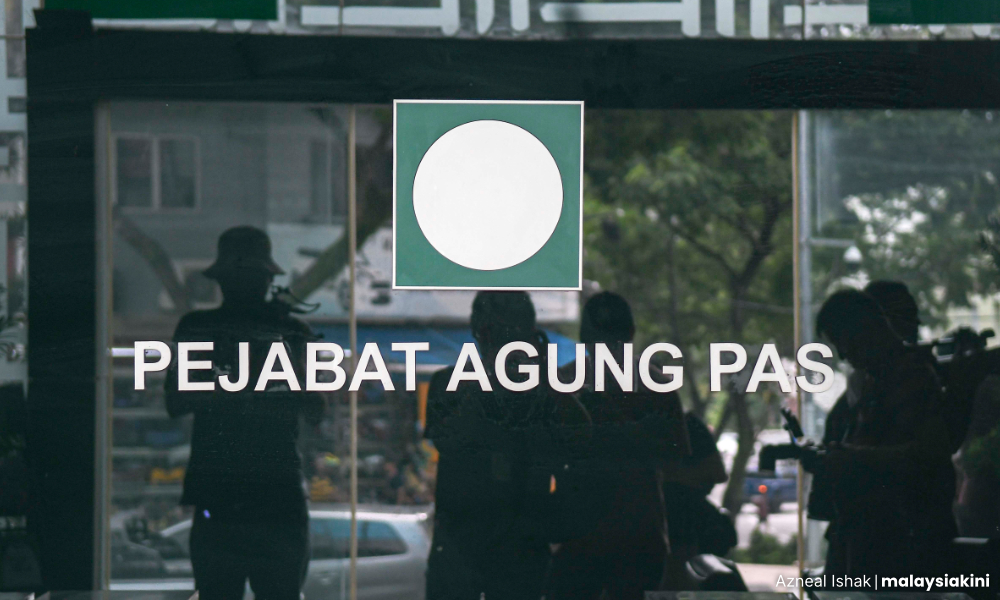
Gerakan and PAS have been at loggerheads over matters pertaining to the role of brewery companies in facilitating fundraising events for Chinese schools.
Last week, Gerakan was reported to have concurred with DAP’s view of supporting fundraising events sponsored by breweries.
Disappointed with the stance, PAS then lambasted their partner, with its information chief Ahmad Fadhli Shaari indicating that the Islamist party may not ally with Gerakan for the 16th general election.
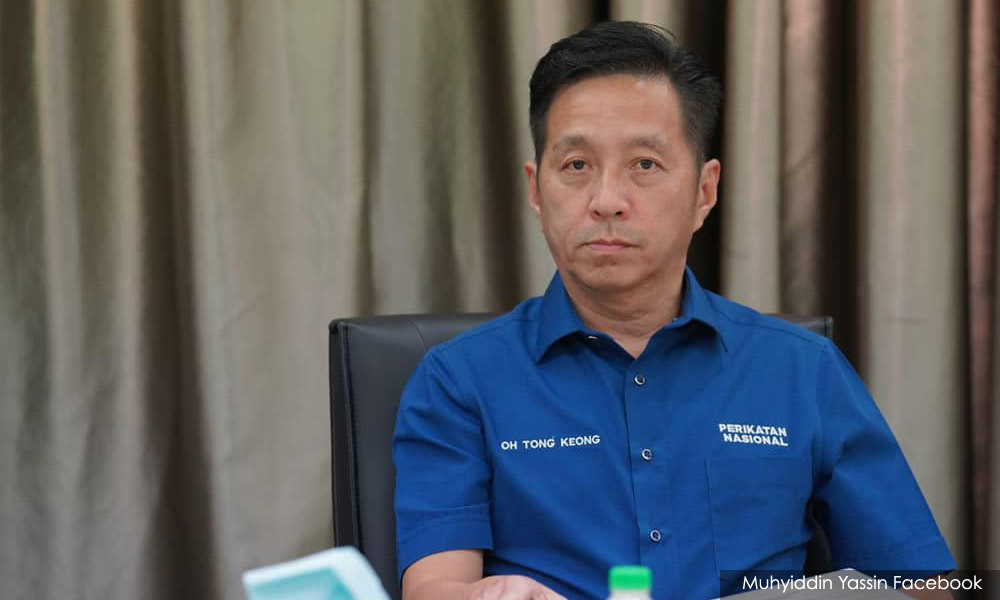
Following this, Gerakan deputy president Oh Tong Keong called out PAS by saying that it should not act like the “taikor (big brother) and demand compliance from all other parties”.
He also threatened that Gerakan would quit PN if it was forced to accept extremely conservative and unreasonable demands of a “particular party”.
In response to the remarks, top PAS leaders dared Gerakan to withdraw from the coalition.
After days of squabbles between the two parties, Hamzah yesterday claimed that the conflict had been resolved, describing it as a mere “storm in a teacup”.
Hamzah, who is also Larut MP, said what happened between PAS and Gerakan was a common occurrence in a family.
Balance needed for continuity
Meanwhile, Universiti Malaya’s political science, public administration, and development studies lecturer Mohammad Tawfik Yaakub viewed PAS’ threat and dare for Gerakan to quit as excessive.
Tawfik said PAS should have discussed the matter at PN’s top brass level before issuing harsh statements to their coalition partner.
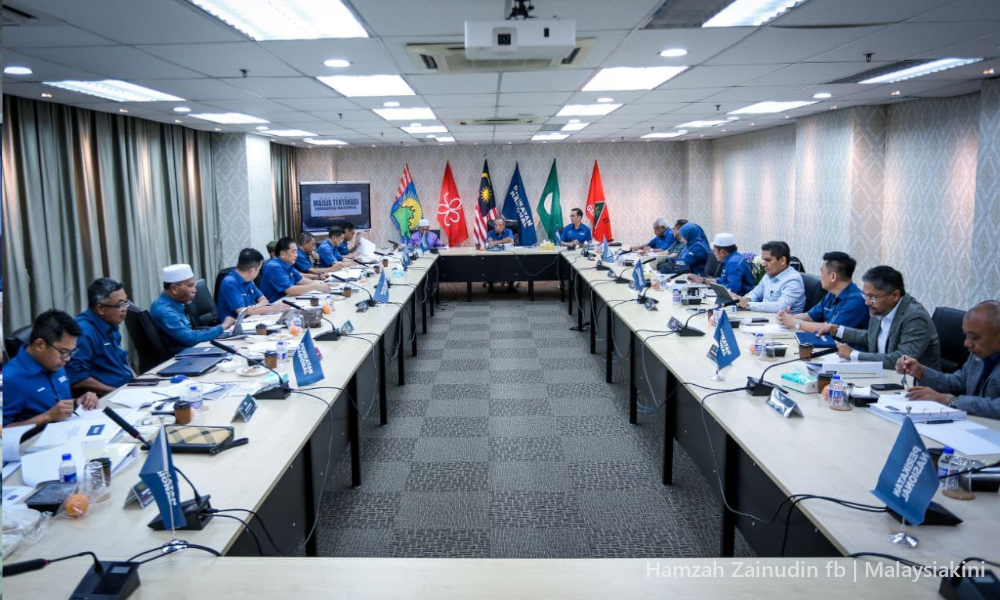
He also compared how PN handles conflicts to the coalition government, saying that the government is seen to handle issues between its component parties in a more mature and careful manner.
“The parties in the coalition government have more differences among them but the conflicts do not reach the point of wanting to expel their own partners from the coalition,” he said.
International Islamic University Malaysia’s political science department academic Lau Zhe Wei considered the disputes between PAS and Gerakan to be a common occurrence among parties that are cooperating under one alliance but have different ideologies.
“It is necessary for the survival of each party to convince their target groups (the public) that they still adhere to the proclaimed principles of their struggles,” Lau said.

However, he stressed the importance of balance in a political coalition.
“When one party becomes too dominant with its ideology in the cooperation, it is not good for the coalition.
“For instance, look at the 2008 general election when the conservative Malay ideology was too dominant in BN.
“Although Umno managed to win many seats in Penang, the state fell to Pakatan Rakyat because MCA and Gerakan within BN began to weaken,” he added.

Universiti Putra Malaysia’s Political Science senior lecturer Nur Ayuni Mohd Isa said that PAS and Gerakan should increase constructive engagements with each other.
“Communication, compromise, and tolerance should be prioritised in the cooperation to reduce conflicts.
“Bersatu should act as a moderator between the two parties by defusing the verbal blows between PAS and Gerakan without requiring any party to abandon their principles,” she said.
/file/publisher-c1a3f893382d2b2f8a9aa22a654d9c97/2023/08/c9df2a9c26d66e4b4814dc6c66e87b0b.jpg)
/file/publisher-c1a3f893382d2b2f8a9aa22a654d9c97/2022/03/d0ba113d8704ddc0833ed2e576b44c99.jpg)
/file/publisher-c1a3f893382d2b2f8a9aa22a654d9c97/2024/08/ad0bac439ef2eeee0b48d5aa168c872a.jpg)
/file/1107/a2c538f1db81dc10a13cb8d337b7b5bf.jpeg)
/file/publisher-c1a3f893382d2b2f8a9aa22a654d9c97/2024/05/89fb940bb406ebf1c0f3fb48e4856bbe.jpg)
/file/publisher-c1a3f893382d2b2f8a9aa22a654d9c97/2024/02/b7823ad19d29425980fa3533418af9aa.jpg)


Report this comment
Are you sure you want to delete this comment?
This action cannot be undone.