


/file/publisher-c1a3f893382d2b2f8a9aa22a654d9c97/2024/08/5e27896e06caf15086ba35a3cc3c3558.jpg)

T'ganu ghost festival organiser warns Muslims away with banners
The organiser of the Hungry Ghost Festival in Kemaman, Terengganu, has put up banners prohibiting Muslims from entering the venue.
This is after a temple in Kuala Terengganu was not granted an exemption for women to perform at a celebration event for the festival due to it being in an open space.
The organiser of the Hungry Ghost Festival in Kemaman, Terengganu, has put up banners prohibiting Muslims from entering the venue.
This is after a temple in Kuala Terengganu was not granted an exemption for women to perform at a celebration event for the festival due to it being in an open space.
According to a Sin Chew Daily report, red banners were hung around the Hungry Ghost Festival event area and tents, stating that Muslims were prohibited from entering, which has drawn attention from local residents.
The banners were written in Malay and stated, “During the event, Muslims are not allowed to enter the event area (for Chinese only)”.
It is understood that the event was held on a vacant private lot, which is usually open for free parking. However, for this year’s Hungry Ghost Festival, the organisers hung three red banners at the entrance and on the tents, marking the first time such banners were used.
According to the report, the organisers put up these banners to prevent potential issues and conflicts.
The Hungry Ghost Festival is on the 15th night of the seventh month according to the Chinese calendar.
READ MORE | Hungry Ghost Festival: Time to appease 'tortured spirits'
Early this month, it was reported that the Kuala Terengganu City Council had refused to allow female performers to participate in the festival celebrations from July 29 to Aug 2 at the Guan Di temple.
Seputeh MP Teresa Kok in response questioned why rules that were meant for Muslims were being applied to non-Muslims.
State exco Wan Sukairi Wan Abdullah, who oversees local councils, said this is because the performance was held in an open space accessible to all, including Muslims.
Meanwhile, Gerakan president Dominic Lau said he had given three proposals to Wan Sukairi during a meeting on Tuesday.
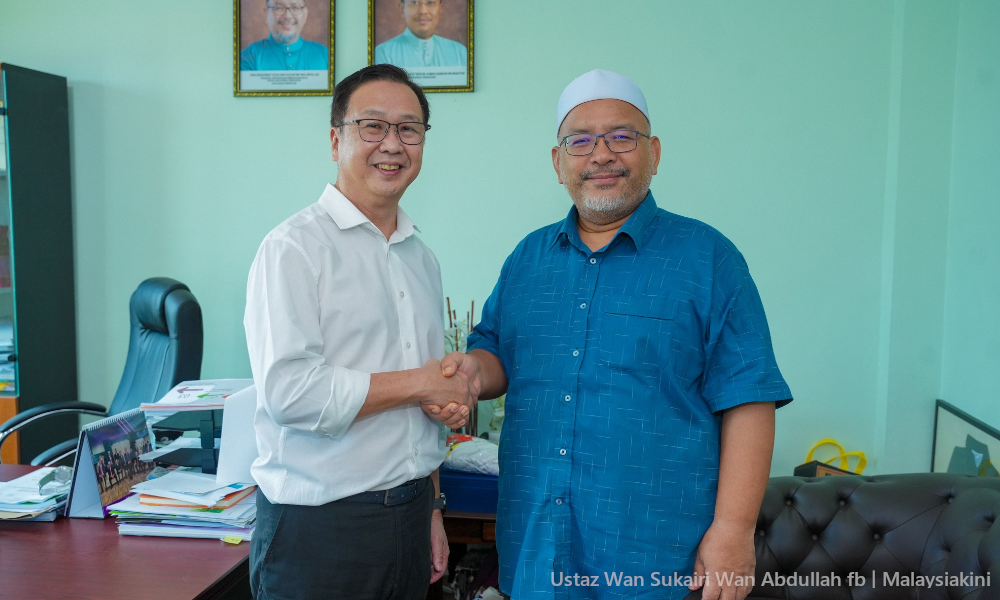
Lau said the state government responded positively to the suggestions, which include:
(1) Placing notice boards outside the performance venues indicating that the performances are for non-Muslim audiences only.
(2) Requesting Rela or arranging personnel to maintain order at the performance venues and to decline entry to Muslims.
(3) Setting up caution tapes around the performance areas.
/file/publisher-c1a3f893382d2b2f8a9aa22a654d9c97/2024/08/7fd5d32d6681108ac5eda288960a8433.jpg)
/file/publisher-c1a3f893382d2b2f8a9aa22a654d9c97/2023/08/146e6b748f8cf0ebbf3844f3116f8b26.jpg)
/file/1158/997f724a9d8c3e29e0c0949624439c0d.jpeg)
/file/1197/81ec9c1b5eb9e0bd00433ea8fc1ed194.jpeg)
/file/publisher-c1a3f893382d2b2f8a9aa22a654d9c97/2024/08/275f255deb3c9755dd9b163de6894af1.jpg)
/file/publisher-c1a3f893382d2b2f8a9aa22a654d9c97/2023/03/28aa08f49c0f9e5be9f96300b4f113b9.jpg)


Are you sure you want to delete this comment?
This action cannot be undone.