


/file/publisher-c1a3f893382d2b2f8a9aa22a654d9c97/2020/07/ab252e041671fc142719cb89b33d094f.jpg)

Groups warn against law changes confining geomatics to surveyors
A dozen professional groups have urged the government to reconsider amendments to the Licensed Land Surveyors Act 1958 passed earlier this year.
They warned that new amendments would only allow licensed land surveyors (LLS) registered under the Land Surveyors Board (LSB) to conduct geomatics surveys, even though there are many other professions that also use geomatics in their daily work.
A dozen professional groups have urged the government to reconsider amendments to the Licensed Land Surveyors Act 1958 passed earlier this year.
They warned that new amendments would only allow licensed land surveyors (LLS) registered under the Land Surveyors Board (LSB) to conduct geomatics surveys, even though there are many other professions that also use geomatics in their daily work.
Such professions include geospatialists, engineers, geologists, hydrographers, town and country planners, farmers, construction experts, air traffic controllers, and sea navigators.
Fresh graduates from various fields who studied geomatics courses will also be barred from carrying out geomatics surveys.
“Policies that restrict geomatics surveys solely to LLS can have a negative impact on national development.
“The requirement to appoint LLS for every type of geomatic measurement task can potentially increase project costs and delay project schedules due to lack of available surveyors.
“The very broad definition of geomatics in the legislative amendment and the restrictions on geomatics survey would severely affect our economy.
“The amendment would add a greater layer of bureaucracy as well as affect competitiveness ranking and ease of doing business in this country,” the groups warned in a joint statement last night.
The National Hydrographic Association (Malaysia), Malaysian Society of Soil Science, IEEE Geoscience & Remote Sensing Society Malaysia Chapter, Malaysian Society of Agricultural and Food Engineers, Institute of Geology Malaysia, Agricultural Institute of Malaysia, Institute of Foresters Malaysia, International Institute of Plantation Management, Malaysian Society for Engineering & Technology, Malaysian Institute of Planners, Institute of Landscape Architects Malaysia, and Institution of Geospatial and Remote Sensing Malaysia signed the statement.
Keeping up with advancements
The Dewan Rakyat approved the Licensed Land Surveyors (Amendment) Bill 2024 on March 25, followed by the Dewan Negara’s approval on April 4.
At the time, Natural Resources and Environmental Sustainability Minister Nik Nazmi Nik Ahmad reportedly said the amendments help to keep up with advancements in the geomatics field and the land surveying profession, as well as broadening the LSB’s authority.
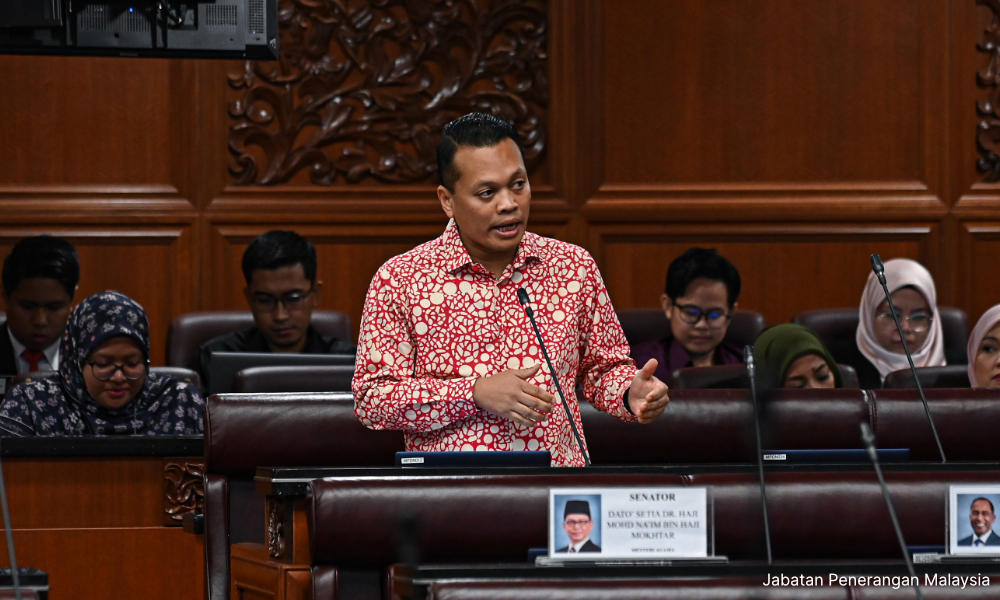
According to the amended law, “geomatics survey” refers to “any survey undertaken for the purposes of production of or in connection with, maps, geomatics survey plans or information using survey-accurate techniques”.
The groups explained that it involves the measurement, analysis, and interpretation of Earth’s physical features, from the subsurface to space, using a variety of techniques and technologies including global navigation satellite systems, remote sensing, and geographic information systems.
“It is a cross-disciplinary field of knowledge and applications that play a crucial role in numerous sectors, including engineering, hydrography, town and country planning, agriculture, plantation, forestry, landscape architecture, geology, disaster management, as well as numerous other fields,” they said.
Under the amended law, anyone conducting a geomatic survey who is not an LLS is liable to a fine up to RM250,000, imprisonment up to three years, or both.

Once it is gazetted, the amended law stipulates a six-month transition period to allow non-LLS geomatics professionals to register with the LSB.
‘Near-impossible’ task
However, groups said such professionals are facing the near-impossible task of meeting LSB’s requirements for registering as an LLS, even though they do not carry out title surveys and are legally barred from doing so.
“Furthermore, for most non-LLS geomatics professionals, there is no requirement to conduct title surveys in their respective fields.
“Therefore, it is unlikely that they can meet the registration requirements with LSB during this transitional period,” they said.
Despite the potential impact of the new law, the groups claimed that very few stakeholders have been consulted.
It said during a series of discussions conducted in June and July this year, it learned that out of 41 relevant stakeholders, 38 said their organisations were completely unaware of the amendments and were not invited to the LSB’s engagement sessions held in 2020.
For the remaining three, it said the Board of Engineers Malaysia, Board of Architects Malaysia, and Board of Town Planners Malaysia stated that they were involved in LSB’s engagement session but did not express support for the amendment act as approved in Parliament.
In addition, the Malaysian Productivity Corporation conducted a survey from December 2020 to January 2021 but none of the 41 stakeholders received it.
“This raises questions about the effectiveness of information dissemination and the openness of this process to all parties involved,” they said.
In view of these issues, they urged the government to reconsider the amendments and hold extensive discussions with all stakeholders.
/file/publisher-c1a3f893382d2b2f8a9aa22a654d9c97/2024/01/03ec2a701d1557174becc27177139ab3.jpg)
/file/publisher-c1a3f893382d2b2f8a9aa22a654d9c97/2022/12/2fe8606d1ab2cd948569b80aa99ded8e.jpg)
/file/publisher-c1a3f893382d2b2f8a9aa22a654d9c97/2024/08/6b6e195d1163a585594b4acdee0acd27.jpg)
/file/publisher-c1a3f893382d2b2f8a9aa22a654d9c97/2024/07/baca78169fa0ff7d689866f381db2b65.jpg)
/file/publisher-c1a3f893382d2b2f8a9aa22a654d9c97/2024/08/70fea0eafffe1ef16f89eec912da6f8b.jpg)
/file/publisher-c1a3f893382d2b2f8a9aa22a654d9c97/2024/08/77b4bff40caf22d665ec461fe01fde81.jpg)


Are you sure you want to delete this comment?
This action cannot be undone.