


/file/publisher-c1a3f893382d2b2f8a9aa22a654d9c97/2019/07/8af2542700de23f7fbd95e5d1976ca83.jpg)

Employers need to be compelled by law to review wages, unionist says
There is no way employers would voluntarily provide “reasonable wages” to their workers, said Penang Malaysian Trades Union Congress (MTUC) secretary K Veeriah.
He said this in response to Prime Minister Anwar Ibrahim’s call for the private sector, especially companies with high profits, to provide more reasonable salaries to their employees.
There is no way employers would voluntarily provide “reasonable wages” to their workers, said Penang Malaysian Trades Union Congress (MTUC) secretary K Veeriah.
He said this in response to Prime Minister Anwar Ibrahim’s call for the private sector, especially companies with high profits, to provide more reasonable salaries to their employees.
“When it comes to our employers, volunteerism won’t work. They must be compelled (to increase workers’ wages) through legislation.
“And our politicians must have the political will to do this,” Veeriah (above) told Malaysiakini.
Anwar had on Aug 16 announced a pay hike for civil servants beginning Dec 1, in which civil servants categorised in the support, management, and professional groups will receive an average 15 percent salary rise while top management officers would only get seven percent.
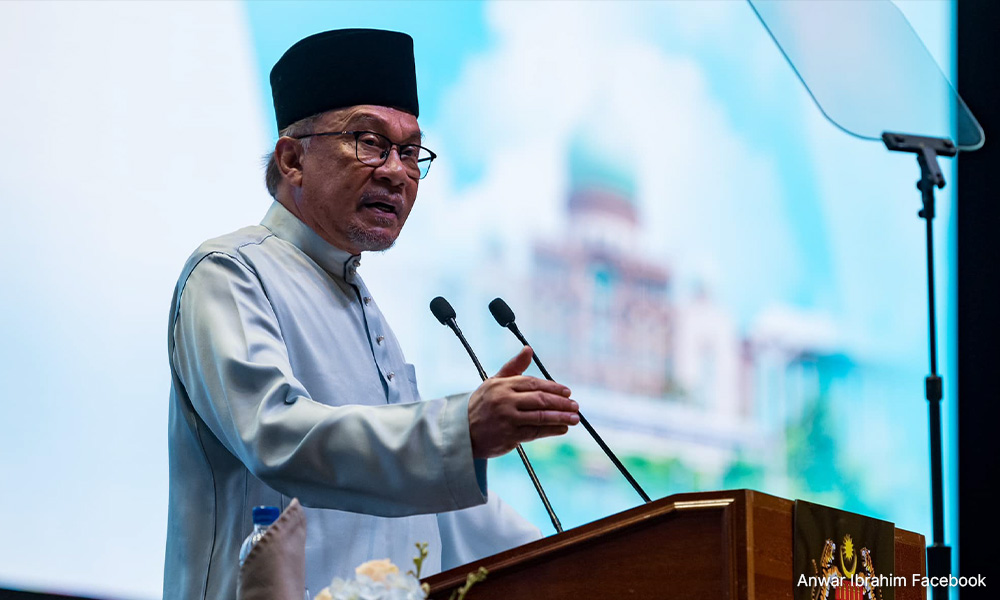
Following the announcement, Anwar expressed hope private companies with high profits will pay their employees a reasonable wage.
“I hope the private sector will review their (salary) schemes so that the (financial) burden of the workforce can be reduced with a more reasonable remuneration and salary increment scheme, especially companies that record large profits.
“There is no reason for a monthly salary to be less than RM2,000,” he was reported as saying.
Workers not getting economic benefits
Elaborating, Veeriah said that about two million people are working in the private sector.
Out of the figure, only two percent of them have a collective agreement (CA) with their respective employers, he said.
“So, another 98 percent are at the mercy of their employers when it comes to negotiating annual or periodical salary adjustments.
“This is among the reasons why our wages have stagnated and our country is caught in the low-wage trap,” he said.
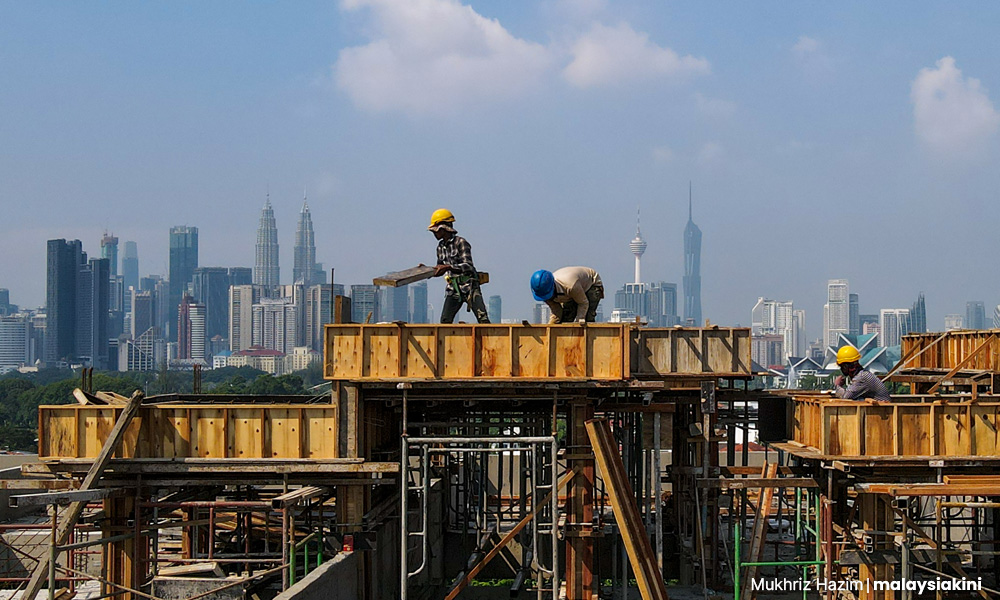
Veeriah also cited an economic report by the Finance Ministry, which indicated that wages workers receive are not reflective of the nation’s gross domestic product increase.
“According to Finance Ministry’s 2024 Economic Outlook Report, the share of employee compensation of GDP was at 32.4 percent in 2023.
“However, the report also indicated that employee compensation still remains lower compared to other economies and falls short of the 40 percent target by 2025.
“This shows that workers are still not enjoying the benefits of our economic growth.”
Living wage
Veeriah was sceptical about the government’s progressive wage policy’s ability to raise salaries.
He doubted the programme’s efficacy due to its voluntary nature, on top of its limited scope and being experimental.

Veeriah called for structural changes instead, starting with changing the name of the National Minimum Wage Council to the National Living Wage Council.
“We must move from the minimum wage to the living wage concept. For one’s understanding, even if we set the minimum wage at RM2,000, our national poverty line is RM2,589.
“In addition, employers must be compelled to make salary adjustments by considering the real-time consumer price index and the nation’s GDP.
“If our GDP rises, wages should be adjusted accordingly,” he stressed.
Second jobs
On employers’ arguments that such measures may lead them to close shop, Veeriah dismissed it outright.
He recalled the opposition to the minimum wage policy in its inception at RM900 in 2013, with employers saying many may have to shut down due to its unaffordability.

“It’s been years now (with minimum wage now at RM1,500) but can they tell us how many businesses have shuttered? They won’t say.
“My argument is this. Employers cannot expect us to live in the depths of poverty just so they can do business.
“The reality is our salaries are so low that workers have to get a second job.
“The long hours of work are affecting their physical and mental health,” he said.
Enough with excuses
Union Network International-Malaysia Labour Centre president Mohamed Shafie BP Mammal also backed Veeriah’s statement, saying a pay hike for private sector workers was long overdue.
“We all know that a majority of private sector workers have yet to get their pay revision post-Covid-19.
“And employers are giving various excuses to not do so,” he told Malaysiakini.
Lauding the prime minister’s decision to raise civil servants’ salaries, Shafie urged the private sector to follow suit and take constructive action to review their employees’ remuneration scheme.
“If implemented, it will definitely boost workers’ morale and in turn, raise their productivity,” he added.
/file/publisher-c1a3f893382d2b2f8a9aa22a654d9c97/2024/08/f92faaee9a7df66175ba9310808ca04b.jpg)
/file/publisher-c1a3f893382d2b2f8a9aa22a654d9c97/2024/08/5681d3021e0219a67c815b814a152e67.jpg)
/file/publisher-c1a3f893382d2b2f8a9aa22a654d9c97/2024/07/0a2ed01e3cf85b1835cca3c7073afd42.jpg)
/file/publisher-c1a3f893382d2b2f8a9aa22a654d9c97/2021/10/53560767b254f44b2bd05775752baf3c.jpg)
/file/publisher-c1a3f893382d2b2f8a9aa22a654d9c97/2024/01/03ec2a701d1557174becc27177139ab3.jpg)


Are you sure you want to delete this comment?
This action cannot be undone.