


/file/publisher-c1a3f893382d2b2f8a9aa22a654d9c97/2024/10/b82859e4f238dbe2b2a65bcf753dab1b.jpg)

Firing up opposition against S'gor's incinerators
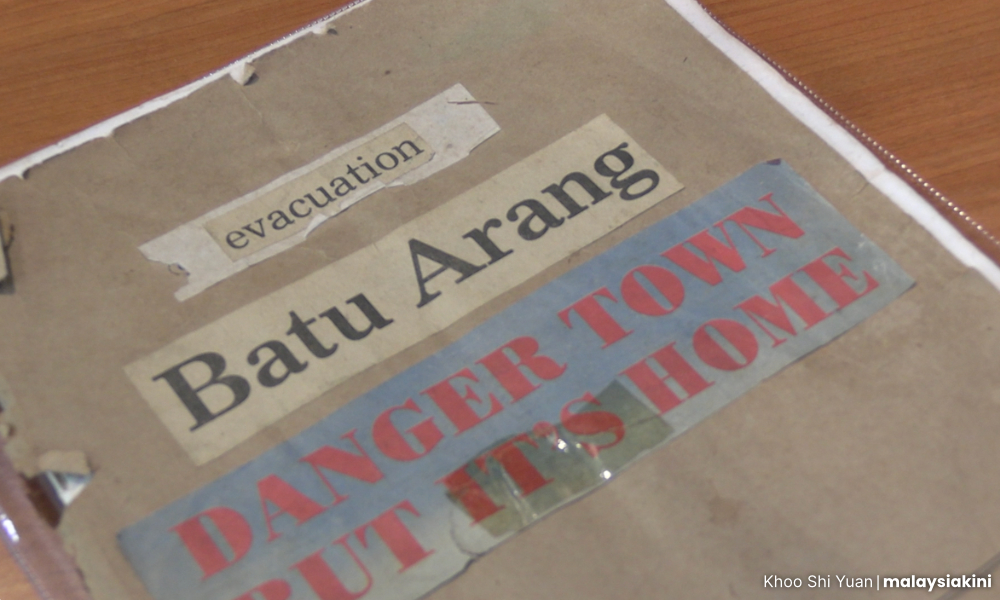
The old scrapbook’s cover has yellowed. Its worn edges bear the scars of time, and its title is pieced together with headlines from old newspaper cutouts. It reads: “Evacuation Batu Arang: Danger town but it’s home”.
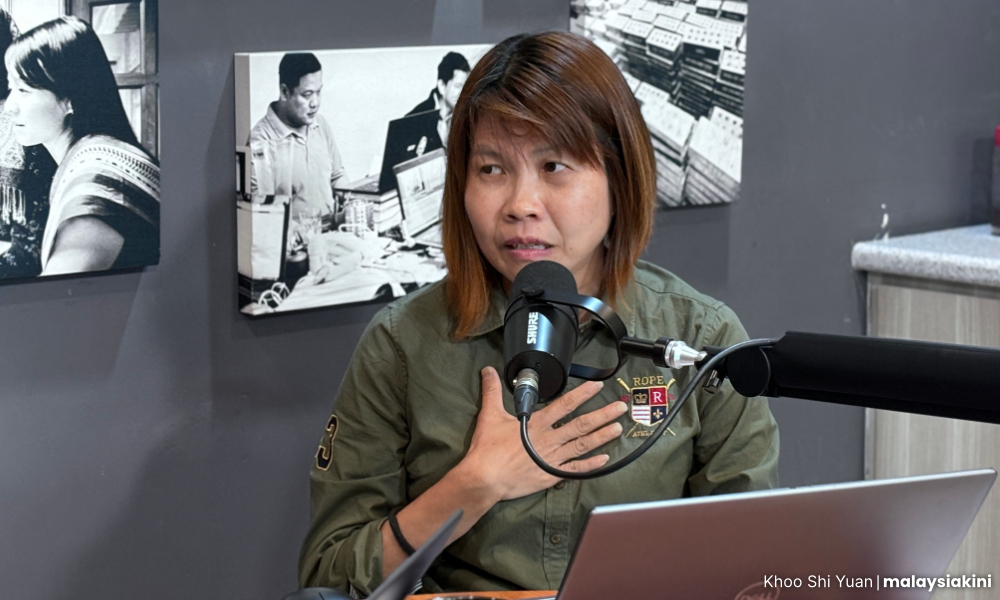
Rawang Tolak Insinerator Network (RTI) member Pauline Puah carefully handed the scrapbook to a reporter on Wednesday as soon as she arrived at Malaysiakini’s office in Petaling Jaya for an interview.
Inside, one of the news clippings said, “Expert recommends evacuation of town’s residents; Panel: Batu Arang unsafe”. A photo caption in another article described a “30m-deep hole on Batu Arang’s main street”.
The old scrapbook’s cover has yellowed. Its worn edges bear the scars of time, and its title is pieced together with headlines from old newspaper cutouts. It reads: “Evacuation Batu Arang: Danger town but it’s home”.
Rawang Tolak Insinerator Network (RTI) member Pauline Puah carefully handed the scrapbook to a reporter on Wednesday as soon as she arrived at Malaysiakini’s office in Petaling Jaya for an interview.
Inside, one of the news clippings said, “Expert recommends evacuation of town’s residents; Panel: Batu Arang unsafe”. A photo caption in another article described a “30m-deep hole on Batu Arang’s main street”.
It turns out that in preparation for the interview, Puah borrowed the scrapbook from an elderly member of the community who had been collecting news clippings about land subsidence that plagued the area long ago.
On June 28 of this year, the Selayang Municipal Council (MPS) held a public hearing about changing the land use status of Lot 3847 from residential to industrial, to pave the way for the Rawang incinerator project.
Puah said residents saw it as an opportunity to express their opposition to the project, so despite it being held on a weekday, about 200 to 300 people eagerly attended the hearing.
Of sinkholes and underground fires
Puah described how the residents came well-prepared for the public hearing, including the elderly man who brought his scrapbook. He used it to argue that Batu Arang’s geological conditions were unsuitable for building an incinerator, citing frequent landslides, subsidence, and underground fires.
Puah also recalled how a former vice-principal of SJK (C) Chap Khuan came in a wheelchair to recount how the government once approved the construction of a new school building, only to cancel it due to underground fires.
He retold this as a warning about the risks of construction in Batu Arang.
“(Everyone felt) ‘Wow, I’ve finally found an opportunity, I must speak out about everything’... So during the meeting, we raised all kinds of concerns.
“Not just him, but other residents as well. I remember one resident coming forward and saying, ‘(The proposed incinerator site) is only 500m from my house... My backyard was burned down by underground fires around the year 2000’.
As for the outcome of the public hearing? Puah laughed and said, “The outcome was that we held a protest yesterday (Tuesday).”
She jokingly compared the public hearing to a karaoke session where, after singing their piece, everyone simply waved goodbye and left.
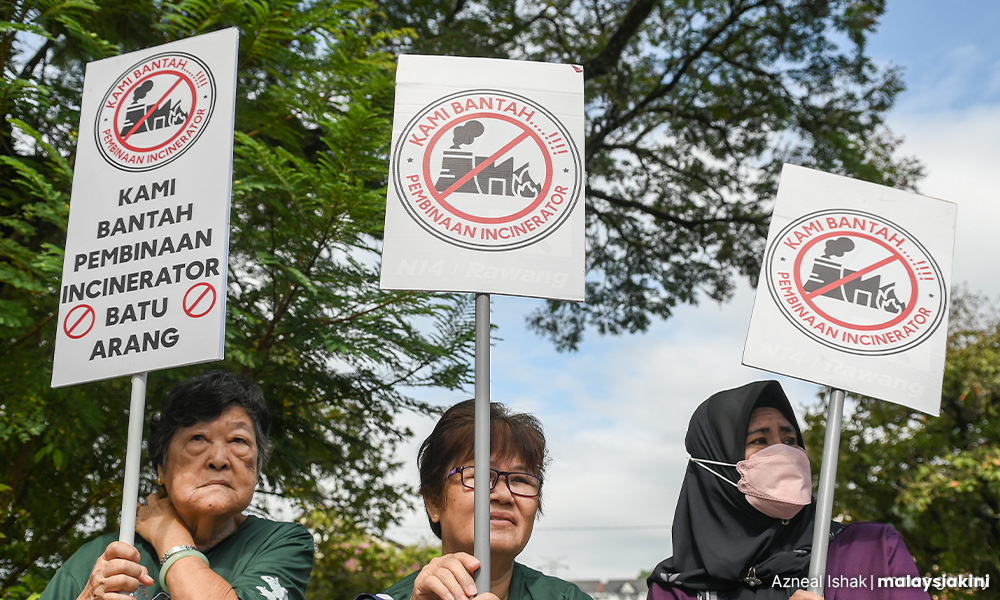
On Tuesday, RTI organised around 120 people to protest in front of the MPS office, demanding that the council rescind its decision to change the land use status.
Parents moved to protest on weekday
According to Puah, most of the participants were local residents, including elderly people and parents of schoolchildren. They had arranged three buses to transport these residents to the protest.
Puah said she was deeply moved by parents who had taken time off work to join the protest.
The proposed location for the incinerator is near schools, she said, including that of her child. This has raised concerns for many parents.
When she first learnt about this in July last year, she could not believe it.
She was even more surprised to find out that there were 18 schools within 8km of the site, with the nearest one being a Tamil school just 1km away.
“In addition, there are various religious sites nearby, such as surau, Hindu temples, and more. Why did they choose to build it there? It’s truly baffling.”
Batu Arang had a population of over 10,000 people as of 2020, according to data from the Statistics Department.
Sparking flames of protest
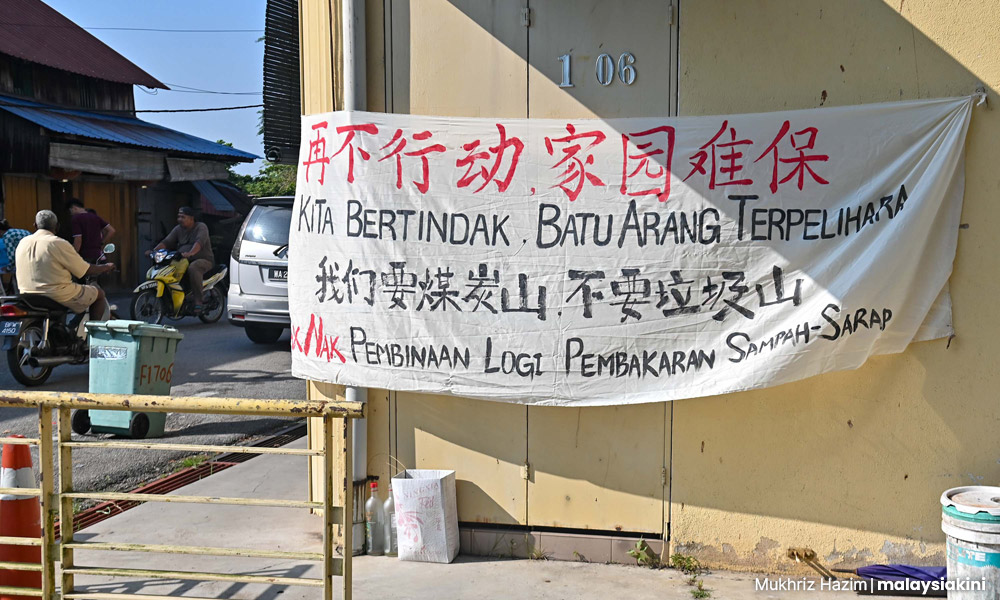
Puah said at first, residents had only heard rumours about the incinerator project but could not find confirmation through official channels.
That was until November last year when Kumpulan Darul Ehsan Bhd (KDEB) - a subsidiary of Selangor Menteri Besar Incorporated (MBI Selangor) - announced on Facebook that construction would begin in June this year.
“At that time, back in November, there was no environmental impact assessment (EIA) or social impact assessment (SIA) reports. No one knew the details. Only a few villagers nearby were aware.”
Puah said this during a Malaysiakini Chinese-language podcast yesterday, which was aired on YouTube, Spotify, and Apple Podcasts.
The incinerator plant is formally known as the Sultan Idris Shah WTE Green Energy Plant and KDEB and YTL Power International Bhd would oversee the project.
The Housing and Local Government Ministry believes that this type of “waste-to-energy” incinerators is different from traditional incinerator projects, as it can generate electricity by burning waste materials.
However, activists are concerned that a “waste-to-energy plant” is simply a rebranding for a traditional waste incinerator, since the waste treatment process still involves burning.
Without proper waste sorting, it could lead to serious environmental issues such as mercury contamination of the environment.
‘MB won’t even spare us a glance’
KDEB’s announcement sparked strong and immediate opposition from the residents.
Puah said RTI had submitted a memorandum with over 10,000 signatures opposing the project and tried various means to request a meeting with Selangor Menteri Besar Amirudin Shari, but to no avail.
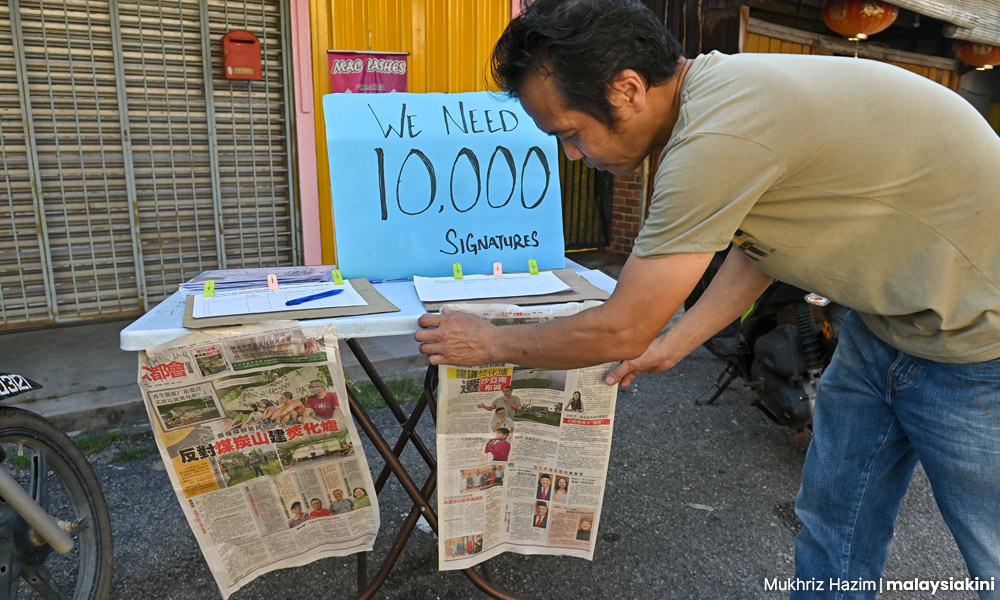
The group did not receive any response from the menteri besar’s office.
“So I said, we must stand up. We must meet you (Amirudin).”
Puah recalled how they once braved heavy rain at an MPS event to ask Amirudin for a meeting, but he ignored them and walked away.
“It was pouring, we were ignored. The officials told us to move aside... and then we watched him drive off in his car, not even sparing us a glance,” she said.
The group also protested at the groundbreaking ceremony for an incinerator plant in Jeram and once again demanded to meet Amirudin.
However, they were only allowed to gather outside the venue, across the road, and were still unable to speak to Amirudin.
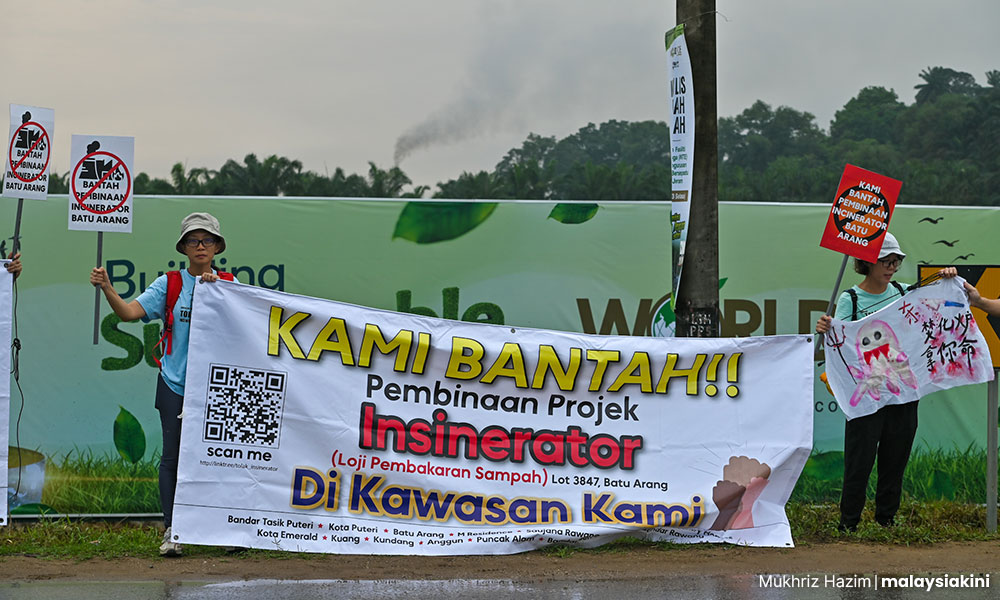
Puah reflected on how politicians were willing to meet her when she worked at her previous job as a journalist, but now she has gained a deep understanding of the helplessness felt by ordinary people.
Not buying govt’s sales pitch
Puah also addressed criticism against RTI, such as people questioning why residents can’t make a “sacrifice” and accusations of “nimbyism”.
Nimbyism, from “nimby”, which is short for “not in my backyard”, is a disparaging term referring to people who don’t want something to be done simply because it is near where they live.
Puah believes such criticism misses the point, which is the government’s refusal to reform its waste management system, educate the public, and promote more sustainable ways to dispose of waste.
Instead, she said the government is being short-sighted by viewing incinerators as the only option.
No matter how many incinerators are built, she said, some types of waste cannot be burnt and will still have to be buried in landfills.
Therefore, the government should consider other solutions instead of letting a small group of people bear the consequences of living near incinerators.
“He (government representative) sounded just like an incinerator salesman... saying: ‘How great the technology is now! You don’t need to worry, it’s not like the technology from the 1970s or 1980s; there’s no danger anymore, and the exhaust gas filtration is very good’.”
He said RTI had asked a state exco member why Batu Arang was chosen as the location for the project. The reply came: “If we said we are building an incinerator in Petaling Jaya, the people would come out in protest.”
Puah fired back with a series of questions, asking: “Wouldn’t Batu Arang residents also protest? Isn’t it the government’s responsibility to treat all communities fairly and protect their health?”
The Selangor government plans to build three incinerator plants in the state.
Besides Batu Arang, the other two are planned for Jeram and Rawang, with the Jeram incinerator having broken ground in October last year.
/file/publisher-c1a3f893382d2b2f8a9aa22a654d9c97/2024/10/b82859e4f238dbe2b2a65bcf753dab1b.jpg)
/file/publisher-c1a3f893382d2b2f8a9aa22a654d9c97/2023/08/3d6d85e073efac3e61a6b4601611afe0.jpg)
/file/publisher-c1a3f893382d2b2f8a9aa22a654d9c97/2023/08/951a62d6453e2ba36084ef28c24b105e.jpg)
/file/publisher-c1a3f893382d2b2f8a9aa22a654d9c97/2024/03/06fd92912fd74b3f3a7965e771baa803.png)
/file/publisher-c1a3f893382d2b2f8a9aa22a654d9c97/2023/02/db03877ee08ffb896778528a32804f69.jpg)
/file/publisher-c1a3f893382d2b2f8a9aa22a654d9c97/2023/08/1d6b8edf4fd955aa98ec82bf1c83a296.jpg)
/file/publisher-c1a3f893382d2b2f8a9aa22a654d9c97/2024/01/71020abe2bd2f883b076907a6be38c65.jpg)


Are you sure you want to delete this comment?
This action cannot be undone.