


/file/publisher-c1a3f893382d2b2f8a9aa22a654d9c97/2023/11/e898fde820b8587e559d3630d04e4251.jpg)

Mufti bill won't turn M'sia into Islamic state - minister
Communications Minister Fahmi Fadzil today rebutted a claim by 14 groups based in Sabah and Sarawak that the Mufti (Federal Territories) Bill 2024 will turn Malaysia into an Islamic state.
According to Fahmi, the bill closely mirrors the Sabah Fatwa Enactment which has been in force for the past 20 years.
Despite having a similar law to the proposed bill for two decades, he pointed out that it has never disrupted the cultures and lifestyles of Sabahans.
“Sabah has not experienced any changes in religious practices...
Communications Minister Fahmi Fadzil today rebutted a claim by 14 groups based in Sabah and Sarawak that the Mufti (Federal Territories) Bill 2024 will turn Malaysia into an Islamic state.
According to Fahmi, the bill closely mirrors the Sabah Fatwa Enactment which has been in force for the past 20 years.
Despite having a similar law to the proposed bill for two decades, he pointed out that it has never disrupted the cultures and lifestyles of Sabahans.
“Sabah has not experienced any changes in religious practices or freedom for non-Muslims. We still witness events and celebrations such as Tadau Kaamatan being observed, which I attended this year.
“Traditional events like Unduk Ngadau are still held without issue.
“So for those making these claims, I suggest they revisit Sabah’s history; it has had this law for 20 years without any adverse effects,” he said at a programme in Kerinchi, Kuala Lumpur.
Yesterday, Malaysiakini reported that 14 groups based in Sabah and Sarawak had criticised the bill, which they claimed would violate the Malaysia Agreement 1963 (MA63) and directly attack the country’s secular framework.
No extra powers for mufti
Clarifying the bill’s purpose, Fahmi, who is also the government spokesperson, stressed that it does not give any extra power to a mufti.
“At the same time, there is no increase in the mufti’s powers; it remains the same as now. The difference is that we want to bring it as a parliamentary act to clarify its jurisdiction, so there are no claims or disputes about the mufti’s authority,” he said.
He also pointed out that the group’s definition of an Islamic state has a negative connotation, implying a transformation similar to that in the Middle East or other regions.
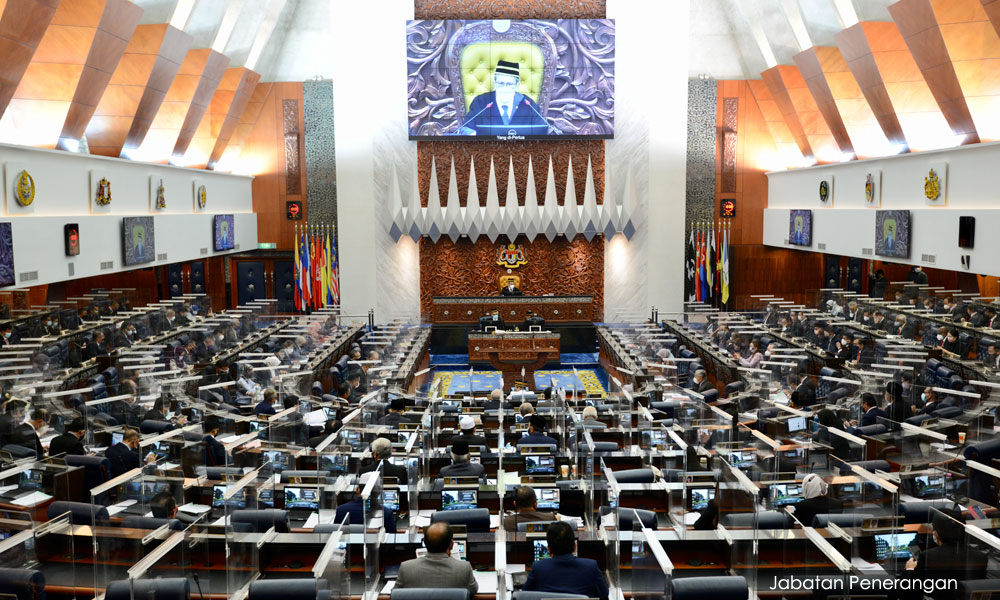
The Lembah Pantai MP further urged all parties to be literate in the laws of the land to ensure that Islam for Muslims is respected and regulated through proper legal channels.
“Do not view this matter with prejudice; we need to be legally aware.
“By bringing the Federal Territories mufti bill to Parliament, the mufti’s position will have more constitutional and legal order in our country,” he concluded.
According to Bernama, Minister in the Prime Minister’s Department (Islamic Affairs) Mohd Na’im Mokhtar confirmed that the bill will be tabled for its second and third readings during the upcoming parliamentary session, which begins next week.
The bill’s first reading took place in July.
Concern and criticisms
The proposed legislation has drawn criticism from several quarters, including the Perlis ruler Tuanku Syed Sirajuddin Tuanku Syed Putra Jamalullail, who described it as having a “narrow interpretation” of Sunni Islam and lacking inclusivity.
Additionally, women’s rights group Sisters in Islam expressed concern, warning that the bill could grant unchecked power to religious authorities, particularly through provisions that offer them legal immunity.
/file/publisher-c1a3f893382d2b2f8a9aa22a654d9c97/2021/07/5b7a143287301b9c9fe45c2010a00bdb.jpg)
/file/publisher-c1a3f893382d2b2f8a9aa22a654d9c97/2021/07/c7c7eec58df46869c6d7c9ad252de13f.jpg)
/file/publisher-c1a3f893382d2b2f8a9aa22a654d9c97/2020/07/0d426fff7c05e1f67e88b839b3814f7e.jpg)
/file/publisher-c1a3f893382d2b2f8a9aa22a654d9c97/2023/10/21ca119e8d7a701b6b00f5d67796f704.jpg)
/file/publisher-c1a3f893382d2b2f8a9aa22a654d9c97/2023/02/3a2cd94216295ec402d4c64c3470c863.jpg)
/file/publisher-c1a3f893382d2b2f8a9aa22a654d9c97/2024/07/89ddb9b0bda9358603d6e85557597eac.jpg)
/file/publisher-c1a3f893382d2b2f8a9aa22a654d9c97/2024/07/1fc6914c382b474fc1a29afafc623ec1.jpg)


Are you sure you want to delete this comment?
This action cannot be undone.