
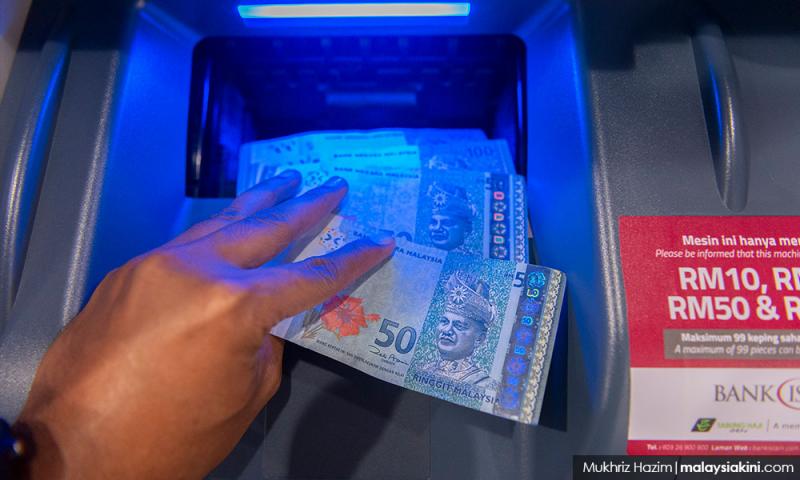
With Budget 2025 set to be unveiled this Friday, NGOs are calling on the government to think bigger and go beyond the norm.

Wishlists include welfare allocations for the most invisible of marginalised groups in Malaysia: refugees, undocumented migrants, migrant workers, and prisoners, among others.

The call for an increased minimum wage and better welfare safeguards for workers was also prevalent among workers’ groups.

Prime Minister Anwar Ibrahim, who is also the finance minister, will table the national budget in the Dewan Rakyat.

Last year, he announced an allocation of RM393.8 billion, Malaysia’s largest-ever budget, with a focus on a Rahmah Cash Aid (STR) increase as well as the withdrawal of subsidies.

This year, Malaysiakini again asked NGOs what they wanted to see.

Gender-responsive budgeting

A welfare state cannot be perpetuated, but aid must reach targeted groups effectively, said Engender founder and managing director Omna Sreeni-Ong to Malaysiakini.

“The principle that the national budget should employ is to leave no one behind. And the first step to accomplish this is to reach out to those furthest away first,” she said.

She said cash aid is much needed, particularly for families struggling with the high cost of living to support their dependents.

“Empowering the same families through upskilling, starting up or strengthening business, subsidised and accessible community-based childcare, and job placements are what can help to alleviate them from poverty, welfare dependency, and set them on a trajectory that contributes to the well-being of the family,” she said.

The best way for the government to get started is with gender-responsive budgeting, added Sreeni-Ong.

The government had already done that before by scrapping aid specifically for single mothers, which then left several groups out. It was later changed to a blanket childcare aid, she said.

“We laud the government’s commitment to gender-responsive budgeting both in policy and through capacity building of government ministries.

“There is definitely growing awareness and attention to engender budget measures and we hope to see greater application of this internationally acclaimed strategy and tool over the next few years,” she said.

Recently, Engender, WAO, and the Gender Group handed a 74-page memorandum to the Finance Ministry ahead of the budget.

Among the actions the group urged for was the capacity building of government agencies, especially the dis-aggregation of data, allowing for a greater focus on specific groups, and resulting in targeted intervention.

Several groups in Malaysian society have been rendered invisible due to the lack of data, Sreeni-Ong explained.

For example, Malaysiakini checks have shown that the category of non-bumiputera “other” races does not appear on the Statistics Department’s (DOSM) data regarding life expectancy.

Besides that, she called for the federal and state governments to monitor welfare and aid programmes so that reports can be released to the public.

“Some ministries like the Health Ministry have a wealth of data in their annual Health and Morbidity Survey which allows for a more nuanced targeted intervention.

“Greater disaggregation (of gender data) can help us understand the live realities, challenges, and barriers faced by diverse segments in the population.

“We don’t want to know how many people attended the programme but how many who attended have had their lives transformed,” she said, adding that if the government’s actions do not adequately impact lives, then plans must be re-devised.

Revise minimum wage, social protection

Meanwhile, Tenaganita executive director Glorene Das emphasised fair pay and social protections for vulnerable groups, especially those in low-wage roles.

“The government could allocate funds for revising minimum wage policies, expanding social protections such as Socso and EPF, and ensuring all workers are covered, including migrants,” she said.

The budget must include specific measures focused on strengthening the enforcement of labour laws as well, she added.

Tenaganita executive director Glorene Das

The government could recruit more labour officers and inspectors to ensure better workplace safety and to establish accessible complaint mechanisms for workers.

“Allocating funds to boost the capacity of labour inspectors and provide training for employers can help uphold standards in the sector,” she said.

Revising wages, worker rights

On the other hand, Sarawak Bank Employees Union chairperson Andrew Lo told Malaysiakini that the minimum wage needs to be revised to at least RM2,000 a month.

Trade unions need allocations to prepare them for the freedom of association framework recently implemented under the amended Trade Union Act 1959 and Industrial Relations Act 1967, he added.


READ MORE: Has govt fulfilled Budget 2024 promises?


National Union of Bank Employees secretary-general Joseph Solomon hoped the new national budget would be meaningful for M40 and B40 Malaysians.

He said the government should consider progressive measures such as a festival bonus, which provides B40 and M40 employees with a one-month salary with each large festival.

“Festivals are key times for family bonding and workers should not need to borrow for extra costs.

“Indonesia has practised this since the 1950s, even for CEOs, till today,” he said.

Unnecessary bank fees, like the RM1 fee for cash withdrawals, should also be removed, he added, calling on Bank Negara Malaysia to review unjustified fees imposed on customers.

On the other hand, both Gloria and North-South Initiative director Adrien Pereira agreed for the budget to allocate resources towards the plight of migrant workers.

She urged the government to allocate resources for legal and social support systems to protect migrant workers from exploitation and abuse.

Adrian suggested an allocation of RM100 million for legal aid for migrants so they are not so vulnerable when facing a remand situation.

He further called for the ratification of the 1990 United Nations International Conventions on the Protection of the Rights of All Migrant Workers and Members of Their Families (United Migrant Worker Convention) and asked the government to subsidise healthcare for migrant workers.

Human rights education is key

Suara Rakyat Malaysia (Suaram) executive director Sevan Doraisamy said the new national budget should take into account the country’s Universal Periodic Review (UPR) recommendations.

“One key example is improving the existing human rights training module for law enforcement officers to include guidelines on policing public assemblies.

“Institutionalising comprehensive human rights education within the police force is key in ensuring not only long-term sensitisation of law enforcement officers in human rights, but also the integration of the human rights lens in their mandate of upholding public safety in all contexts,” he told Malaysiakini.

Besides that, the authorities should allocate resources to improve the infrastructure, sanitation, and health facilities in detention centres, especially prisons, he said.

Poor conditions lead to declining health and possible negligence in light of some prisons lacking adequate numbers of healthcare personnel, Sevan explained.