


/file/publisher-c1a3f893382d2b2f8a9aa22a654d9c97/2024/07/b409123ff36658f693c1e8163b307e36.jpg)

Social media licensing: Many stakeholder consultations have been held - Teo
PARLIAMENT | Deputy Communications Minister Teo Nie Ching has denied the Asia Internet Coalition’s (AIC) claims that the development of a social media licensing framework did not involve a consultation process, calling it untrue.
She said the views of stakeholders have been considered through several engagement sessions and ongoing consultations since April to ensure the creation of a comprehensive licensing framework.
PARLIAMENT | Deputy Communications Minister Teo Nie Ching has denied the Asia Internet Coalition’s (AIC) claims that the development of a social media licensing framework did not involve a consultation process, calling it untrue.
She said the views of stakeholders have been considered through several engagement sessions and ongoing consultations since April to ensure the creation of a comprehensive licensing framework.
Teo said several key meetings with major industry players were held, including with ByteDance on April 25, Aug 28 and Sept 26; Meta (June 11 and Sept 18); Telegram (April 25 and Sept 23); Google (April 29 and June 28); X (April 25 and Oct 16); and Tencent (April 24 and May 27).
“A discussion and engagement session with the AIC was also conducted at the Malaysian Communications and Multimedia Commission (MCMC) headquarters on May 28.
“Also, the AIC provided written feedback to the MCMC on June 26,” she said during the question-and-answer session in the Dewan Rakyat today.
Teo was responding to Wee Ka Siong (BN-Ayer Hitam), who sought clarification on the apparent contradiction in the AIC's response - via an open letter dated Aug 26 - urging the government to suspend plans for licensing social media platforms.
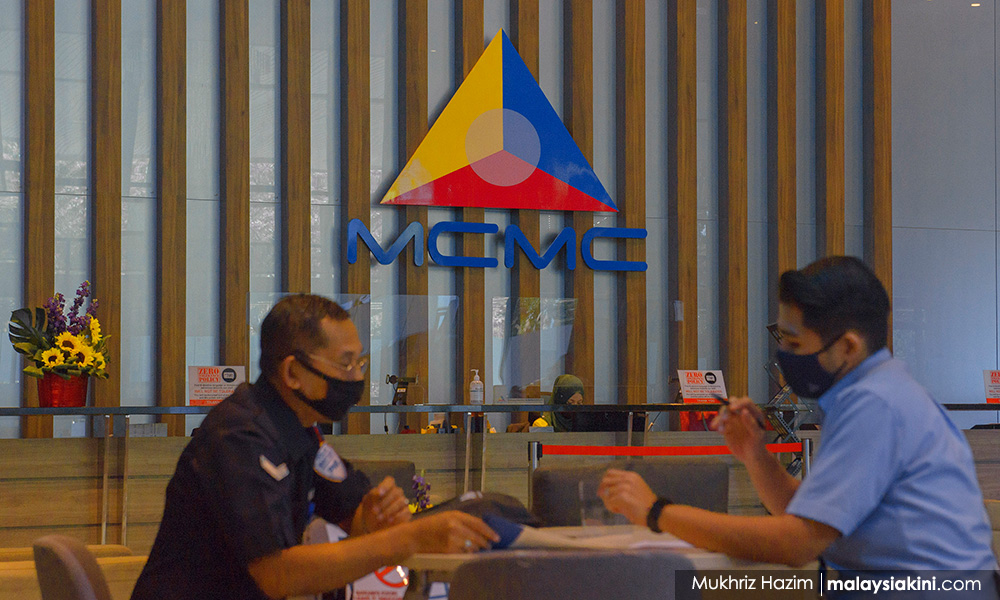
MCMC previously announced that all social media and internet messaging services with at least eight million registered users in the country must apply for a Class Licence for Application Service Providers under the Communications and Multimedia Act 1998 (Act 588).
The AIC has argued that this licensing initiative is impractical for the industry and could hinder innovation by placing undue burdens on businesses.
User ID verification
Responding to additional inquiries from Wee about the necessity of user identity verification on social media, Teo said the government does not plan to implement such measures, noting that it would be challenging if platform providers themselves do not enforce these requirements.
“This could only become feasible after we establish a social media licensing framework and integrate it into a code of conduct, but that is not the government’s intention at this time,” she said.
On the issue of extending licensing to social media platforms with fewer than eight million registered users, Teo indicated that the government intends to first evaluate the effectiveness of the licensing framework, which is set to take effect on Jan 1, 2025.
“By setting eight million as the threshold, we understand that it is not particularly high. For comparison, the thresholds in the United Kingdom and India are much lower, at five and seven million, respectively.
“Our research indicates that most cyber crimes occur on popular platforms like Facebook, Telegram and WhatsApp. Therefore, we want to concentrate on platforms with over eight million users and assess the effectiveness of the mechanisms that will be in place next year,” she said.
Content removal
Teo revealed that from January 2022 to September this year, 60 percent of the content removal requests submitted to the MCMC were related to gambling, while 22 percent pertained to fraud.
She said since her appointment alongside Communications Minister Fahmi Fadzil, 22 meetings have been held with social media platform providers to discuss these issues. However, problematic content and posts continue to resurface weeks later.
“Statistics from the police show losses amounting to RM1.6 billion over a 19-month period. Therefore, it is essential to ensure that platforms are held accountable for the unsafe content they host,” she added.
- Bernama
/file/1189/1f154e06c510b4e575d475dd39c82db3.jpeg)
/file/publisher-c1a3f893382d2b2f8a9aa22a654d9c97/2024/08/6cabe2b4853cdb163548e95613113034.jpg)
/file/publisher-c1a3f893382d2b2f8a9aa22a654d9c97/2024/01/e50e0262a2eee1d03f092c0e35233637.jpg)
/file/publisher-c1a3f893382d2b2f8a9aa22a654d9c97/2024/08/589df61d5177c5d06306afcb888a56cc.jpg)


Report this comment
Are you sure you want to delete this comment?
This action cannot be undone.