


/file/publisher-c1a3f893382d2b2f8a9aa22a654d9c97/2024/04/acb10dcb576334d58f53dd90e3ed53a8.jpg)

Groups seek engagement, clarity on new house arrest law
A group of civil society organisations has called for more government engagement, as well as greater clarity and transparency, over the proposed house arrest law.
The CSO Platform for Reforms underscored three demands - enhancing transparency in legislative processes, engaging civil society in consultations, and establishing clear guidelines for implementation.
A group of civil society organisations has called for more government engagement, as well as greater clarity and transparency, over the proposed house arrest law.
The CSO Platform for Reforms underscored three demands - enhancing transparency in legislative processes, engaging civil society in consultations, and establishing clear guidelines for implementation.
“As discussions continue about the proposed House Arrest Bill, it’s important to understand its purpose and potential impact.’
“The bill aims to address prison overcrowding and provide alternatives for certain offenders, particularly first-time offenders and vulnerable groups,” the group’s steering committee, which includes Suaram and Pusat Komas, said in a statement.
The group noted that Home Minister Saifuddin Nasution Ismail previously stated the legislation is intended to offer a second chance rather than create loopholes for serious offenders.
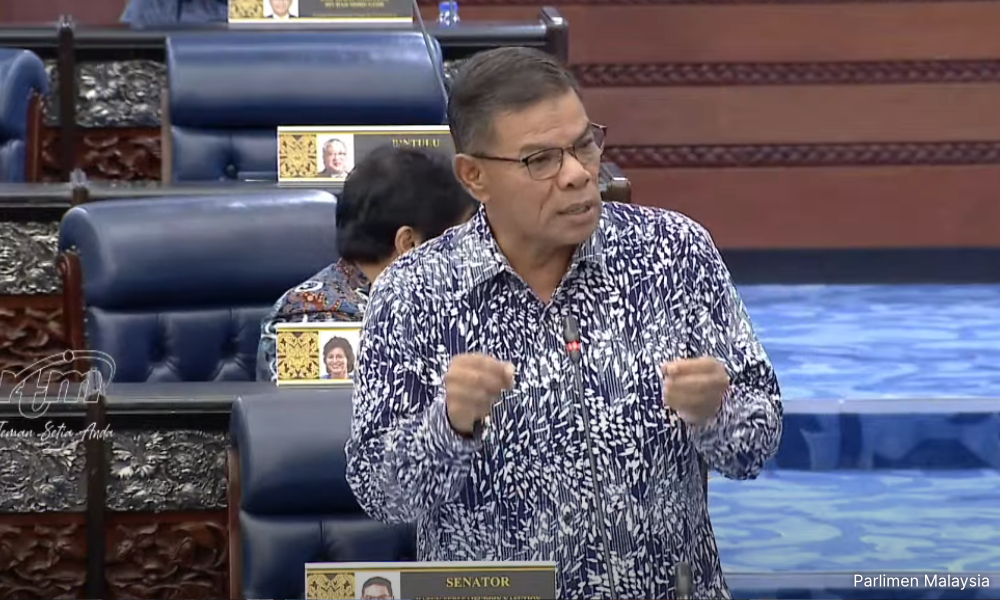
“This is in line with a modern society that can support such good initiatives.
“Despite these intentions, there is scepticism among lawmakers and the public regarding the risk of misuse, especially concerning high-profile cases,” said the group.
The proposal for a new law to facilitate house arrests was mentioned in the official text of Prime Minister Anwar Ibrahim’s Budget 2025 speech, though that portion of the text was not read out when he presented the budget.
He proposed that offenders be confined to a suitable location such as a residence, care home, or workers’ hostel under specific conditions supervised by the Prison Department.
Elephant in the room
Since then, CSO Platform for Reforms noted there had been significant debate on the proposal, particularly regarding its implications for high-profile individuals including former prime minister Najib Abdul Razak.

“The case (against Najib) remains a serious criminal offence, as it is a mega kleptocratic offence, and this doesn’t qualify for the house arrest bill being mooted.
“We don’t want justice to be given an easy discount via this bill,” said the group.
Last week, government spokesperson Fahmi Fadzil denied that the proposed law to allow house arrest of prisoners is designed to facilitate the release of any specific individual, including VIPs.
Najib is currently serving his sentence at Kajang Prison after being convicted in the RM42 million SRC International corruption case.
He was originally sentenced to 12 years imprisonment and an RM210 million fine in lieu of an additional five years in jail.
However, the Pardons Board later decided to reduce his sentence to six years in jail and an RM50 million fine, as well as an additional year in prison if he failed to pay the fine.
Earlier today, the Kuala Lumpur High Court ordered Najib to enter his defence over four abuse of power and 21 money laundering charges involving RM2.27 billion from 1MDB.
/file/publisher-c1a3f893382d2b2f8a9aa22a654d9c97/2024/10/1ae99d3a57182f32eac20b45a4b2d5c8.jpg)
/file/publisher-c1a3f893382d2b2f8a9aa22a654d9c97/2024/09/6fceb59a2b8017ff526645f60253af12.jpg)
/file/1144/bb3ed288b0587c6631680682e380bb41.jpeg)
/file/publisher-c1a3f893382d2b2f8a9aa22a654d9c97/2024/04/397d38374e855e51f2489c035839eb73.jpg)
/file/publisher-c1a3f893382d2b2f8a9aa22a654d9c97/2024/10/41d38f180b55dcf9e6646957fe88d2de.jpg)
/file/publisher-c1a3f893382d2b2f8a9aa22a654d9c97/2024/04/59e37127e4d47789c79222913cc86af8.jpg)


Report this comment
Are you sure you want to delete this comment?
This action cannot be undone.