


/file/publisher-c1a3f893382d2b2f8a9aa22a654d9c97/2024/03/1022635271c4e9ae76716414dd3a456d.jpg)

NGOs see urgent need for political funding law in Hajiji's claims
Sabah Chief Minister Hajiji Noor’s statement regarding the corruption scandal in the state underscores the urgent need for a new law on political funding, according to NGOs.
Bersih chairperson Muhammad Faisal Abdul Aziz believes that the public funding component is crucial to minimise the reliance of political parties and politicians on corporate donors, who may attempt to influence government policies or unfairly gain access to government contracts.
“This would address the fundamental question of the need for...
Summary
NGOs emphasise the need for a political funding law to ensure transparency, regulate party finances, and reduce dependence on corporate donors, which could influence government policies.
Bersih’s Muhammad Faisal Abdul Aziz stresses the importance of public funding for parties, alongside clear financial regulations to prevent corruption.
Malaysian Corruption Watch urges for transparent reporting of political donations, independent audits, and additional MACC powers to oversee political funding.
Sabah Chief Minister Hajiji Noor’s statement regarding the corruption scandal in the state underscores the urgent need for a new law on political funding, according to NGOs.
Bersih chairperson Muhammad Faisal Abdul Aziz believes that the public funding component is crucial to minimise the reliance of political parties and politicians on corporate donors, who may attempt to influence government policies or unfairly gain access to government contracts.
“This would address the fundamental question of the need for political parties to secure funds to pay staff salaries, cover office operating costs, and so forth when political parties are allocated appropriate funds based on the percentage of votes they obtain.
“Once this question is resolved, political parties must comply with financial regulations under the Political Funding Act to ensure transparency and to prevent elements of corruption and abuse of power,” he said when contacted by Malaysiakini yesterday.
He was commenting on Hajiji’s statement addressing allegations of a corruption scandal involving his administration, suggesting that the leaked video clips may refer to political donations.
In the TikTok clip, the Gabungan Rakyat Sabah (GRS) chairperson emphasised that assemblypersons in his administration had never solicited bribes.
He also highlighted that the salaries of assemblypersons were insufficient to meet their needs.
Adhere to regulations
Faisal (above) said that the political funding law, in addition to regulating how parties obtain financing, would provide avenues for parties to access public funds.
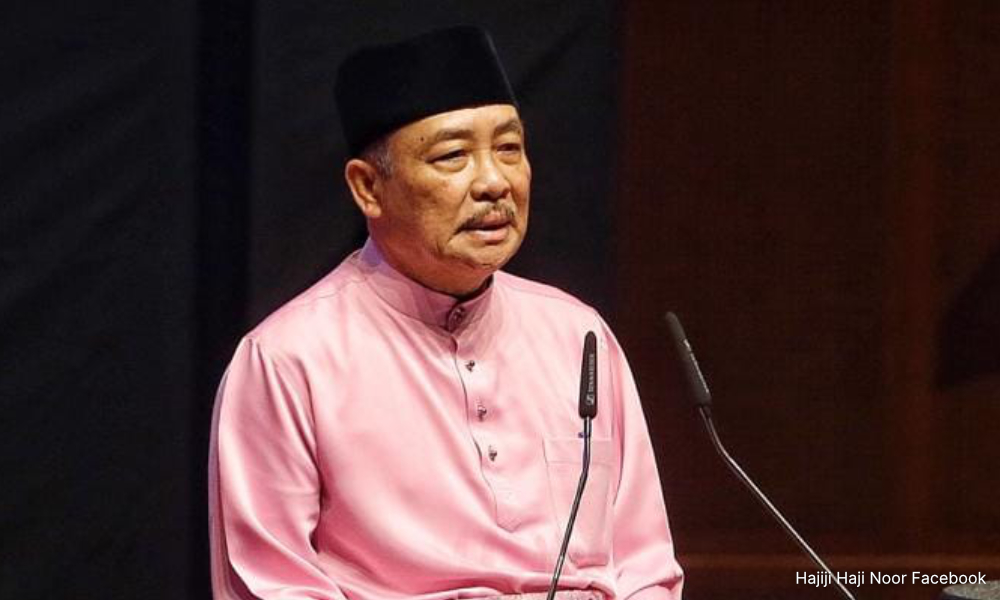
He added that all contributions received must be transparent and adhere to regulations.
“Without clear rules, any political party is at risk of being accused of corruption based on such grounds.
“In truth, the political funding act has long been discussed by the All-Party Parliamentary Group on Political Finance but has been repeatedly delayed from being tabled in the Dewan Rakyat.
“It is now time for the country to take a step forward in reforming the nation’s political system,” he said.
Abuse of power risks
Malaysian Corruption Watch (MCW) president Jais Abdul Karim said his organisation takes Hajiji’s remarks seriously.
“Although political donations are not illegal under the law, this issue is often associated with the risks of abuse of power, conflicts of interest, and corruption if not managed transparently and responsibly.
“MCW emphasises that the acceptance of political funds must be accompanied by a transparent reporting system and high accountability. All contributions must be recorded, made public, and independently audited.
“The proposal to establish specific legislation to regulate political funds should be expedited to avoid negative perceptions of the integrity of leaders and political parties.
“Therefore, the government must promptly draft a political funding law requiring all donations to be reported and audited, and the MACC should be given additional powers to oversee political funds to prevent corrupt practices or misuse of funds,” he said.
Jais also urged the MACC to investigate Hajiji’s claim of having obtained confidential information about statements made by a whistleblower to the anti-corruption agency.
“This allegation is a serious matter. The MACC must investigate this issue to ensure the confidentiality of investigations is not compromised, thereby maintaining public trust in the law enforcement process,” he said.
No legitimacy
Minister in the Prime Minister’s Department (Law and Institutional Reform) Azalina Othman Said had last year that no existing laws allow for donations to political parties.
She said the channelling of funds in this manner is punishable under the MACC Act 2009 if corrupt elements were found.
“No existing laws allow for this (political donations). Unless (in future), exceptions are made to the rule through a proposed Political Funding Act.
“Even if someone says the donation is well-intended or to assist, no laws lend legitimacy to the act,” she reportedly said in a Astro Awani programme in March 2023.
/file/publisher-c1a3f893382d2b2f8a9aa22a654d9c97/2023/10/fb175fa214a3c6889ea683e9bd918a2f.jpg)
/file/publisher-c1a3f893382d2b2f8a9aa22a654d9c97/2023/01/14f23dc02c8d3511e23e38f98274ff11.jpg)
/file/publisher-c1a3f893382d2b2f8a9aa22a654d9c97/2024/12/c8e74582d2cee23c263d1e5df9ca09c0.jpg)
/file/publisher-c1a3f893382d2b2f8a9aa22a654d9c97/2024/12/53da8a84232d5acfa97c4aaeb8bef4f0.jpg)
/file/publisher-c1a3f893382d2b2f8a9aa22a654d9c97/2024/12/434c1bb2ed99c0d2a8a7d63b9ae32b26.jpg)


Are you sure you want to delete this comment?
This action cannot be undone.