


/file/publisher-c1a3f893382d2b2f8a9aa22a654d9c97/2024/09/6a7b01cbd2beaed0aa1a9d346ded2a76.jpg)

Tell PAS they're not sole arbiters of Islamic living, DAP rep urges Muslims
Amid the latest twist in the row over mandatory halal certification, DAP central committee member Lee Chin Chen urged Muslims to send a message to PAS.
He claimed Perikatan Nasional and PAS’ goal in the move is to place all religious matters under state government control, which reflects not just the economic interests involved but also an obsession with monopolising religious discourse.
“Muslims need to make PAS understand that...
Summary
DAP member Lee Chin Chen condems PAS and Perikatan Nasional for attempting to control all religious matters under state authority, arguing that it reflects an economic and ideological monopoly on religious discourse, stifling diversity and choice in society.
MCA Youth deputy chief Mike Chong expresses concern that the new rule requiring halal certification in Kelantan could unfairly affect non-Muslim businesses, potentially forcing them to close or alter their operations.
Amid the latest twist in the row over mandatory halal certification, DAP central committee member Lee Chin Chen urged Muslims to send a message to PAS.
He claimed Perikatan Nasional and PAS’ goal in the move is to place all religious matters under state government control, which reflects not just the economic interests involved but also an obsession with monopolising religious discourse.
“Muslims need to make PAS understand that they are not the sole arbiters of Islamic living. Diversity and choice are the foundation of a healthy society,” Lee (above) said in a statement last night.
He was responding to media reports yesterday quoting Kelantan Islamic Development, Proselytisation, Information, and Public Relations executive councillor Mohd Asri Mat Daud stating that food and beverage businesses statewide will soon require halal certification as a prerequisite for renewing their business licence.
Asri reportedly said this has already been implemented by the Kota Bharu Municipal Council and will be expanded to other local authorities, with the Kelantan Islamic Religious Affairs Department also expanding opportunities for small businesses to obtain certification.
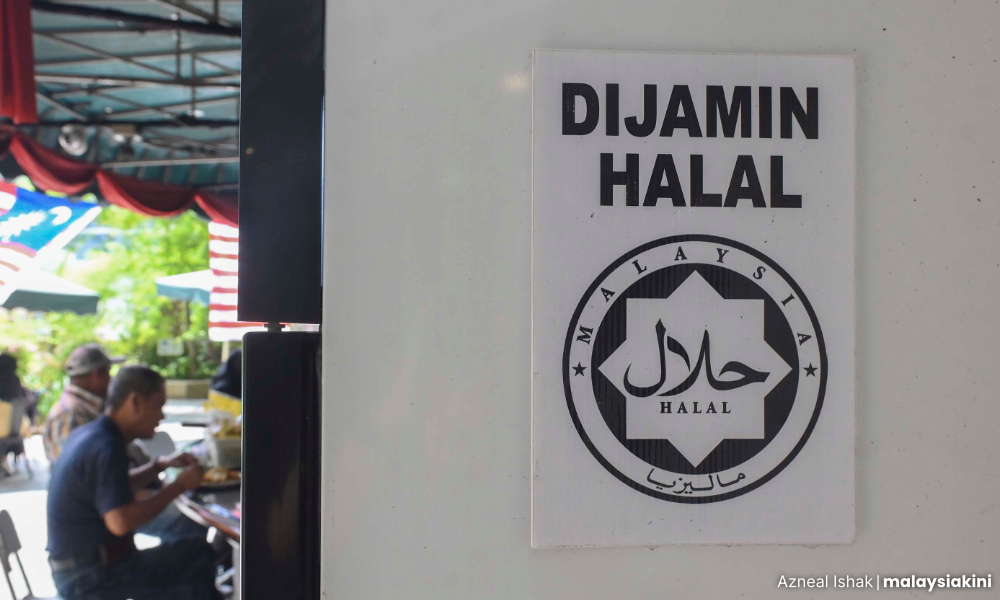
Lee said many Muslim-owned businesses don’t seek halal certification due to factors such as cost and market demand, while Muslim customers can choose “Muslim-friendly” businesses based on personal preferences and trust.
Such mutual respect in business reflects a harmonious multicultural society.
“There is no shortage of halal products and services available to Muslim consumers in the market. However, PN-PAS aims to place all matters related to religion under state government control.
“This involves not only significant economic interests but also an obsession with monopolising religious discourse,” he added.
He also claimed that many living in the PN-led northern states have been dismayed by their conservative policies.
In the upcoming New Year celebrations, he claimed some 500,000 revellers are expected to travel from Malaysia to Hatyai in southern Thailand to celebrate in a more inclusive and freer environment.
“If PN continues down this misguided path, one day, it won’t just be tourists leaving – even Kelantan residents might cross into Thailand in search of better lives and livelihoods.
“This is not a policy direction that serves the people’s interests,” said Lee.
‘Unfair move’
MCA Youth deputy chief Mike Chong urged the Kelantan government to clarify whether the rule also applies to non-halal food and beverage businesses catering to the non-Muslim community.
If so, the move would force such businesses to either close or change the nature of their business.

“This will severely impact non-Muslim operators and consumers alike, which is extremely unfair,” he said in a separate statement last night.
He urged for halal certification to remain voluntary and leave it to businesses to decide based on their market considerations, marketing strategies, and business development plans.
“The government can encourage businesses to apply for halal certification, improve the certification process and operations, and even enhance the benefits that halal certification brings to businesses.
“However, under no circumstances should the decision to apply for halal certification be anything but free and voluntary for the businesses themselves,” he said.
In September, Minister in the Prime Minister’s Department (Islamic Affairs) Mohd Na’im Mokhtar mooted a similar move at the national level where restaurants and food companies that do not serve pork or alcohol would be required to obtain halal certification.
The issue sparked objections, citing the costs and stringent requirements for certification, as well as a controversy where critics accused Seputeh MP Teresa Kok of disrespecting Islam in highlighting issues related to the proposal.
The cabinet ultimately decided to maintain the status quo, where halal certification is voluntary and pledged to improve the certification process.
/file/publisher-c1a3f893382d2b2f8a9aa22a654d9c97/2024/09/3b4708435d5687f62b316667c1fb24f5.jpg)
/file/publisher-c1a3f893382d2b2f8a9aa22a654d9c97/2024/12/f78201a32e580ee2c0535f36018367e8.jpg)
/file/publisher-c1a3f893382d2b2f8a9aa22a654d9c97/2024/11/90c9fca784b5ee6586a401ccf1567d1d.jpg)
/file/publisher-c1a3f893382d2b2f8a9aa22a654d9c97/2024/09/5394662dc606e59603ee59cc4d497259.jpg)


