




PKR promises an economic 'new deal'
In the first of a series of public forums and consultations, opposition party PKR yesterday unveiled its proposed 'new deal' to the people.
In the first of a series of public forums and consultations, opposition party PKR yesterday unveiled its proposed 'new deal' to the people.
The party also aims to collect public feedback for its proposals to re-structure the economy.
Some 100 people flocked to a hotel in Kuala Lumpur to hear PKR's secretary-general Khalid Ibrahim and treasurer William Leong speak on 'Malaysia's Economic Direction: For Better or for Worse?'
Launched early last month, the party's Malaysian Economic Agenda proposed the new deal to introduce significant changes aimed at greater and fairer distribution of resources and opportunities.
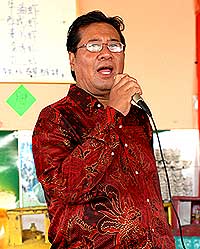 Among them, said Khalid in his presentation, is an overhaul of the New Economic Policy (NEP) favouring bumiputeras and the emphasis on needs-based, as opposed to race-based, affirmative actions.
The share of the economic pie of low-and middle-income groups would be increased while that owned by the elites reduced. Other policy changes will include the expansion of meritocracy and cross-communal affirmative actions in education, employment, housing and health.
Khalid also said there would be strict adherence to institutional checks and balances to prevent consolidation of power by the executive, legislative and judicial branches of government.
Between Marxism and capitalism
Referring to it as being between Marxism and capitalism, he said the 'new deal' is a 'social democracy' which will pave the way for a brighter future for all Malaysians.
"The concept of social democracy (...) promises that for its takers, if it's not a heaven, at least it's an end to hell on earth," said Khalid.
Among those invited to give their views on the 'new deal' were Universiti Malaya economics professor Dr Rajah Rasiah, newly anointed PKR leader and University of Cambodia professor Dr Din Merican, and political scientist and economics researcher Dr Lim Teck Ghee.
All three panelists lauded PKR's decision to embrace a non-racial approach to economic development.
 "What is extremely refreshing is to see an economic document of a party that is multi-racial but with a large Malay component which does not have figures that draw attention to racial quotas and racial targets," said Lim.
"That, to me, is an extremely courageous effort by the party and one that I think deserves support," he added.
He said further that while the Economic Agenda needs "fleshing out" in its proposals to reduce disparities in education, housing, income and other aspects of the economy, they are "do-able".
"I believe that more transparency on it and more input from the Malaysian citizenry will help improve this economic agenda and will make it much more participatory," he said.
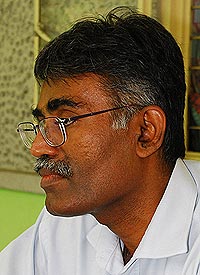 Referring to a proposal to link greater distribution of economic resources to greater economic efficiency, Rajah said "the link is actually direct" rather than indirect as posited by PKR.
"When you distribute to the poor more economic resources, there will be more efficiency because they haven't reached the state of 'saturation' as usually happens with the rich," he said.
Contacted later, Leong said the party leadership will discuss the details of other programmes in order to bring PKR's Economic Agenda to other audiences and to get feedback from economists, the business sector and other stakeholders.
"As we go along, we will refine it after getting the views of the people, although the party's position on the main ideas would be the same," he explained.


