
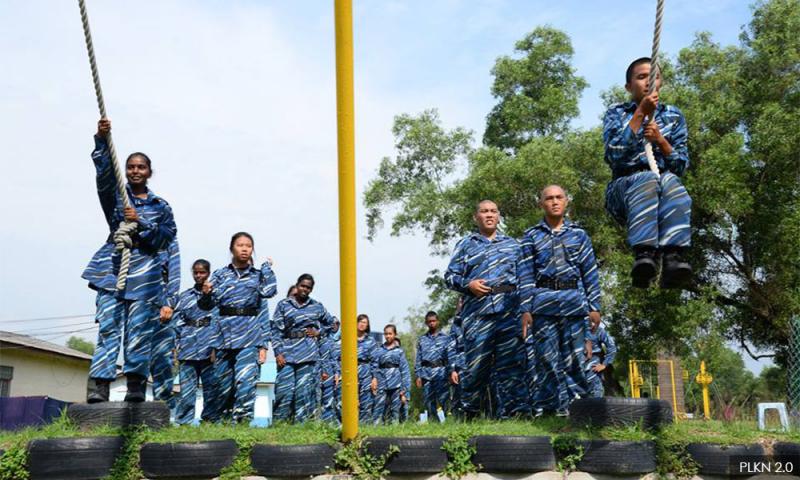
Individuals selected to undergo the National Service Training Programme (PLKN) 3.0 are required to attend, and those who are unable to do so must apply for deferment.

National Service Training Department director-general, Ya’cob Samiran said that working individuals must obtain permission from their employers for leave, and employers must provide justification if they refuse to release their employees for training.

“If employers do not grant permission, there are other processes we will implement,” he told reporters during the PLKN 3.0 2025 light weapons shooting training session at the First Battalion, Royal Malay Regiment Shooting Range, Kem Perdana Sungai Besi today.

He explained that deferment applications must be made for the second and subsequent series, as only the first series of PLKN 3.0 allows voluntary participation.

Regarding the light weapons shooting training, Ya’cob stated that it is conducted over two days, with 67 trainees participating today and another 53 scheduled for tomorrow.

For today’s session, 40 male and 27 female trainees began training at 9am, supervised by 10 instructors from the army and air force.

“Before shooting (practice), the trainees are given at least a week of education on weapon management,” he said.

Bernama's observation found that the session began with a 25m light weapon calibration exercise, followed by a 100m shooting drill using the M16 rifle.

Before training commenced, instructor Shawal Mohamad Illias provided a safety briefing to all trainees, as well as attending media personnel.

Cost-effective

On Jan 12, a total of 120 trainees, comprising 80 men and 40 women aged 18 to 25, were accepted into the first series of PLKN 3.0 for 2025.

The Defence Ministry previously announced that this figure includes 13 individuals who registered as walk-ins at the 515 Territorial Army Regiment Camp, representing diverse ethnic, religious, educational, and local backgrounds.

Ya’cob said that the use of military fatigues for PLKN 3.0 trainees aligns with practices in other countries and is a more cost-effective option compared to alternative uniforms.

“If we were to use a different type of uniform, the process would take longer, and the cost would be higher,” he explained.

He added that trainees are required to return the uniforms after completing their training, allowing future batches to reuse the existing camouflage attire.

- Bernama