


/file/publisher-c1a3f893382d2b2f8a9aa22a654d9c97/2024/12/4cd911e642e847e56a3061a3320501ce.jpg)

Tariffs: Zafrul to meet US trade officials in Washington on April 24
Investment, Trade and Industry Minister Tengku Zafrul Aziz is set to meet United States Trade Representative (USTR), Jamieson Greer, and other relevant officials in Washington on April 24, to discuss the reciprocal tariff imposed on Malaysia.
“We will be meeting the USTR as well as other government officials from US President Donald Trump’s administration during my two-day visit,” he said.
The Malaysian delegation will also...
Investment, Trade and Industry Minister Tengku Zafrul Aziz is set to meet United States Trade Representative (USTR), Jamieson Greer, and other relevant officials in Washington on April 24, to discuss the reciprocal tariff imposed on Malaysia.
“We will be meeting the USTR as well as other government officials from US President Donald Trump’s administration during my two-day visit,” he said.
The Malaysian delegation will also take the opportunity to meet some chambers, companies and interest groups to explain the country’s stand and situation as well as the feedback received from the cabinet, Zafrul said in a recent press briefing.
“We need to go there to explain how Malaysia, as a neutral country, plays an important role in the semiconductor and electrical and electronics sectors. Our goal is to show that Malaysia can support industries in the US rather than posing a threat to them,” he emphasised.
The minister will be accompanied by the ministry’s deputy secretary-general (trade) Mastura Ahmad Mustafa, as well as other officials from the ministry.
The ministry’s representatives at Malaysia's Embassy in Washington will join the delegation.
The minister clarified that the trip is not for negotiation but for discussion.
“We are not going there to discuss the details of negotiation. Negotiation takes time, right? So, it is more to talk about how Malaysia can play an important role in the supply chain between Asia and the US,” Zafrul said.
Asean’s stand
Although this visit is purely for Malaysia, he said he will also take the opportunity to reiterate Asean’s stand on the tariff issue, especially the outcome of the special Asean Economic Ministers’ meeting.
“As Malaysia is Asean chair, I will also explain Asean’s position as well, which is, we believe in the rule-based global trading system, which is the principles of multilateralism when it comes to trade,” he said.
Asean and Malaysia have clearly stated that they will not take any retaliatory measures.
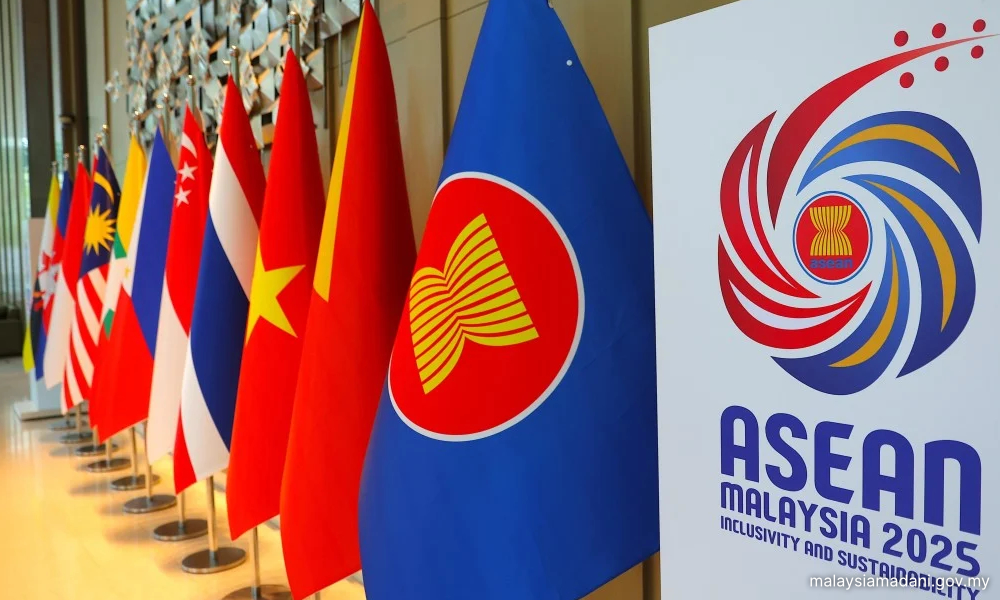
“We also all want to explain to the US that many of us, Asean itself, do not believe that we have imposed such high tariffs on US products. We want to correct some of the wrong views,” Zafrul said.
In a joint statement issued after the special meeting on April 10, Asean said it will engage in a frank and constructive dialogue with the US to address trade-related concerns.
The ministers said the grouping remains committed to safeguarding Asean’s economic interests as well as maintaining strong and mutually beneficial trade relations with the US.
Asean’s Indochina member states were the hardest hit by the tariffs, with Cambodia facing combined baseline and retaliatory duties totalling 49 percent, followed by Laos (48 percent), Vietnam (46 percent), and Myanmar (44 percent).
Thailand was subjected to tariffs of 36 percent, Indonesia 32 percent, Brunei and Malaysia both 24 percent, the Philippines 17 percent, while Singapore faced a baseline tariff of 10 percent.
The reciprocal tariffs are currently on a 90-day pause, except for China.
- Bernama
/file/publisher-c1a3f893382d2b2f8a9aa22a654d9c97/2025/01/b02a3f8aadf08c4b809c88a6926386b0.jpg)
/file/publisher-c1a3f893382d2b2f8a9aa22a654d9c97/2022/12/246dbf6346038150648922edc2bb8074.jpg)
/file/publisher-c1a3f893382d2b2f8a9aa22a654d9c97/2025/02/676e863eb597c212909cce6e064c49bd.jpg)
/file/publisher-c1a3f893382d2b2f8a9aa22a654d9c97/2020/04/3e83d78654467743a8764f56c3fe860f.jpg)
/file/publisher-c1a3f893382d2b2f8a9aa22a654d9c97/2025/04/08c034cb000dfb62678fc2fbecd40bd4.jpg)


Are you sure you want to delete this comment?
This action cannot be undone.