


/file/publisher-c1a3f893382d2b2f8a9aa22a654d9c97/2025/05/4e2c41a602e86dd8cdea518b65d630e2.jpg)

'Unprofessional, undiplomatic': Abim slams Indian media for belittling Anwar
Its president Ahmad Fahmi Samsudin referred to their conduct as unprofessional and contrary to the spirit of international diplomacy amid escalating tensions between the South Asia nations...
Summary
Abim president Ahmad Fahmi Samsudin berates an Indian media agency for belittling Prime Minister Anwar Ibrahim’s offer to mediate the dispute between India and Pakistan
He also calls it unprofessional and contrary to the spirit of international diplomacy amid escalating tensions between the nuclear-armed nations.
The Malaysian Islamic Youth Movement (Abim) condemned an Indian media outlet for belittling Prime Minister Anwar Ibrahim’s offer to mediate the dispute between India and Pakistan following the deadly terror attack in Pahalgam, Kashmir.
Its president Ahmad Fahmi Samsudin referred to their conduct as unprofessional and contrary to the spirit of international diplomacy amid escalating tensions between the South Asia nations.
“We condemn the unprofessional conduct of certain Indian media practitioners who have belittled Anwar’s offer to act as a peace intermediary.
“This is an inappropriate act and contradicts the principles of international diplomacy.
“The ongoing conflict in this strategic region also has a significant impact on global economy and geopolitical stability, especially as it involves two nuclear-armed nations representing two of the world’s major religions - Islam and Hinduism,” Fahmi said in a statement today.
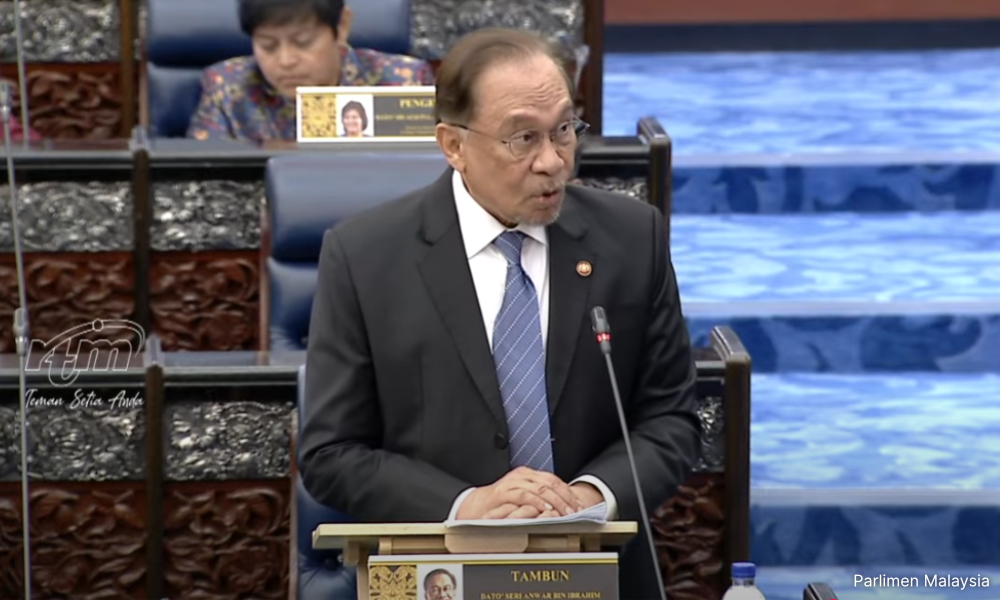
Yesterday, Indian media outlet Firstpost criticised Anwar over his offer to mediate between India and Pakistan and called it “absurd”.
According to journalist Palki Sharma, Malaysia is not a neutral country and thus unqualified to act as a peace broker.
She based her arguments using Anwar's own words, where the latter had referred to the territory as “India-administered Kashmir”, adding the premier had also issued a statement that seemed sympathetic to Pakistan.
Earlier today, India launched missile attacks in several areas of Pakistan-administered Kashmir.
India’s Defence Ministry in a statement said Indian forces targeted several sites early Wednesday to hit "terrorist infrastructure", claiming the action as “focused, measured and non-escalatory in nature”.
‘India fuelling tensions’
Further, Fahmi urged for an immediate end to the armed conflict between the countries to prevent further bloodshed, particularly involving innocent civilians.
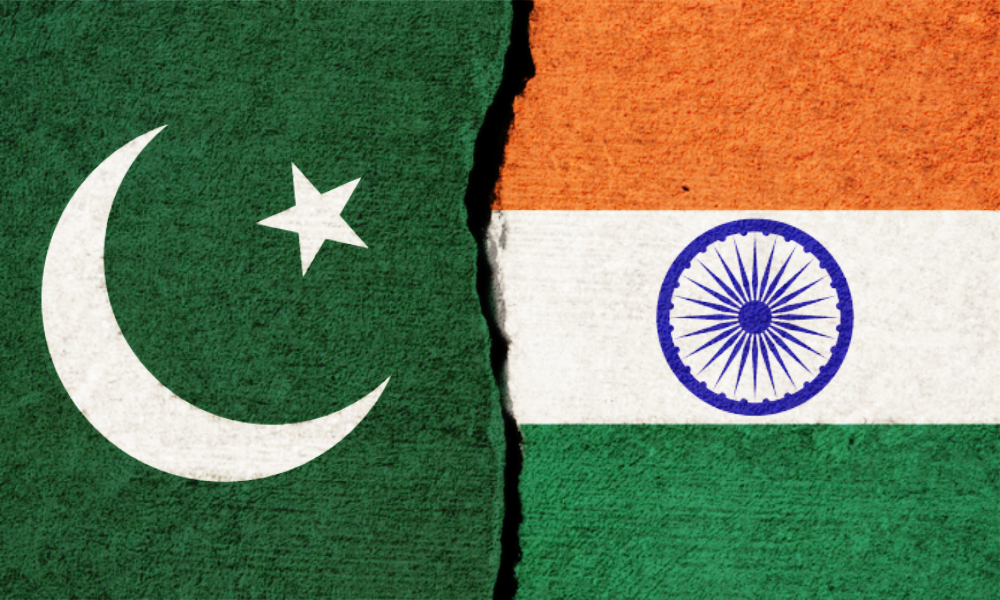
Fahmi also blamed the Indian government’s alleged provocative actions for fuelling tensions - including the closure of a dam that serves as a crucial water source for Pakistan.
“This action violates humanitarian principles and the spirit of international neighbourliness.
“Abim takes seriously the incident in Pahalgam, Kashmir, which has been a major trigger for the current conflict.
“The incident must be investigated independently and transparently to avoid it being used as justification for further military action that would worsen the situation,” he added.
UN failing
Fahmi warned that the conflict risks fuelling Islamophobia and xenophobia not only in South Asia but also in international discourse.
“It reflects the failure of the United Nations to play an effective role as a global peacekeeping body, having allowed tensions to escalate into armed conflict,” he said.
Therefore, Fahmi urged the international community to immediately intervene and urge all parties to return to the negotiation table to find a peaceful solution.
The Indian missile strikes come after a militant attack last month that killed 26 Hindu tourists in Pahalgam. India blamed Pakistan-based militants for the assault, which Islamabad has denied.
/file/publisher-c1a3f893382d2b2f8a9aa22a654d9c97/2025/05/dc676bd56669d955641dac69f462e136.jpg)
/file/publisher-c1a3f893382d2b2f8a9aa22a654d9c97/2024/09/a3780d2adbde280211857c2897f8508d.jpg)
/file/publisher-c1a3f893382d2b2f8a9aa22a654d9c97/2025/04/95999a3ea95b4ab9499c29361a93746b.jpg)
/file/publisher-c1a3f893382d2b2f8a9aa22a654d9c97/2025/04/8f25f8137879009dc05eb62cb5a2aaf7.jpg)


India has the right to defend its people from terrorists,
India is fighting terrorism, especially Islamic based terrorism. While our Anwar supports Hamas which is a well know terrorism organisation. Anwar is also closely associated with the "Islamic Brotherhood" which many countries, including progressive Islamic countries consider as terrorism organisation and troublemakers. Also, Anwar's past court cases and records counts when you volunteer to become a mediator. Additionally, Malaysia is a tiny country (population 35 million) while Pakistan has 240 million and India is 1.4 billion strong. In that sense, it is not only 'absurd' but also laughable for Malaysia and Anwar to want to be a mediator.
The same PMX said "they deserve it" when iran attacked israel once. Where did Abim or PMX's humanitarian values/compassion reside at that time ? I am not advocating for war as a solution, but bear in mind that India is only retaliating for what has happened to them at Kashmir. And they r nt stupid to simply blame and attack another country with ascertaining the culprit. The attack also targeted the very habitat of terrorists, not involving public. So my advice is stay silent and let them settle their own issues. There are soo many issues plaguing our country, which the PMX has yet to address / speak. Your own coalition's starwalt politician dr akmal has multiple times said that "melayu first, others secondary" in diff wrds and tone. So why did you guys nt tame him or ask him to shut up, and impart the lesson of peacekeeping in a multiracial country ? A bunch of jokers.
Are you sure you want to delete this comment?
This action cannot be undone.