


/file/publisher-c1a3f893382d2b2f8a9aa22a654d9c97/2023/08/382fd9523c73622447021ffbb87b04b6.jpg)

Rawang incinerator site separated from coal seams by 300m of rock: EIA report
The proposed waste-to-energy (WTE) incinerator in Rawang, Selangor, will be separated from coal seams by up to 300m of boulder beds, according to the environmental impact assessment (EIA) report.
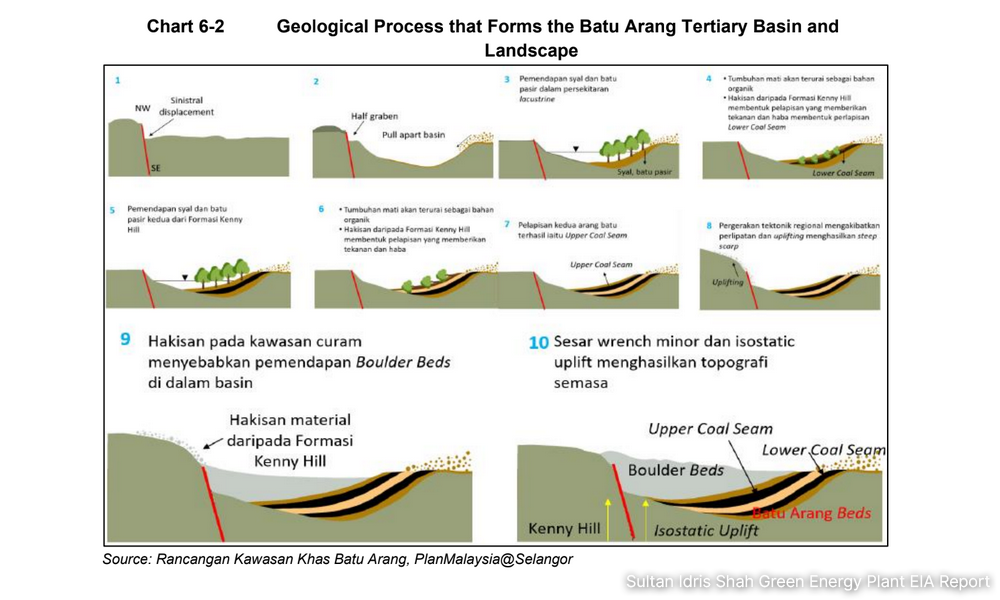
The EIA on the Sultan Idris Shah (SIS) Green Energy Plant said the boulder beds unconformably sit on top of the coal seams and reach their maximum thickness of 300m at the centre of the basin that outcrops the site.
It identified two coal seams underneath the project site...
Summary
The proposed Rawang waste-to-energy incinerator will be separated from coal seams by up to 300m of boulder beds, according to the EIA report.
The boulder beds sit on top of the coal seams and reach their maximum thickness of 300m at the centre of the basin that outcrops the site.
The project EIA identifies two coal seams underneath the project site, but makes no mention of their length.
The proposed waste-to-energy (WTE) incinerator in Rawang, Selangor, will be separated from coal seams by up to 300m of boulder beds, according to the environmental impact assessment (EIA) report.
The EIA on the Sultan Idris Shah (SIS) Green Energy Plant said the boulder beds unconformably sit on top of the coal seams and reach their maximum thickness of 300m at the centre of the basin that outcrops the site.
It identified two coal seams underneath the project site.
They were made up of a lower and upper seam with a thickness of 7m and 13m, respectively, the report said.
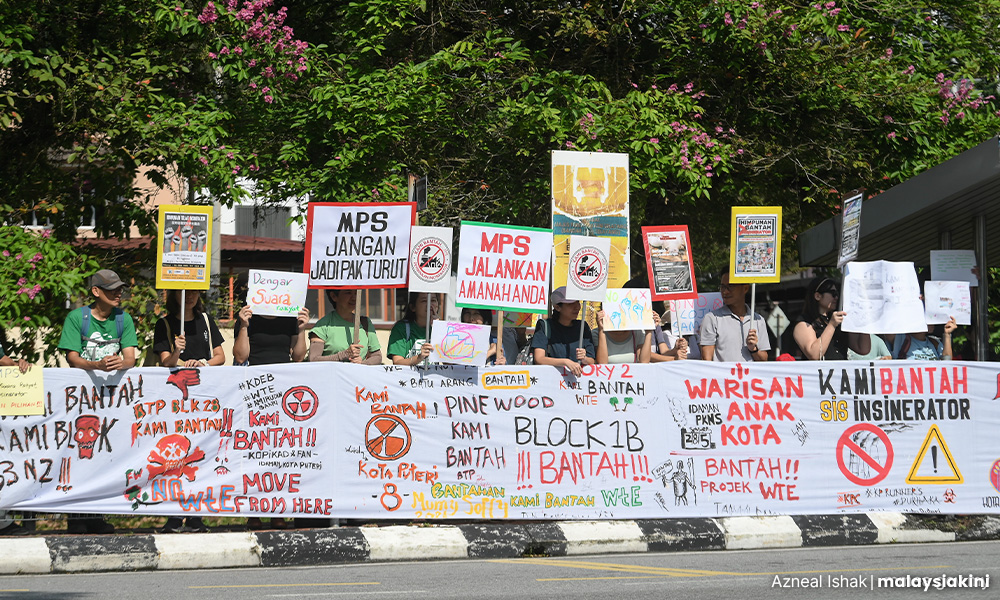
The Rawang Tolak Insinerator Network (RTI) has rejected the incinerator over concerns that the area in Batu Arang, Selangor, is unsuitable due to its position on top of former open-cast coal mines, which the group said makes the land unstable and poses a risk of collapse.
The group said there were also coal seams about 50km long under Batu Arang, and a WTE plant opens the possibility of fires or an explosion.
However, the EIA did not mention the length of the coal seams.
It said the upper coal seam was created in the late Miocene age, which was around 10.5 million years ago.
As for the lower coal seam, the report said it was from the late Oligocene and early Miocene age, or approximately 23 million years ago.
It noted that Batu Arang, which literally translates to “coal” in Bahasa Melayu, was a settlement built for miners during the peak of coal extraction activities.
Affected wildlife
Aside from the geology of the site, the EIA covered wildlife in the area that would be affected, identifying 10 species of mammals and birds which should be conserved.
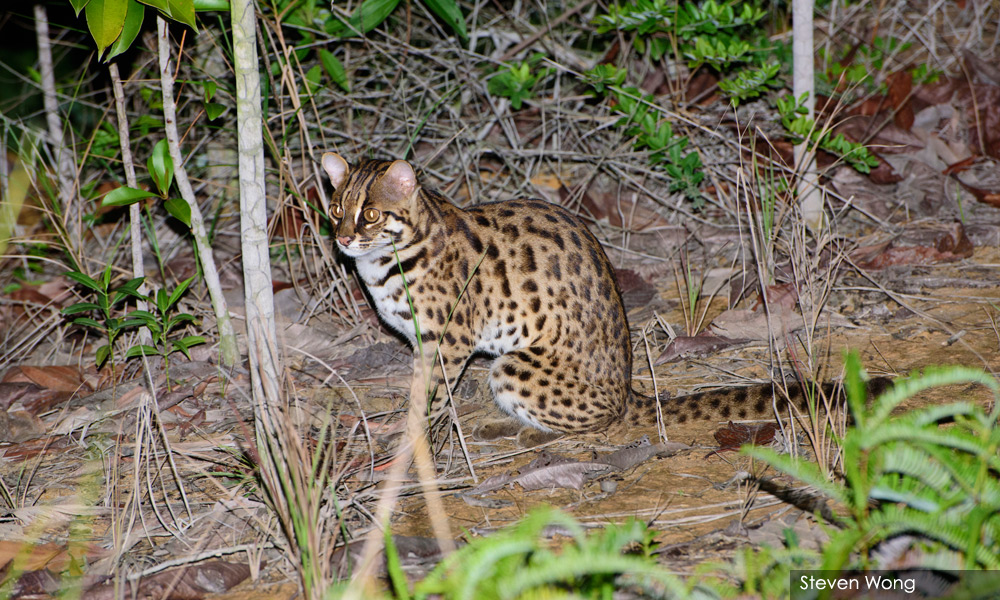
The leopard cat (prionailurus bengalensis) is listed as near threatened on the Peninsular Malaysia Red List.
Nine species of birds found there are also totally protected under the Wildlife Conservation Act 2010.
They are the white-bellied sea eagle (haliaeetus leucosgaster), changeable hawk eagle (nisaetus cirrhatus), common iora (aegithinia tiphia), purple heron (ardea purpurea), little egret (egretta gazretta), yellow-bellied prinia (prinia flaviventris), blue-tailed bee-eater (merops philippinus), Malaysian pied fantail (rhipidura javanica), and pin-striped tit-babbler (mixornis gularis).
However, the report conversely stressed the project’s importance to Malaysia’s environmental goals.
“Failure to proceed with the project would result in missed opportunities across environmental, social and economic dimensions, impacting Malaysia’s long-term sustainability goals,” it said.
This is because the plant will accelerate the country’s target of achieving 40 percent electricity from renewable sources by 2035, it said.
“With an estimated energy recovery capacity of 58 megawatts (464,000 megawatt-hour annually), the project will play a significant role in reducing greenhouse gas emissions,” it added.
It said the reduction is equivalent to offsetting 199,392 tonnes of greenhouse gases and avoiding carbon dioxide emissions from burning 496,079 tonnes of coal.
Reducing disposal of solid waste
The project has the key objective of reducing the volume of solid waste disposed of in landfills due to land scarcity issues and the increasing amount of municipal solid waste generated in Selangor, the report said.
“To achieve this goal, the most suitable thermal treatment method with a proven track record is the mass burn incineration process.
“This technology can reduce the volume of solid waste by up to 90 percent and mass reduction up to 70 to 80 percent.

“Additionally, the flue gas produced, which retains a considerable amount of heat, can be utilised to generate steam, which in turn drives a steam turbine to produce electricity,” it said.
The report pointed to the significant increase in household and public cleansing waste, which has shortened the capacity of landfills in Selangor.
“The amount of collected household and public cleansing waste stood at 7,000 tonnes per day in 2022 and is increasing at about five to six percent annually,” it said.
It called the project “the most viable” solution for reducing solid waste while extending the lifespans of existing landfills in Selangor as well as producing renewable energy.
Strong opposition
Previously, it was reported that the EIA found that 91.3 percent of respondents surveyed in 2025 either opposed or strongly opposed the project.
Then-prime minister Dr Mahathir Mohamad had, in 2003, proposed the WTE incinerator.
Kumpulan Darul Ehsan Bhd (KDEB) Waste Management and YTL Power International Bhd will oversee the plant.
KDEB is a subsidiary of Selangor Menteri Besar Incorporated.
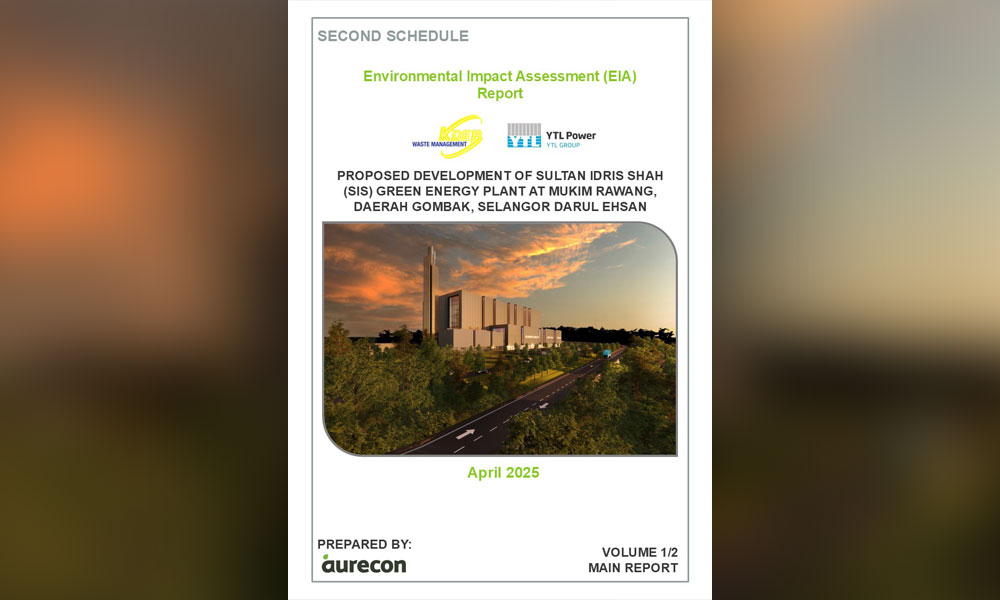
The EIA is up for public viewing until June 5. It can be accessed here.
Public feedback can be provided through the form here.
Last month, RTI slammed the Selangor government for evading queries during a public inquiry on the Selangor Draft Structure Plan 2035.
RTI spokesperson Abdul Hanan Abd Mokti said the queries were not “new” as the group has repeatedly sought clarification on the proposed incinerator project, but to no avail.
The media was also barred from attending the hearing, which housing and culture exco Burhan Ahmad Shah, who chaired the meeting, said was due to concerns of “manipulation”.
/file/publisher-c1a3f893382d2b2f8a9aa22a654d9c97/2025/05/a8efd7b18c861f0427a87eb07674ed8a.jpg)
/file/publisher-c1a3f893382d2b2f8a9aa22a654d9c97/2025/05/3c02dcf0c492424ffa9b2b835e568180.jpg)
/file/publisher-c1a3f893382d2b2f8a9aa22a654d9c97/2023/11/7c7dde186b3f74b01b5e7617a2d82766.jpg)
/file/publisher-c1a3f893382d2b2f8a9aa22a654d9c97/2024/10/ab7b3d21572fdb95fb60fa0a9ac1e7e1.jpg)
/file/publisher-c1a3f893382d2b2f8a9aa22a654d9c97/2024/10/5ff9c03ffe3eb0345ec44482651d0373.jpg)


Are you sure you want to delete this comment?
This action cannot be undone.