


/file/publisher-c1a3f893382d2b2f8a9aa22a654d9c97/2025/04/959256b950ddb63c940461e5547f1f9c.jpg)

Hannah Thomas on Aussie polls, govt failure, voter frustration
Even though she lost and Albanese became the only Australian prime minister in decades to win a second consecutive term, she successfully won about one-third of the population’s preference on the Greens party ticket.
She ran a progressive campaign that promoted...
Summary
Hannah Thomas, daughter of former attorney-general Tommy Thomas, ran against the prime minister in Australia’s election earlier this month.
She tells Malaysiakini that Australians responded to her pro-Palestine stance with positivity, adding that the government is out of touch with its citizens.
She speaks on the lack of diversity in the Australian Parliament and criticises centrist governments for enabling the rise of extremism.
INTERVIEW | Hannah Thomas, whose father is former attorney-general Tommy Thomas, ran in the Australian election earlier this month against Prime Minister Anthony Albanese in his seat of Grayndler, Sydney.
Even though she lost and Albanese became the only Australian prime minister in decades to win a second consecutive term, she successfully won about one-third of the population’s preference on the Greens party ticket.
She ran a progressive campaign that promoted a pro-Palestine stance, refugee rights, and the environment.
Below are excerpts from an interview with Malaysiakini on her experience.
How have Australians responded to your pro-Palestine stance?
Overwhelmingly positive. I think the Australian government is extremely out of touch with how people actually feel about what’s going on in Gaza, especially in progressive areas like Grayndler, where I live and where I ran. People can see that bombing schools and hospitals, and refugee camps, is wrong, and slaughtering children is wrong, and targeting journalists is wrong.
We’re talking about an industrial-scale, high-tech slaughter perpetrated by Israel with American help, and it’s all live-streamed for everyone to see. Tens of thousands of people killed. Hospitals and schools obliterated, children left orphaned, and the highest population of child amputees.
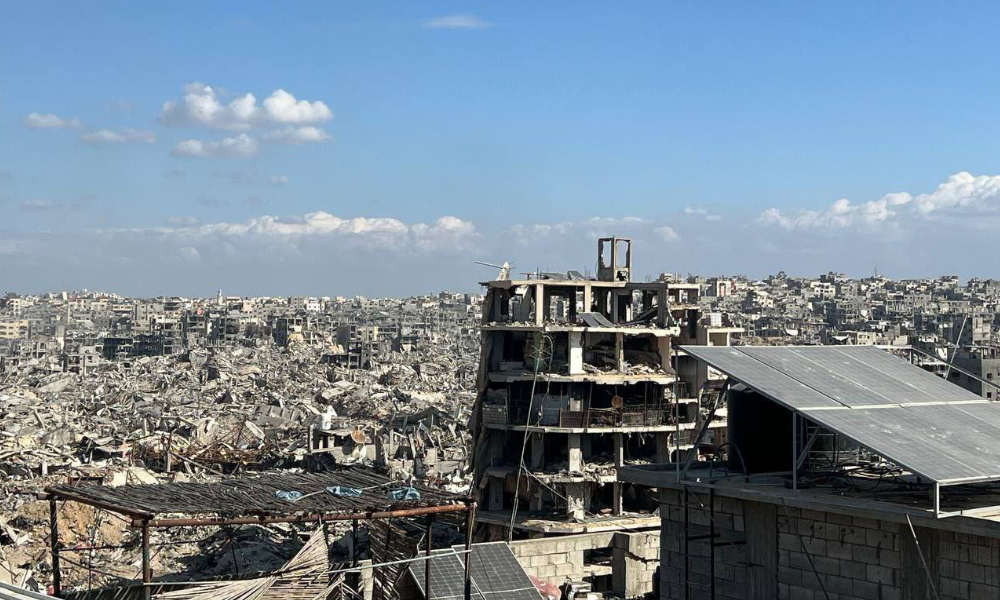
I think people can see what’s going on, and they feel terribly frustrated in Australia that the major parties, both, first of all, refuse to call it a genocide, and pretty much actively still support Israel, by omission if nothing else. We saw the Greens, this election, do really well in more multicultural and Muslim communities.
As a woman of colour and a migrant challenging the Australian prime minister, what has your experience been like?
First, I would say the Australian Parliament does not look at all like the Australian population.
This is a multicultural country and Parliament, though it lacks First Nations people - the original and true owners of the land.
It lacks people of colour, immigrants, also lacks young people and people who are carers, doing jobs like trades, cleaners, those sorts of people.
Parliament’s full of mostly white, rich people, and I think people responded well to having a fresh face, not just immigrants and young people, but lots of people who are older and stuff told me that it was really nice to see someone who doesn’t look like your typical politician in Australia running for Parliament, especially up against the prime minister in Grayndler.
It’s also a very progressive, diverse electorate. Lots of people in this community are young immigrants. It felt like a good fit to be running in this area.
What are your thoughts on the rising tide of extremism and conservative beliefs worldwide, particularly in the Global North?
I think broadly on the left, like the Democrats in the US during the last term, (Prime Minister Keir) Starmer in Labour in the UK right now, Albanese in Australia, they’ve failed to look after working-class people and address corporate profiteering and the greed of billionaires and the wealthy few.

People have gotten poorer, lives have gotten harder, and in those conditions, the far right and extremism thrive. Right-wing parties have exploited the failures of centrist liberal governments and have been able to blame immigrants, who are often easy and voiceless targets.
I think the rising tide of extremism and the anti-incumbency sentiment that we’ve seen a lot in the West and the Global North has often been driven by bad incumbent governments that have failed to look after people.
I think what could be a turning point and a circuit breaker is (US President Donald) Trump’s presidency, because people are seeing in real time what a disaster those extreme right-wing politics are, in terms of the effect it’s having on the US economy, working class people, and marginalised communities in the US.
I think Trump’s presidency was one of the reasons that in Australia, the coalition government under (opposition leader Peter) Dutton, who was basically Australia’s version of Trump, was comprehensively rejected at the recent election.
What lessons from Malaysian politics do you believe could benefit the Australian political system and vice versa?
(I’m) not as in touch with Malaysian politics these days, so these are pretty general observations that I’ll make.
I think one thing that’s really good about Malaysia is, (in) my experience there, is that people are more politically engaged. I think people talk about politics more in Malaysia, and I think especially young people seem to pay more attention to politics there than they do in Australia. In my experience, just things like Malaysian politicians have much larger social media followings.
I know Malaysia has a larger population, but even taking that into account, Malaysian politicians have, I think, larger followings, and more people pay attention to what they say and do. I think political parties like Muda and politicians like (Muar MP) Syed Saddiq (Syed Abdul Rahman) have really been very effective in engaging young Malaysians in politics there. I think that’s a strength that Malaysia has, just a high level of political engagement.
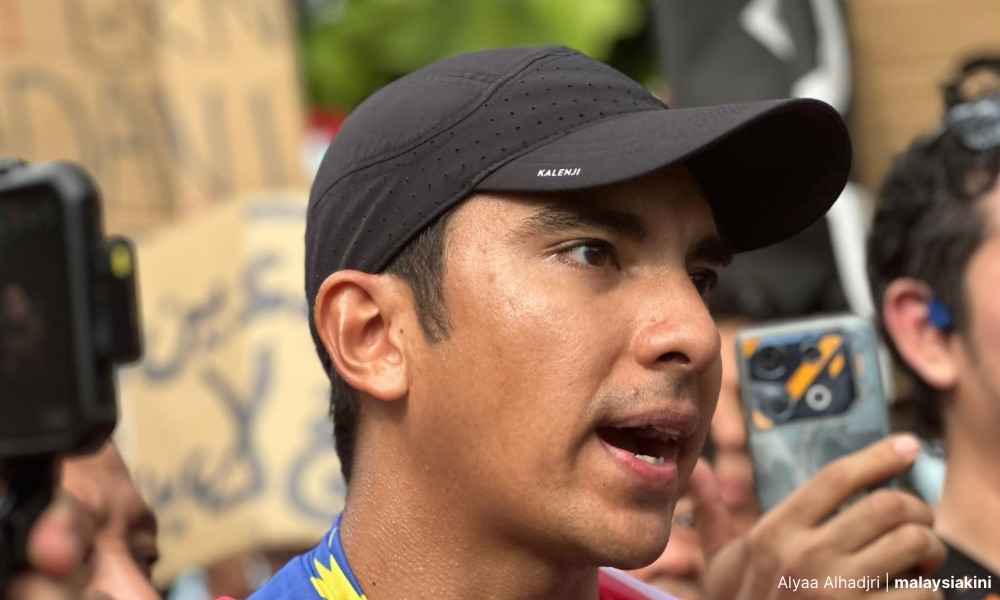
I think Australian elections and political parties are more policy-focused than in Malaysia. My experience observing Malaysian elections was that there was never that much of a policy debate. I think that could just be my observation as well, but in Australia, it’s more of a policy debate.
Do you think that’s something we should practise here in Malaysia, more of a focus on policies instead of following, for example, what your parents vote for?
Or just voting on racial lines, which obviously happens a lot in Malaysia as well.
Yeah, I think policy discussions and comparisons are obviously important and Malaysia would benefit from that in my view, but that’s just my observation as someone who isn’t that closely observing anymore.
What is the largest failure a government can make?
Well, I mean, for example, in Australia, this is an extremely wealthy country, and I think something like one in six children lives in poverty. That’s an absolute failure.
The fact that so many people are homeless in this wealthy country, while so many people have 20 homes, is also a massive failure.
Obviously, in Australia, this is, you know, this land was violently stolen. There’s never been a treaty with the First People. That’s a failure as well.
And obviously, the climate crisis throughout the planet, governments of every persuasion are pretty much failing to address what is the biggest existential threat of our time.
/file/publisher-c1a3f893382d2b2f8a9aa22a654d9c97/2025/05/ce78e7b10ef464dc3ad0ac0cfea2d2ef.jpg)
/file/publisher-c1a3f893382d2b2f8a9aa22a654d9c97/2025/04/959256b950ddb63c940461e5547f1f9c.jpg)


With this article is Mkini trying to promote Australian politics , Thomas family or Palestine cause? Who controls the Palestinians? As long as they live with terrorists, citizens will suffer. Should campaign in Palestine for democratic government instead .
Are you sure you want to delete this comment?
This action cannot be undone.