


/file/1167/9cefafc1242056177b50a99da86c4029.jpeg)

'Road to Rail' initiative: Ministry to shift goods transport from lorries to trains
Transport Minister Anthony Loke has revealed that his ministry is in the middle of shifting the transport of container goods from freight vehicles to the use of railways.
This will be implemented through the "Road to Rail" initiative, which includes the East Coast Rail Link (ECRL) project.
"The ECRL will be completed in...
Summary
Anthony Loke says his ministry is in the middle of a "Road to Rail" initiative to transport containers and goods through trains instead of roads.
Transport minister says his immediate priority is the mobility of Malaysians, which includes faster transportation, reducing congestion and encouraging public transportation use.
He also dismisses a policy for drone mobility, saying more development is needed before it becomes an urgent need.
Transport Minister Anthony Loke has revealed that his ministry is in the middle of shifting the transport of container goods from freight vehicles to the use of railways.
This will be implemented through the "Road to Rail" initiative, which includes the East Coast Rail Link (ECRL) project.
"The ECRL will be completed in about two years, and once it is ready, the transportation of containers and goods to the east coast will be encouraged and increased using rail instead of container lorries," he said at an event in Petaling Jaya yesterday.
The initiative is hoped to improve road safety as discourse emerged on accidents involving heavy vehicles and efforts to prevent collisions.
On May 13, Federal Reserve Unit (FRU) truck carrying 18 personnel from Unit 5 Sungai Senam collided with a rock-laden lorry in Teluk Intan, Perak, killing eight at the scene, while another succumbed to injuries at Teluk Intan Hospital.
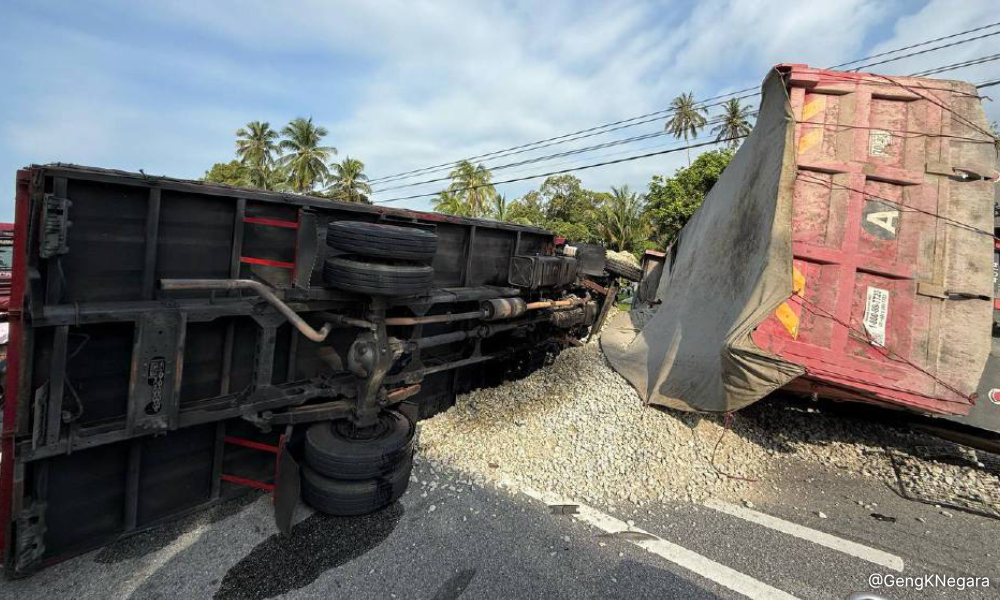
On Dec 23, seven were killed and 33 injured in a five-vehicle accident on the North-South Expressway (Plus).
The accident involved a tour bus carrying 27 passengers, two lorries, a car, and an MPV.
People’s mobility
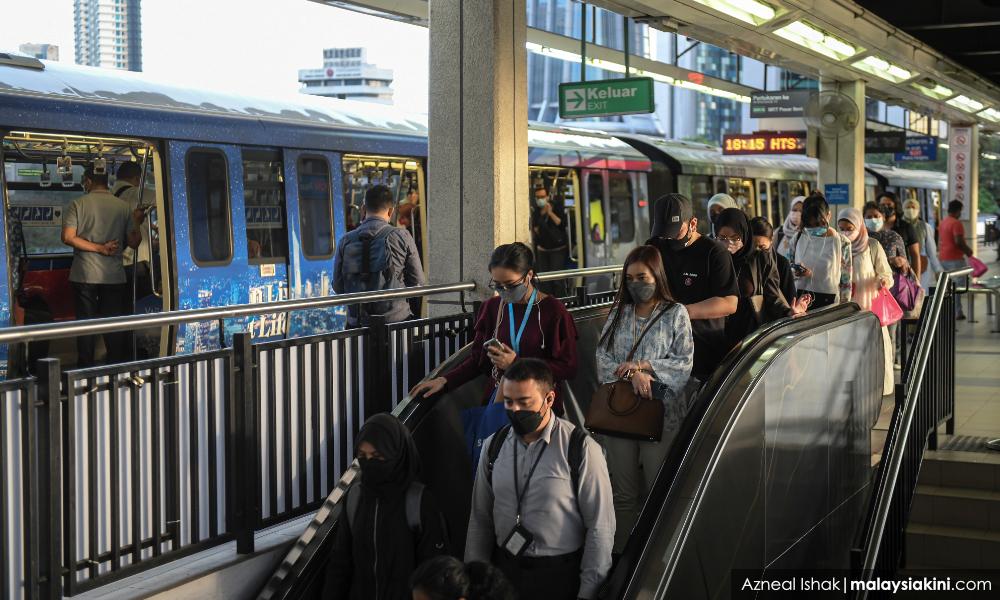
Loke also said that his ministry is prioritising the mobility of Malaysians.
This involves faster transportation, the reduction of congestion and encouraging public transport use.
"The Klang Valley has a public transportation network that is fairly comprehensive.
"The main focus now is on how we can encourage greater usage and address the first-mile and last-mile connectivity issues," he said.
However, he said, unlike this issue, a policy on drone mobility is not an urgent need, as it was still an immature matter and would need another 10-15 years to develop before it becomes a priority.
There were many challenges to drone mobility that needed to be determined first, such as a legal framework as well as technological and operational issues, he added.
/file/publisher-c1a3f893382d2b2f8a9aa22a654d9c97/2023/03/d397fbfb5714f8be2b6110757b8f7fd8.jpg)
/file/publisher-c1a3f893382d2b2f8a9aa22a654d9c97/2025/04/567f82d22c88b8a6a01467cc5f02f5dd.jpg)
/file/publisher-c1a3f893382d2b2f8a9aa22a654d9c97/2025/05/4395131da8b9ea0a1867a5ca5dc8d8e4.jpg)
/file/publisher-c1a3f893382d2b2f8a9aa22a654d9c97/2024/12/09cccea399c37086dc596ba4d0e5d42b.png)


Are you sure you want to delete this comment?
This action cannot be undone.