


/file/publisher-c1a3f893382d2b2f8a9aa22a654d9c97/2025/05/35fe5eeed5da33f42bf860a9e481b297.jpg)

Ramasamy urges opposition unity to liberate judiciary, backs PN's push
He also threw his support behind Perikatan Nasional chief whip Takiyuddin Hassan’s call to amend Article 121 of the Federal Constitution, aimed at restoring the crucial separation of powers between the judiciary, legislature, and executive.
“Institutional reforms such as...
Summary
Urimai chairperson P Ramasamy calls for a united push to reform Article 121 of the Federal Constitution.
He accuses the prime minister and his government of having no interest in removing the shackles.
Article 121’s 1988 amendment stated that courts “shall have such jurisdiction and powers as may be conferred by or under federal law”.
Urimai chairperson P Ramasamy has urged the opposition to unite and spearhead meaningful reforms to free and democratise the nation’s judiciary.
He also threw his support behind Perikatan Nasional chief whip Takiyuddin Hassan’s call to amend Article 121 of the Federal Constitution, aimed at restoring the crucial separation of powers between the judiciary, legislature, and executive.
“Institutional reforms such as enhancing the power of the judiciary through a constitutional amendment, rendering the MACC responsible to the Parliament, and others, cannot be postponed anymore.
“Furthermore, piecemeal reforms or everyday forms of changes should not be confused with fundamental or institutional reforms,” he added in a statement.
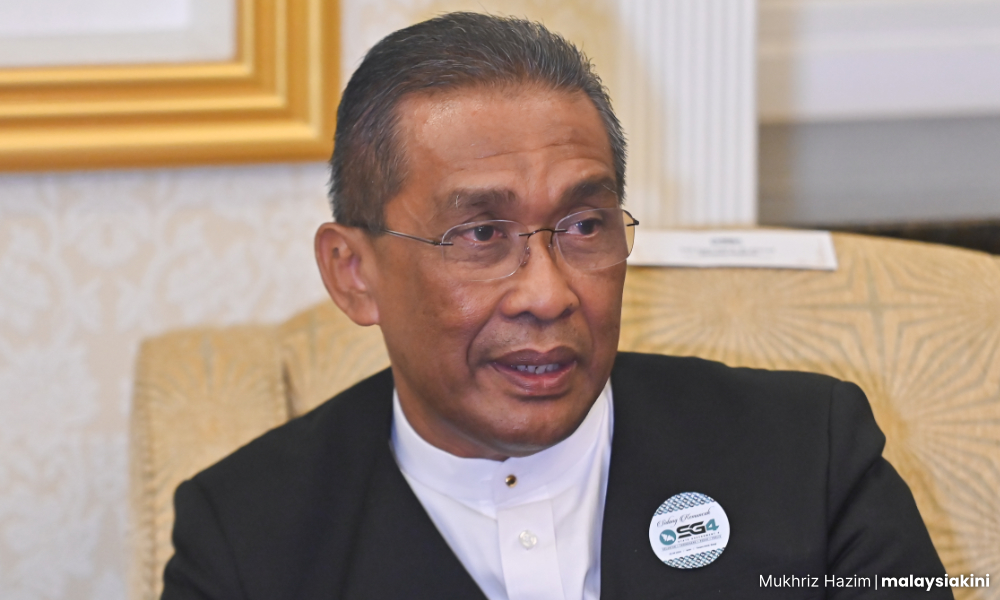
Ramasamy emphasised that in the light of the recent high-profile corruption cases getting the status of discharge not amounting to acquittal (DNAA), there is indeed a pressing need to ensure judicial decisions are free of political interference from the executive.
The former Penang deputy chief minister II argued that Prime Minister Anwar Ibrahim and his government have no interest in initiating the constitutional amendment to democratise the judiciary.
“Anwar might have defended institutional reforms when he was in the opposition, but he is different now. Knowing that control of the judiciary in the appointment of judges is crucial to his staying in power, the question of rendering the judiciary free from political encumbrances remains difficult under the present political circumstances.
“When it comes to restoring the independence of the judiciary, Anwar, despite all his earlier boasts of sweeping reforms in the larger interest of democracy and justice, is a big disappointment to Malaysians.
“Without the presence of a powerful, independent, and viable judiciary, there is no such thing as progress and enlightenment,” he added.
On Friday, the Malaysian Consultative Council of Buddhism, Christianity, Hinduism, Sikhism and Taoism (MCCBCHST) also backed Takiyuddin’s call.
The council urged the government to carry out the promised reforms before the next general election, saying it should no longer rely on the excuse that it might be difficult to get support.
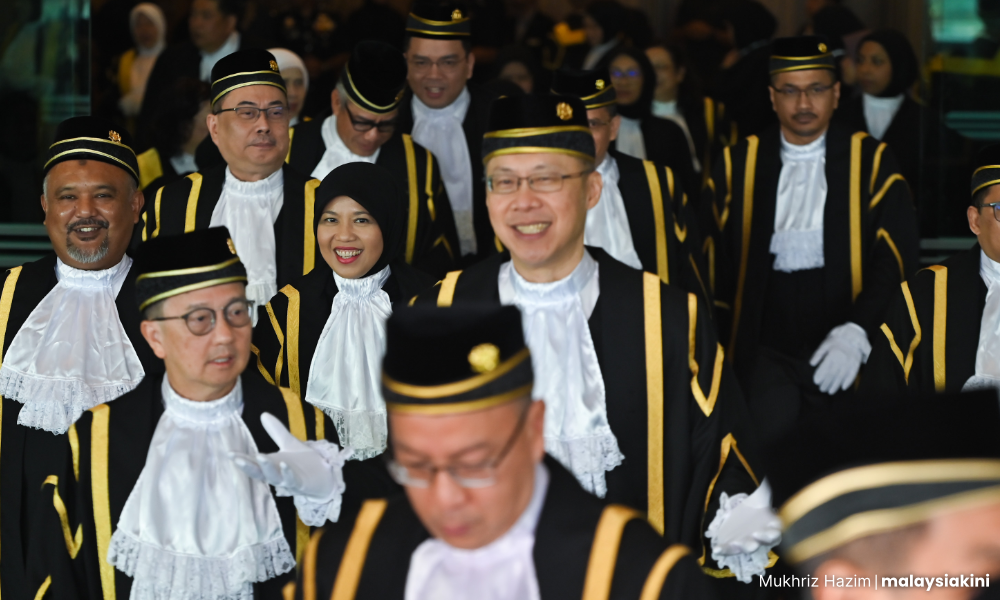
Apart from calling for the amendment of Article 121, Takiyuddin said the government must also establish a bipartisan parliamentary select committee to observe judicial appointments to ensure accountability.
Before 1988, Article 121 vested judicial power in the High Courts and other subordinate courts. However, subsequent amendments removed this explicit provision, stating instead that the courts “shall have such jurisdiction and powers as may be conferred by or under federal law.”
This effectively means that judicial power is no longer inherent but granted solely through federal legislation.
In January, Chief Justice Tengku Maimun Tuan Mat noted that while Malaysia has made significant strides in restoring the judiciary’s integrity, the prime minister still retains excessive influence over judicial appointments.
She also reflected on Anwar’s criticism in 2009 over political interference in appointing senior judges despite critical judicial reforms introduced by the then-government, such as establishing the Judicial Appointments Commission (JAC) in 2009.
It should be noted that while the JAC can nominate candidates for the bench, the prime minister can still ignore the list and request other names.
/file/publisher-c1a3f893382d2b2f8a9aa22a654d9c97/2025/02/8482aadd9f2670a260d93c2a2423e61d.jpg)
/file/publisher-c1a3f893382d2b2f8a9aa22a654d9c97/2022/01/b0a598a3b470cf5030913c4d08f8adb7.jpg)
/file/publisher-c1a3f893382d2b2f8a9aa22a654d9c97/2024/09/f08fc6aaf9e972335c471a4902ef0dec.jpg)
/file/publisher-c1a3f893382d2b2f8a9aa22a654d9c97/2021/08/7c985bf627606be1cd2920a9b62da61d.jpg)


Are you sure you want to delete this comment?
This action cannot be undone.