


/file/publisher-c1a3f893382d2b2f8a9aa22a654d9c97/2024/04/5ffc9608a995b2d3493c578e12df8d8c.jpg)

Suaram pans 'assault on public servant' probe on PSM's Arutchelvan
Suaram called the use of Section 353 of the Penal Code to investigate Parti Sosialis Malaysia deputy chairperson S Arutchelvan "grossly disproportionate".
Its executive director, Azura Nasron, said this is because the police were blocking peaceful protesters from approaching Parliament - a practice in line with Malaysia's protest tradition.
Summary
Suaram executive director Azura Nasron condemns the use of Section 353 of the Penal Code against PSM’s Arutchelvan as excessive, calling it an escalation from the government’s earlier use of Section 186 against peaceful assemblies.
She says the move shifts blame onto protesters exercising constitutional rights while failing to hold police accountable for failing to facilitate the protest effectively.
She urges police to drop the investigation, adopt a rights-based approach to assemblies, and ensure practices align with the government’s stated reform commitments amid ongoing Peaceful Assembly Act amendments.
Suaram called the use of Section 353 of the Penal Code to investigate Parti Sosialis Malaysia deputy chairperson S Arutchelvan "grossly disproportionate".
Its executive director, Azura Nasron, said this is because the police were blocking peaceful protesters from approaching Parliament - a practice in line with Malaysia's protest tradition.
Azura (above) said that the use of Section 353 of the Penal Code marks a "troubling escalation" from the current government's use of Section 186 of the Penal Code - obstruction of public servants - against at least four peaceful assemblies.
"Despite over a decade of managing assemblies under the Peaceful Assembly Act 2012 (PAA), the police have, since 2020, increasingly pushed protesters further away from Parliament gates to the base of the hill - undermining the core purpose of peaceful assembly: to deliver public demands directly to elected representatives.
"Suaram therefore urges the police to immediately drop the investigation against Arutchelvan and cease all forms of intimidation against peaceful protesters," she said in a statement today.
Section 353 criminalises assault or the use of force against a public servant in the execution of their duty.
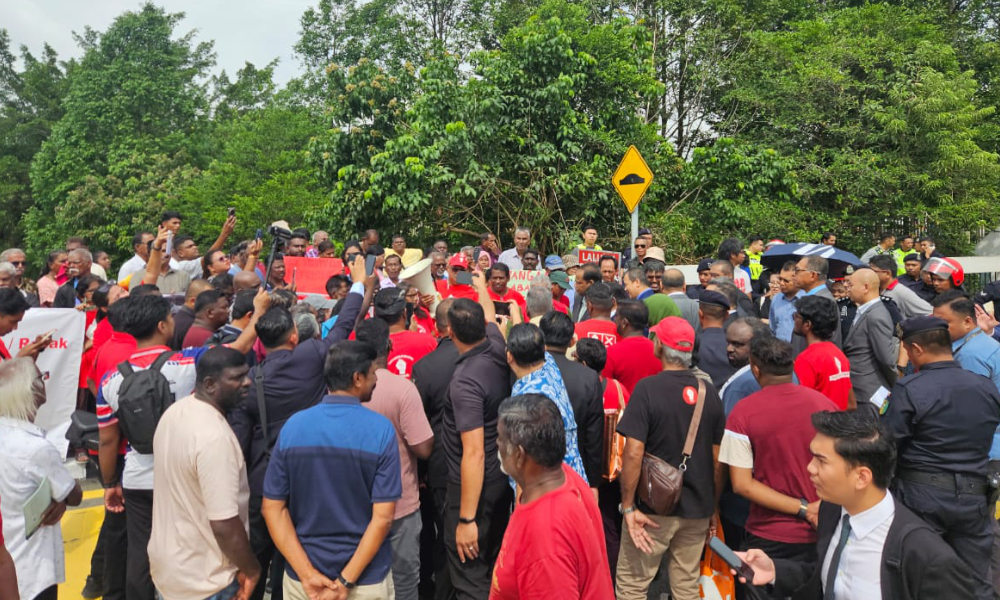
Yesterday, the police confirmed that the scuffle outside Parliament - which saw Arutchelvan falling to the ground - resulted in the injury of an officer.
Kuala Lumpur police chief Fadil Marsus said a report had been launched and that an investigation paper has also been opened under Section 353/427 of the Penal Code.
In the video seen by Malaysiakini, a scuffle broke out between several estate workers and the police, after authorities were seen attempting to prevent a march to the Parliament gates.
Police not held accountable
In her statement, Azura said the use of Section 353 of the Penal Code against Arutchelvan shifts the blame onto citizens who are exercising their constitutional right to peaceful assembly.
But it also fails to hold the police accountable for any failure to effectively facilitate the protest, she added.
She urged the Home Ministry to review police protocols in order to ensure officers use a rights-based approach to assemblies, even those at high-security locations like Parliament.
"Amid ongoing amendments to the PAA, the Madani government must ensure that assembly policing practices reflect, not undermine, its stated commitment to reform," she said.
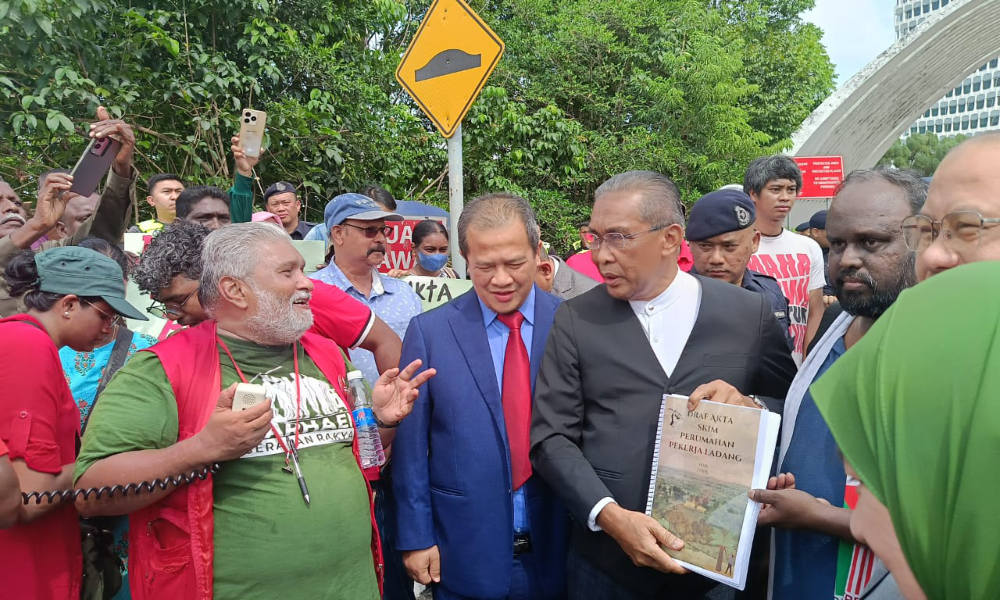
Arutchelvan, along with hundreds of plantation workers, had marched from Taman Tugu to Parliament to submit a memorandum urging the government to enact a law that would require plantation companies to build housing for their workers.
The memorandum was handed over to Deputy Minister in the Prime Minister’s Department (Law and Institutional Reform) M Kulasegaran, a representative of the second deputy prime minister, and Perikatan Nasional chief whip Takiyuddin Hassan.
Arutchelvan explained that, as far back as the era of former prime minister Abdul Razak Hussein, a scheme had been established requiring plantation companies to build housing for plantation workers.
However, due to the absence of a specific law, plantation companies have not complied with this requirement.
/file/publisher-c1a3f893382d2b2f8a9aa22a654d9c97/2025/08/e2ceb2755300003935832cca781c0622.jpg)
/file/publisher-c1a3f893382d2b2f8a9aa22a654d9c97/2025/08/56470edcd6007a78a344d6b9e9bd0b2d.jpg)
/file/publisher-c1a3f893382d2b2f8a9aa22a654d9c97/2025/08/e2f47110a8ee5f339027a6931b7f2ee2.jpg)


Are you sure you want to delete this comment?
This action cannot be undone.