


/file/publisher-c1a3f893382d2b2f8a9aa22a654d9c97/2024/09/17758cd2ef04da59603cf70dcca59ea3.jpg)

Na'imah's legal challenge requires apex court intervention: Judge
Daim Zainuddin’s widow, Na’imah Abdul Khalid’s, legal challenge against several provisions under the MACC Act 2009 holds merit and requires the Federal Court’s determination, the High Court ruled today.
Judge K Muniandy therefore quashed the Sessions Court’s decision that dismissed her application on Feb 18, and allowed Na’imah’s revision against the lower court’s verdict.
Daim Zainuddin’s widow, Na’imah Abdul Khalid’s, legal challenge against several provisions under the MACC Act 2009 holds merit and requires the Federal Court’s determination, the High Court ruled today.
Judge K Muniandy therefore quashed the Sessions Court’s decision that dismissed her application on Feb 18, and allowed Na’imah’s revision against the lower court’s verdict.
The questions raised in Na’imah’s challenge are neither frivolous nor an abuse of court process, said Muniandy.
“The questions represent an important challenge to a piece of legislation (where) the outcome of this case will have a profound impact on the rights of individuals called as witnesses, including the applicant (Na’imah) in MACC investigations.
“It would further define the limit of state power under the law and the Federal Constitution,” he said.
Prosecution to appeal
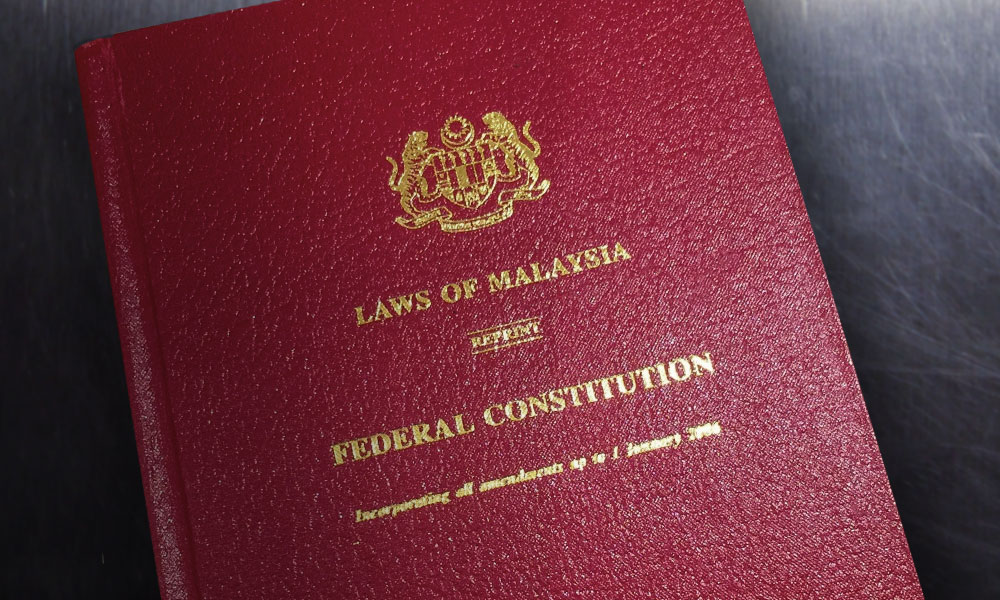
Among the legal provisions challenged by Na’imah in her application are Sections 36(2) and 30(5) of the MACC Act, where she argued these provisions create a total prohibition on her personal rights as accorded under Article 5(1) of the Federal Constitution.
The judge then ordered that the application be returned to the Sessions Court, for the lower court to transmit it back to the High Court, and to refer it to the Federal Court for determination on the legal questions.
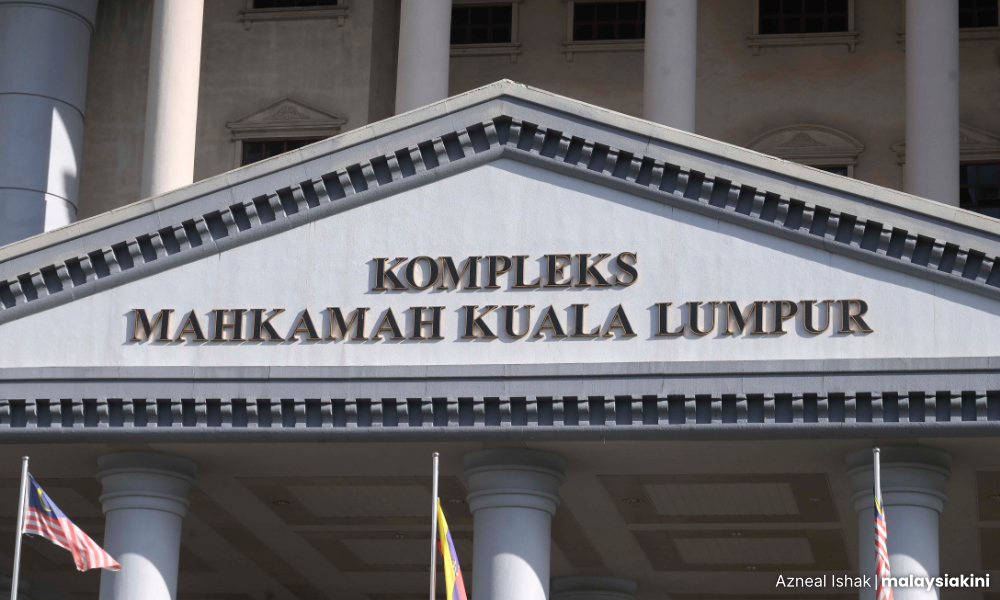
Na’imah’s lawyer, Gurdial Singh Nijar, then applied for the court to order the case to be transmitted to the same judge to avoid clashing opinions should it be heard before a different judge.
The prosecution, led by deputy public prosecutor Law Chin How, said they have no objections to the request and informed the court that they intend to appeal against the judge’s decision.
Following this, Muniandy allowed Gurdial’s request and told the prosecution that they should apply for a stay of proceedings once the case is transmitted back to him, so that the prosecution can proceed with their appeal then.
Na’imah’s application was first filed at the Sessions Court before judge Azura Alwi on Feb 29, 2024, as it is linked to the criminal charges against her under the MACC Act at the same court.
Following today’s verdict, Na’imah called it a victory for justice and the rule of law.
“This outcome is bigger than any individual case; it is about protecting fundamental liberties guaranteed under our Constitution, including the right to silence, self-incrimination, and fair trial.
“No one is above the Constitution and no one is beneath its protection,” she told reporters when met.
In a separate proceeding, the Sessions Court noted the High Court’s order and vacated trial dates fixed for the case, which was initially scheduled to begin on Nov 19.
Na’imah’s challenge against legal provisions
Na’imah, 67, had applied to the Sessions Court last year to refer questions of law to the High Court regarding several sections, including Section 30(5) of the MACC Act and Section 32(3)(b) of the Anti-Money Laundering, Anti-Terrorism Financing and Proceeds of Unlawful Activities Act 2001.
The Sessions Court judge found no merit in her application and dismissed it, adding that the request was frivolous, vexatious and an abuse of court process.
Na’imah was charged on Jan 23 last year at the Sessions Court for allegedly failing to abide by a MACC notice to disclose her assets.

She was charged under Section 36(2) of the Act, which carries a maximum penalty of five years’ imprisonment or a fine of RM10,000.
The assets she allegedly did not disclose involved multiple lands, properties, and Mercedes-Benz vehicles.
According to the annexure attached to the charge and read out in court, among the eight properties allegedly involved are Ilham Tower in Kuala Lumpur, a house in Bukit Tunku, Kuala Lumpur, as well as six plots of land - five in Kuala Lumpur and one in Penang.
Among other alleged items involved in the non-disclosure are two companies, namely Ilham Tower Sdn Bhd and Ilham Baru Sdn Bhd.
/file/publisher-c1a3f893382d2b2f8a9aa22a654d9c97/2024/01/66a8aea7f2cfa5bc02b4e6555ca3850f.jpg)
/file/publisher-c1a3f893382d2b2f8a9aa22a654d9c97/2025/06/a7702e1beb793d4edf5768162e9f7ace.png)
/file/publisher-c1a3f893382d2b2f8a9aa22a654d9c97/2024/09/e3c07b40bad3e91d6345b171a60b74bf.jpg)
/file/publisher-c1a3f893382d2b2f8a9aa22a654d9c97/2024/09/17758cd2ef04da59603cf70dcca59ea3.jpg)
/file/publisher-c1a3f893382d2b2f8a9aa22a654d9c97/2023/02/7c5ea83952999bc5b28648483620956e.jpg)


"The Sessions Court judge found no merit in her application and dismissed it, adding that the request was frivolous, vexatious and an abuse of court process"... Naa'mah, I don't see the 'victory' in the above statement....
Are you sure you want to delete this comment?
This action cannot be undone.