


/file/publisher-c1a3f893382d2b2f8a9aa22a654d9c97/2020/07/f092dd2f912e05ebaafc5277ecad92e6.jpg)

PSM, Suaram laud PM stance on public right to assemble outside Parliament
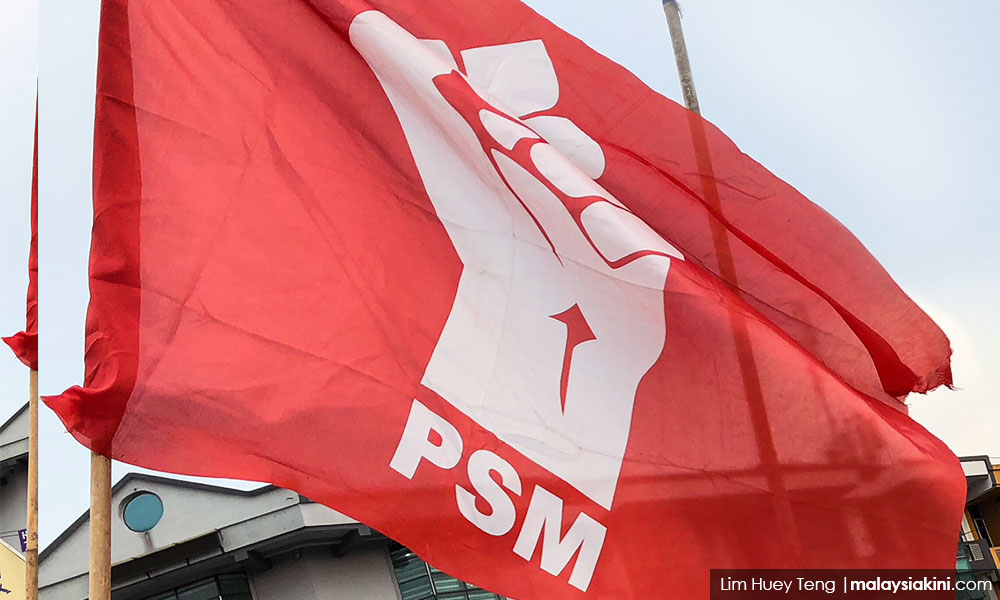
Civil society movements PSM and Suaram have lauded Prime Minister Anwar Ibrahim for affirming the public's right to hold peaceful assembly in front of the Parliament.
In a statement, PSM deputy chairperson S Arutchelvan said they hope that the prime minister's decision will end police preventing protesters from gathering at the roadside leading to the Parliament, where they will be visible to MPs.
Civil society movements PSM and Suaram have lauded Prime Minister Anwar Ibrahim for affirming the public's right to hold peaceful assembly in front of the Parliament.
In a statement, PSM deputy chairperson S Arutchelvan said they hope that the prime minister's decision will end police preventing protesters from gathering at the roadside leading to the Parliament, where they will be visible to MPs.
"In recent times, the police have prevented gathering in front of Parliament gates and have forced gathering at a 'dumb side', opposite the road leading to Parliament.
"We were often told by the police that this is the request of the Parliament authorities.
"We hope that with the PM's spokesperson announcement, this will end. A vibrant democracy is when democracy is alive inside and outside Parliament," he said.
Yesterday, government spokesperson Fahmi Fadzil told a press conference that Anwar had rejected a proposal to move peaceful assemblies from in front of Parliament to Padang Merbok.
The proposal came during a cabinet meeting yesterday, and was made following a commotion outside the Parliament on Aug 13 when police blocked a group of protesters from going towards its main gate.
It saw a scuffle between protesters and the police, and resulted in Arutchelvan falling to the ground and a police officer being injured.
Public access
Suaram executive director Azura Nasron said the prime minister's stance has reinforced the importance of public access to institutions of power.
However, she also raised the organisation's concerns with Anwar's stress on priority for security and traffic control aspects.
She said previous assemblies near the Parliament, including on Aug 13, saw police deploying restrictive measures and only allowed protesters to gather at the base of the hill, which effectively denied them the visibility to make their voices heard.

"Traffic disruption is recognised internationally as a normal, even inevitable, consequence of assemblies near political institutions.
"The threshold for restricting an assembly because of traffic is therefore high: only where congestion creates a clear risk to public safety, or where disruption is disproportionate to the purpose of the protest, can restrictions be justified.
"Blocking access to Parliament’s gates or diverting all protests to the base of the hill clearly fails this test. The state’s responsibility is to actively facilitate and enable assemblies in meaningful proximity to their target, not to subordinate the right to assemble to traffic convenience or bureaucratic coordination," she said.
Azura urged the Home Ministry and police to review their enforcement protocols to reflect the position taken by the prime minister and ensure that assemblies are facilitated through proportionate measures.
/file/publisher-c1a3f893382d2b2f8a9aa22a654d9c97/2025/08/8be6e4f439cf939694040e9e87eb0640.jpg)
/file/publisher-c1a3f893382d2b2f8a9aa22a654d9c97/2025/08/8c778455790d328b7f1459ecec49d7cc.jpg)
/file/publisher-c1a3f893382d2b2f8a9aa22a654d9c97/2024/03/d0285af19eab0e47f2e1b6de8b6703d1.jpg)
/file/publisher-c1a3f893382d2b2f8a9aa22a654d9c97/2025/08/7234576785b1be5fc1a4fd4d27d63d8d.jpg)
/file/publisher-c1a3f893382d2b2f8a9aa22a654d9c97/2025/08/1321666841883f8658149027a8b98af8.jpg)


Are you sure you want to delete this comment?
This action cannot be undone.