


/file/publisher-c1a3f893382d2b2f8a9aa22a654d9c97/2025/09/a9c9c2be80d590cf4d04683e574f1ea8.jpg)

Daily smashed for reducing badminton victor's triumph to looks
A Malay daily is under fire after its headline on Malaysian mixed doubles champion Toh Ee Wei drew backlash from women’s rights and gender advocates, who slammed it for reducing her achievements to her appearance.
“Instead of celebrating her as a world champion who overcame extraordinary challenges, their focus is on her not fitting a narrow idea of femininity.
A Malay daily is under fire after its headline on Malaysian mixed doubles champion Toh Ee Wei drew backlash from women’s rights and gender advocates, who slammed it for reducing her achievements to her appearance.
“Instead of celebrating her as a world champion who overcame extraordinary challenges, their focus is on her not fitting a narrow idea of femininity.
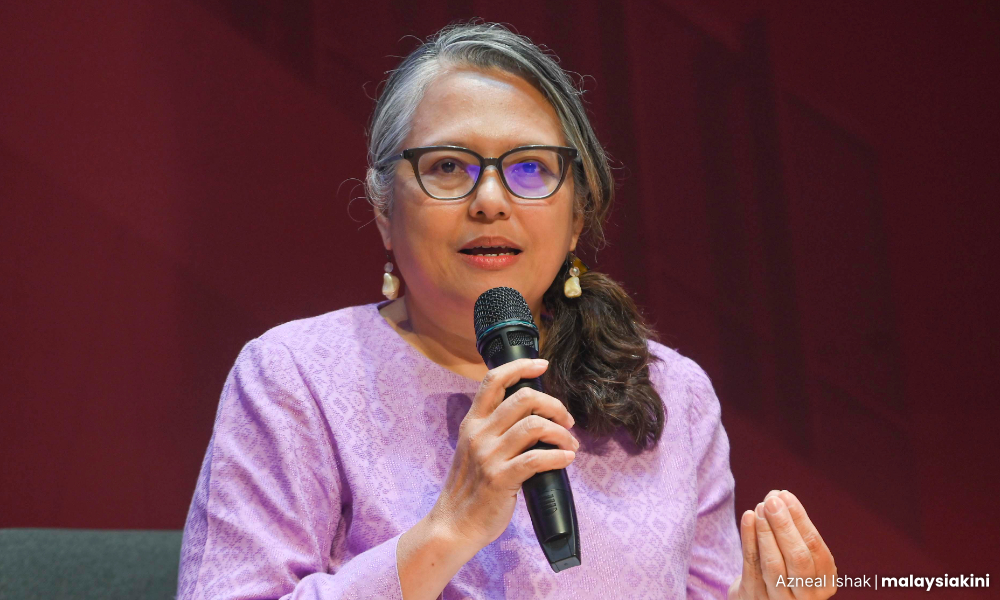
“We must ask: If it were a man, would his victory be framed in terms of what he wore as a boy or whether he conformed to masculine stereotypes? Or would it simply highlight his talent, discipline, and perseverance?” SIS Forum executive director Rozana Isa told Malaysiakini.
On Aug 31, Toh and Chen Tang Jie, won gold at the Badminton BWF World Championships in Paris, France.
Utusan Malaysia later published a story describing Toh as a “tomboy turned world champion”, which has led to widespread criticism from netizens.
It quoted the athlete's parents, who described that Toh, growing up, often preferred the comfort of shorts and T-shirts, instead of skirts.
Nazreen Nizam from Women’s Aid Organisation also emphasised that athletes should be celebrated for their skills, disciplines, and perseverance, instead of being “judged against sexist labels”.
“Framing her success in terms of being a ‘tomboy’ or a ‘gadis lasak’ (rough woman) not only dismisses her sporting excellence but also reinforces harmful ideas about how women should look or behave,” she added.
Gender stereotypes
Justice For Sisters founding member, S Thilaga, also highlighted that the media should not perpetuate gender stereotypes and speculate on matters relating to people’s bodies, appearance, and gender expression.
“This invites too many intrusive comments that can have a negative impact on their well-being. Athletes are already under a lot of public scrutiny.
“The media needs to ask better questions when they interview people, including parents. There was too much focus on clothing, instead of their talent, perseverance, and drive,” she said.
The representatives from SIS Forum and WAO also highlighted the responsibility of the media in shaping public attitudes, urging local press to take accountability for sensationalist or discriminatory reporting.
“When media outlets reinforce outdated stereotypes instead of celebrating women’s excellence, they send a damaging message to every girl who dreams of achieving the same.
“By highlighting stereotypes over substance, they insult every woman who has fought to be taken seriously in her field,” said T Kaveesha from the youth-led gender advocacy group, Pocket of Pink.
“This kind of reporting is part of a larger problem not only in Malaysian media but worldwide: women are consistently boxed into sexist narratives, whether in sports, politics, showbiz or any other industry.
“Male athletes and actors, for instance, are celebrated for their craft, while women are reduced to hairstyles, outfits or personality labels,” she added.
Previously, Malaysiakini published a comment citing a report by the International Federation of Journalists, which showed that women were most commonly depicted in global media as "family figures”, followed by “victims”, “sexual objects”. Women were least depicted as heroes, “experts” or “leaders”.
In June this year, the ministry officially established a national media council under the MMC Act 2025, which aims to be a self-regulatory body to protect media freedom and uphold journalistic ethics.
“Media plays a powerful role in shaping public attitudes, and headlines like this trivialise women's accomplishments while normalising gendered stereotypes.
“We urge media outlets to move away from sensationalist framing and instead spotlight the dedication, talent, and grit that truly define our champions,” said Nazreen.
The real story
The groups also cautioned that perpetuating discriminatory stereotypes could undermine the public’s trust in the media.
Kaveesha explained that when an athlete’s achievements are diminished by the media through discriminatory language, “journalists are not just failing their duty, but actively setting back progress for gender equality in this country”.
Rozana also urged media institutions to take the lead in building a society that respects women’s dignity, instead of diminishing their triumphs.
“The real story here is of Toh’s strength, perseverance, and world-class talent, a young woman who fought through injury, illness, and years of sacrifice to become a global champion. That is what deserves the headline,” she added.
Malaysiakini has contacted Utusan Malaysia and the Malaysian Media Council for comment and is awaiting their response.
/file/publisher-c1a3f893382d2b2f8a9aa22a654d9c97/2025/08/4faeec267f4e6f4ef86e50f07e38614f.jpg)
/file/publisher-c1a3f893382d2b2f8a9aa22a654d9c97/2025/08/40acc8d58d187bee8c647aa25d5dfdf5.jpg)
/file/publisher-c1a3f893382d2b2f8a9aa22a654d9c97/2025/05/6df30b14c54f54f3c25669b7218ad6c1.jpg)
/file/publisher-c1a3f893382d2b2f8a9aa22a654d9c97/2019/02/058354df8f46d21b7febccc22ff67cf2.jpg)
/file/publisher-c1a3f893382d2b2f8a9aa22a654d9c97/2025/05/50aa2234b4226374e9962857a2b7c8d4.jpg)


This is how when you have low classs education from young to mould you to what is today, that doesn't mean you are smart but a sore loser