
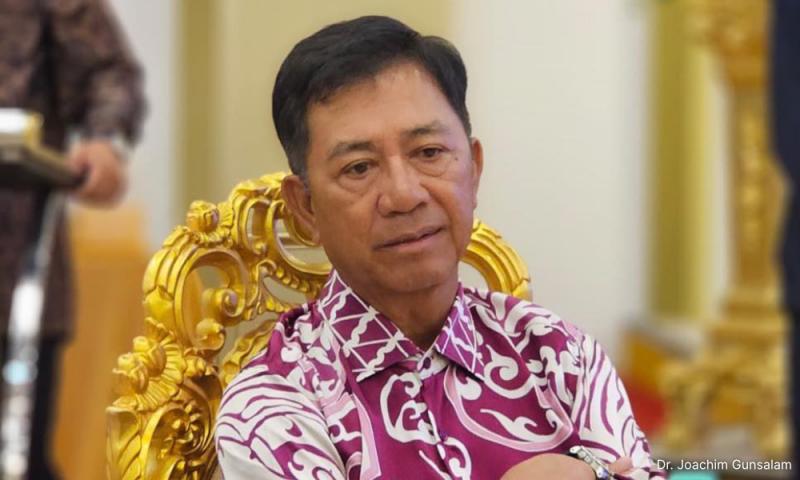
When Parti Bersatu Sabah (PBS) was born out of rebellion in 1985, it toppled a state government within months and became the insurgent voice of Sabah’s Kadazandusun Murut (KDM) community.

Four decades later, the party once feared for its defiance now speaks a different language, one of restraint and compromise.

At the heart of that change is acting president Dr Joachim Gunsalam, a five-term assemblyperson and former deputy chief minister who believes confrontation no longer delivers.

“The federal government should not be seen as the enemy of Sabah.

“We can only achieve progress if we negotiate with strength but also with responsibility,” he said when met as he is about to vacate his ministerial office and prepares for the Sabah election.

From rebellion to realism

PBS still champions state rights under the Malaysia Agreement 1963, but not with the populist slogans of its rivals.

While Parti Solidariti Tanah Airku (Star) president Jeffrey Kitingan rallies crowds with hardline cries of “Sabah for Sabahans”, Gunsalam points instead to Sabah’s limited finances.

Star president Jeffrey Kitingan

“Sometimes Kitingan’s idea of autonomy sounds like full independence. Can we really afford that? Defence, security, even education and health already cost more than Sabah’s revenue can cover,” he said.

With state income at around RM7-10 billion, and education and health spending alone exceeding RM11 billion, Gunsalam argues autonomy must be pursued step by step.

“It’s very impractical to demand everything at once. A confrontational approach doesn’t help. Yes, we must demand our rights, but at the same time, we need to build a stronger Sabah within a stronger Malaysia.”

Pragmatism in practice

For Gunsalam, evidence of that approach lies in the 2021 Commercial Collaboration Agreement with Petronas.

The deal gave Sabah firms a bigger stake in the oil and gas sector while securing more revenue through sales tax.

Although critics such as Warisan call it a sell-out, Gunsalam calls it progress.

“The CCA shows what we can achieve when we negotiate instead of confronting.”

He also cites Sabah’s new regulatory powers over electricity and his role in pushing for devolved health powers, including the right to vaccinate undocumented migrants.

“If we don’t vaccinate them, we cannot reach herd immunity,” he said, mixing medical logic with political realism.

Shadows and survival

PBS has not escaped controversy. A video shows Gunsalam with businessperson Albert Tei, accused of trying to monopolise mining licences.

Gunsalam denies wrongdoing, saying Tei approached leaders separately and only the chief minister saw the bigger picture before rejecting the applications.