


/file/publisher-c1a3f893382d2b2f8a9aa22a654d9c97/2024/10/64769e3cf256140a13c47dafa1dd4fe8.jpg)

Wan Saiful urges white paper on welfare aid, subsidy system reform
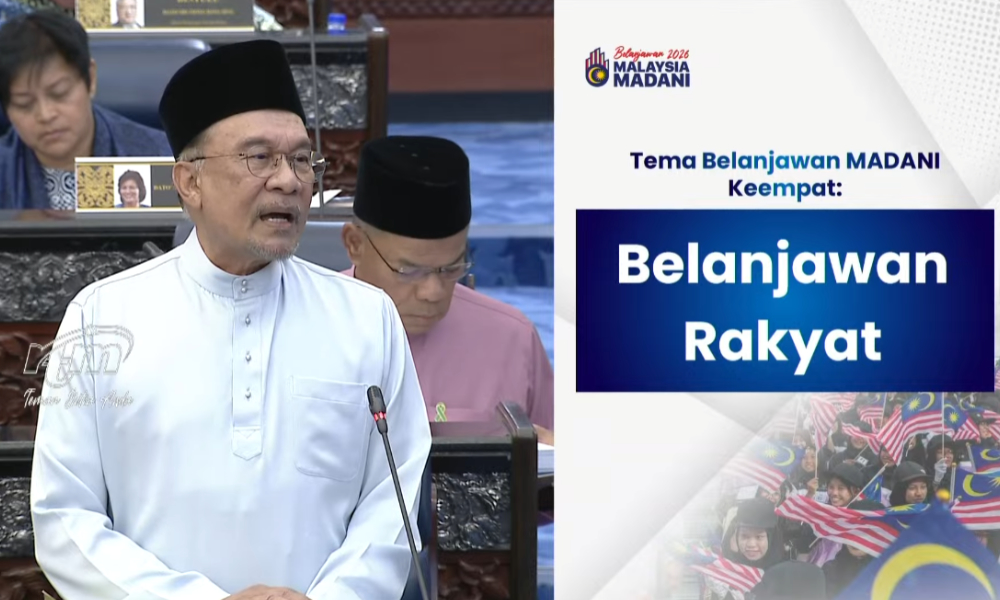
BUDGET 2026 | The government has been urged to table a white paper on reforming the welfare aid and subsidies in the Dewan Rakyat this year.
In a statement regarding the Budget 2026 proposal tabled in the Dewan Rakyat today, Tasek Gelugor MP Wan Saiful Wan Jan said the white paper is crucial for ensuring that the government’s targeted subsidy mechanism is truly effective.
BUDGET 2026 | The government has been urged to table a white paper on reforming the welfare aid and subsidies in the Dewan Rakyat this year.
In a statement regarding the Budget 2026 proposal tabled in the Dewan Rakyat today, Tasek Gelugor MP Wan Saiful Wan Jan said the white paper is crucial for ensuring that the government’s targeted subsidy mechanism is truly effective.
“What caught my attention the most is the government’s emphasis on targeted subsidies and welfare aid. Our country has been bearing a very high subsidy cost for so long, and this will certainly become unsustainable if it continues.
“So far, targeted subsidies are said to potentially save up to RM15.5 billion.
“To ensure that the targeted subsidies are truly effective, I hope the government will take the opportunity through Budget 2026 to conduct a comprehensive review of the welfare aid and subsidy systems,” he said.
According to the Bersatu supreme council member, the targeting criteria must be clearly defined so that those in the B40 and M40 income groups who truly need assistance can receive a more appropriate amount, as the cost of living is expected to keep rising.
In-depth review
He also suggested that the government study how the UK undertook an in-depth review that led to a comprehensive welfare system reform, beginning in 2010, under then-minister Iain Duncan Smith.
“The study Smith spearheaded led to the introduction of the Universal Credit, which unified the various subsidy and aid mechanisms at the time into a single comprehensive system.
“As a result, with just one application, citizens could access all forms of assistance they were eligible for from various agencies.
“This differs from the situation in our country today, where people must go through multiple agencies, each with its own processes and bureaucracy,” he said.
Wan Saiful also said the government must maintain the concept of providing aid and subsidies through direct cash transfers.
“In the white paper, I also hope that we will continue to uphold the concept of direct cash assistance and subsidies for eligible individuals.
“This system has been practised since 2012 and provides direct benefits to recipients without involving middle persons. It should be further expanded,” he said.
/file/publisher-c1a3f893382d2b2f8a9aa22a654d9c97/2025/08/2ba16aa183d21b91d60f56f819692092.jpg)
/file/publisher-c1a3f893382d2b2f8a9aa22a654d9c97/2025/10/898e47d940283f0c65746bfc562b03ba.jpg)
/file/publisher-c1a3f893382d2b2f8a9aa22a654d9c97/2025/10/5536e4507befa62a63b6c7ed5d69f0ab.jpg)
/file/publisher-c1a3f893382d2b2f8a9aa22a654d9c97/2025/10/c9a76dd9d7477c80d2e995b16e2f4362.jpg)


Report this comment
Are you sure you want to delete this comment?
This action cannot be undone.