


/file/publisher-c1a3f893382d2b2f8a9aa22a654d9c97/2025/05/8f52ba6e50a7cb003eeabe5c85ffa034.jpg)

If PM serious about graft, why only two charged over Sabah scandal? - Hamzah
PARLIAMENT | The opposition mocked Prime Minister Anwar Ibrahim's anti-corruption and good governance commitment under Putrajaya's 2026 Supply Bill, questioning his sincerity in implementing the promises.
In debating the proposal today, opposition chief Hamzah Zainudin (PN-Larut) pointed to the Sabah mining scandal, which saw only two state assemblypersons being charged for corruption so far.
Summary
The opposition questions Anwar Ibrahim’s sincerity in implementing anti-corruption and good governance promises.
Opposition leader Hamzah Zainudin cites the Sabah mining scandal, asking why only two assemblypersons have been charged to date.
PARLIAMENT | The opposition mocked Prime Minister Anwar Ibrahim's anti-corruption and good governance commitment under Putrajaya's 2026 Supply Bill, questioning his sincerity in implementing the promises.
In debating the proposal today, opposition chief Hamzah Zainudin (PN-Larut) pointed to the Sabah mining scandal, which saw only two state assemblypersons being charged for corruption so far.
"He (Anwar) presented himself as a leader who is against corruption. However, in the corruption scandal where video recordings of corruption have been circulating throughout the country, especially in Sabah, only two of the assemblypersons have been charged so far.
"Where are the other six? If he is committed towards good governance, why is there a double standard?" he said in the Dewan Rakyat.
Hamzah was referring to an alleged corruption scandal which implicated a slew of Sabah leaders, including the state ministers and government elected representatives.
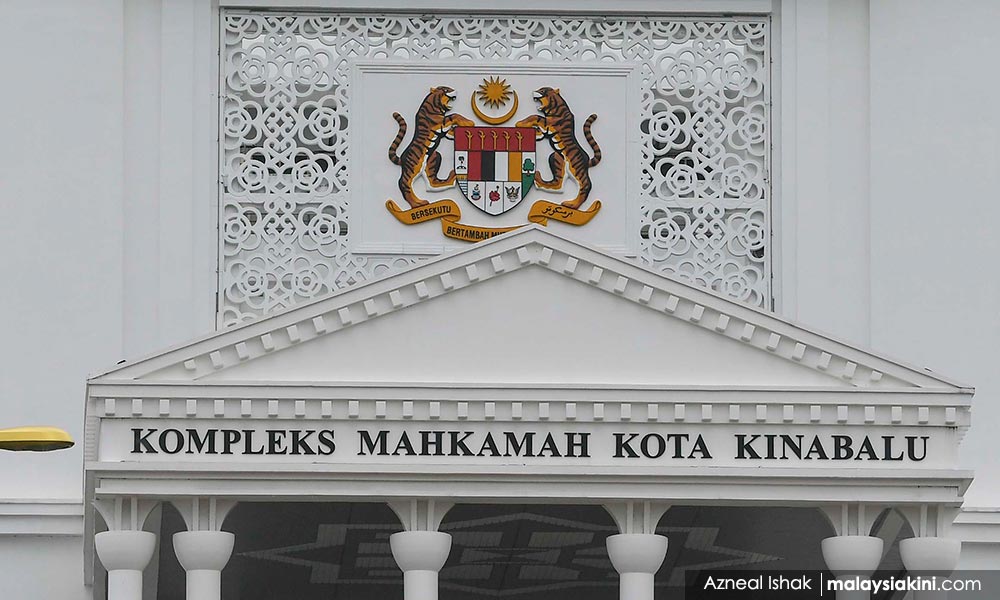
Following MACC investigations, authorities have charged three individuals in court, including state assistant minister Andi Suryady Bandy (Tanjung Batu) and Yusof Yacob (Sindumin).
Businessperson Albert Tei, the whistleblower who exposed the alleged corruption through video recordings, was also charged with offering bribes to the assemblypersons.
In his speech, Hamzah questioned the reasoning behind the authorities’ action against the two state leaders.
"Is it because they are only 'ikan bilis' (small fries) while the others have significant positions in the Sabah state government?
"This proves that there is a practice of selective prosecution in this country," he said.
‘Face court’
Hamzah also pointed to an ala-Rasputin character in the government, understood to be referring to Anwar's former political secretary, Farhash Wafa Salvador Rizal Mubarak.
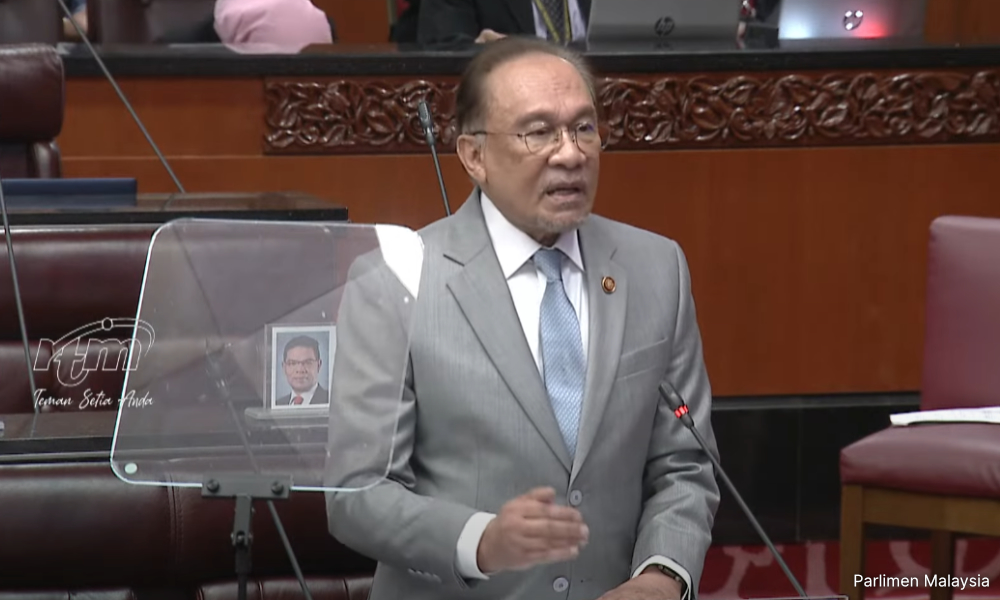
He said the allegation that former economy minister Rafizi Ramli (Harapan-Pandan) had raised is serious and should be answered by Anwar.
In response to a suggestion by Rosol Wahid (PN-Hulu Terengganu), the opposition chief urged Anwar to face his civil suit case brought by Yusoff Rawther without seeking any special treatment.
Hamzah said the prime minister should take the example of Caliph Saidina Ali when facing a court case regarding his stolen armour.
According to Hamzah, the ruler of the Islamic caliphate did not seek immunity or any postponement from the judge, who, in the end, ruled that the armour in question belonged to a Jewish man who was accused of stealing it.
"... I would like to ask the Tambun MP (Anwar) to just go and face his case in court without any immunity," Hamzah said.
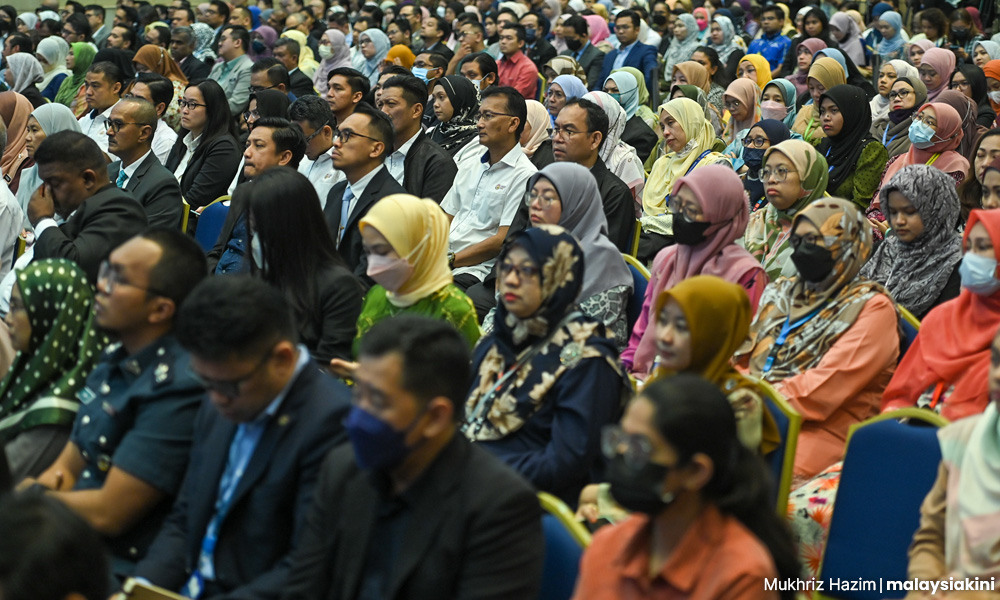
Earlier today, the prime minister, in his speech addressing civil servants, stressed the importance of good governance towards fighting corruption and plugging leakages.
Anwar had stressed on earning an honest income, saying the civil servants must have "habits of the heart" against corruption.
Why the dependence?
The opposition also criticised Putrajaya for its continued dependency on government-linked companies (GLCs) and government-linked investment companies (GLICs) as the government's cash cow, including for risky investments and to fund unprofitable projects.
Hamzah pointed to a proposal for Khazanah Nasional Berhad to fork out RM600 million to fund Carcosa Seri Negara's facelift.
He said the sovereign fund could better utilise the money by investing in opportunities that can yield better profits, which the Carcosa project can be privatised.
"In Budget 2026, the Retirement Fund Incorporated (Kwap) is now involved in a joint investment fund worth RM1.2 billion for ‘growing’ companies.
"Kwap is a body that manages public retirement funds exceeding RM158 billion. PN does not want Kwap to play the role of a venture capital firm.
"Kwap should not be exposed to high-risk investments that do not guarantee long-term returns, resulting from joint investments with companies that are still unstable," he said.
Reporting by Hariz Mohd, Zarrah Morden, Shakira Buang
/file/publisher-c1a3f893382d2b2f8a9aa22a654d9c97/2023/04/2813a344c459414e5faf1a4b21268342.jpg)
/file/publisher-c1a3f893382d2b2f8a9aa22a654d9c97/2025/09/0dbd3e1d07dc6900c965fb5db1322a95.jpg)
/file/publisher-c1a3f893382d2b2f8a9aa22a654d9c97/2025/10/0ca0ae2eb851ba826be76f7afdd281b1.jpg)


Are you sure you want to delete this comment?
This action cannot be undone.