


/file/publisher-c1a3f893382d2b2f8a9aa22a654d9c97/2025/10/025636ae874d61e7f46d01beb8c71d31.jpg)

Dietary patterns, food quality among cancer causes - health minister
PARLIAMENT | Dietary patterns and food quality are among the main factors contributing to the rising number of cancer cases in the country, said Health Minister Dzulkefly Ahmad.
As such, the Health Ministry is actively strengthening its food safety and quality programme as a long-term preventive measure.
PARLIAMENT | Dietary patterns and food quality are among the main factors contributing to the rising number of cancer cases in the country, said Health Minister Dzulkefly Ahmad.
As such, the Health Ministry is actively strengthening its food safety and quality programme as a long-term preventive measure.
Dzulkefly stated that monitoring the entire food supply chain, from farm to table, is crucial in efforts to curb cancer, which now accounts for more than 40,000 new cases each year.
“Diet is one of the main contributors to cancer. That is why the Health Ministry is implementing a comprehensive food safety and quality programme. This is an early control measure.
“Within the broader health framework and as the main caretakers of the public health, the ministry runs various nutrition and dietary programmes, while the food safety and quality programme focuses more on ensuring health protection through control of food that is being consumed.
“The approach is comprehensive, from farm to table. The entire food supply chain must be closely monitored, especially in today’s context of global food trade,” he told the Dewan Rakyat during the oral question session today.
The minister emphasised that the programme acts as the “gatekeeper” of public health because many diseases stem from the type of food consumed.
“Whether the food is ready-to-eat, locally processed, domestically produced, or imported, it must be safe and of high quality,” he added.
Earlier, Ismail Abd Muttalib (PN–Maran) had asked whether the government has data showing that modern eating habits are a source of cancer.
Worrying upward trend
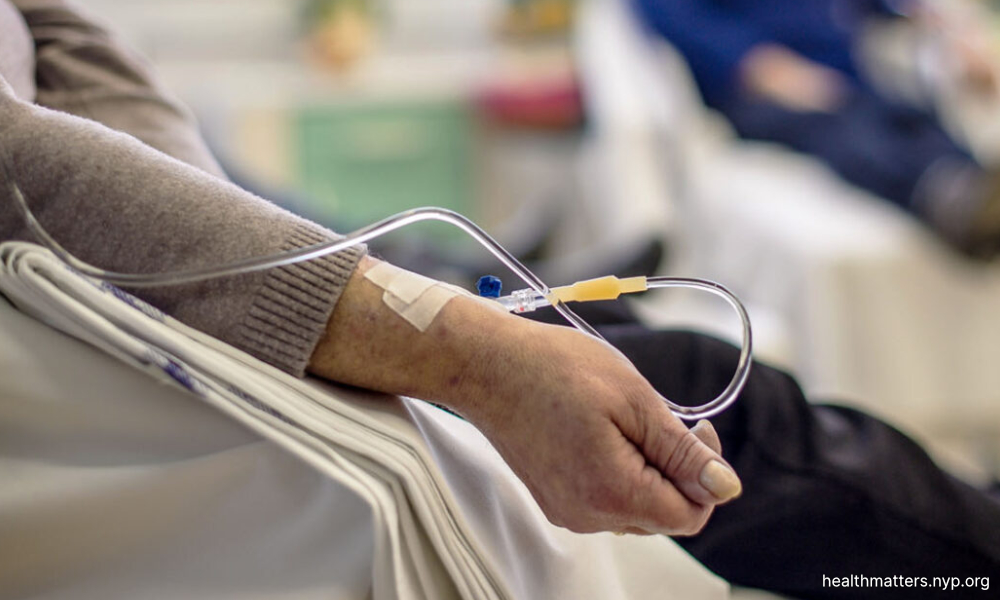
Dzulkefly stressed that nutrition not only affects adults but is also linked to the rising number of cancer cases among children, particularly leukaemia and lymphoma.
“Childhood cancer cases are also showing an upward trend, with 4,303 cases recorded between 2012 and 2016, primarily blood cancers such as leukaemia.
“To address this, the ministry is increasing the number of paediatric oncologists to meet growing demand,” the Kuala Selangor MP said.
Previously, the Health Ministry reported that over 40,000 new cancer cases are recorded annually, with breast, colorectal, and lung cancers being the most prevalent.
Dzulkefly said that prevention and early screening efforts are being intensified through the National Strategic Plan for Cancer Control, which includes expanded immunisation, regular screenings, and public awareness campaigns, such as Pink October.
“A total of 40,570 new cancer cases were reported in 2022, and 38,814 in 2023. The 10 most common cancers include breast, colorectal, lung, lymphoma, liver, prostate, and thyroid cancers,” he said.
For women, the five leading cancers are breast, colorectal, lung, corpus uteri, and ovarian cancers. Among men, the most common are colorectal, lung, prostate, liver, and lymphoma.
Primary prevention measures
Elaborating, Dzulkefly said under the National Strategic Plan for Cancer Control, various initiatives are being implemented to curb the rising numbers.
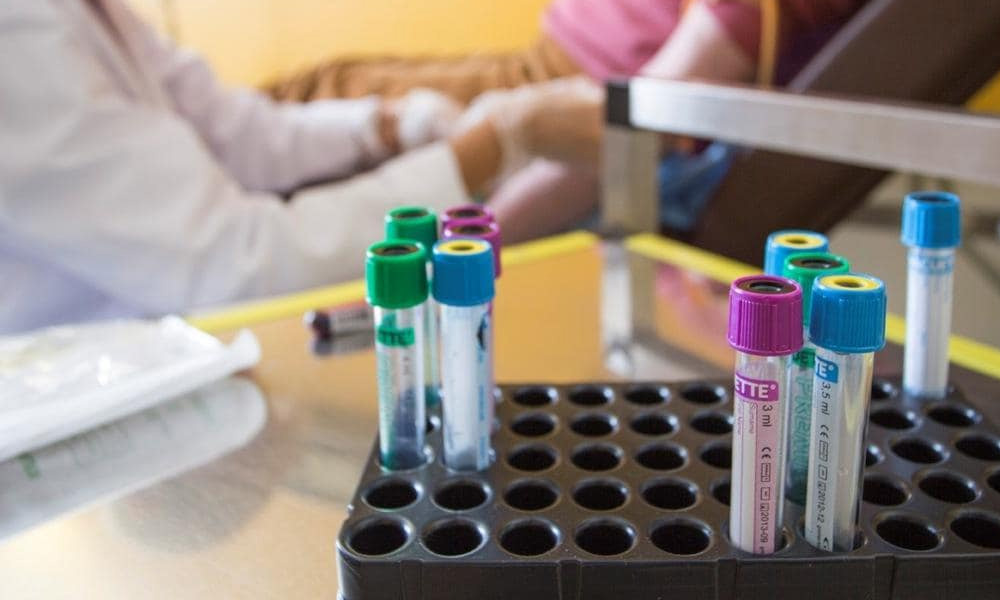
“This includes primary prevention through healthy lifestyle promotion and HPV immunisation, which was introduced in 2010 to prevent cervical cancer.
“Large-scale screenings have been conducted where 77,158 individuals were screened for colorectal cancer using the Faecal Occult Blood Test (FOBT). Some 857,722 women were screened for breast cancer via clinical exams or mammograms.
“Meanwhile, 410,664 women were screened for cervical cancer through Pap smear and HPV testing. For lung cancer, screenings are carried out using AI-based X-rays and low-dose CT scans,” he said.
Advancement in treatment
Dzulkefly added that Malaysia is also developing capacity in advanced cancer treatments such as gene therapy and precision medicine, immunotherapy and targeted therapy, AI-guided diagnostics, and robotic surgery.
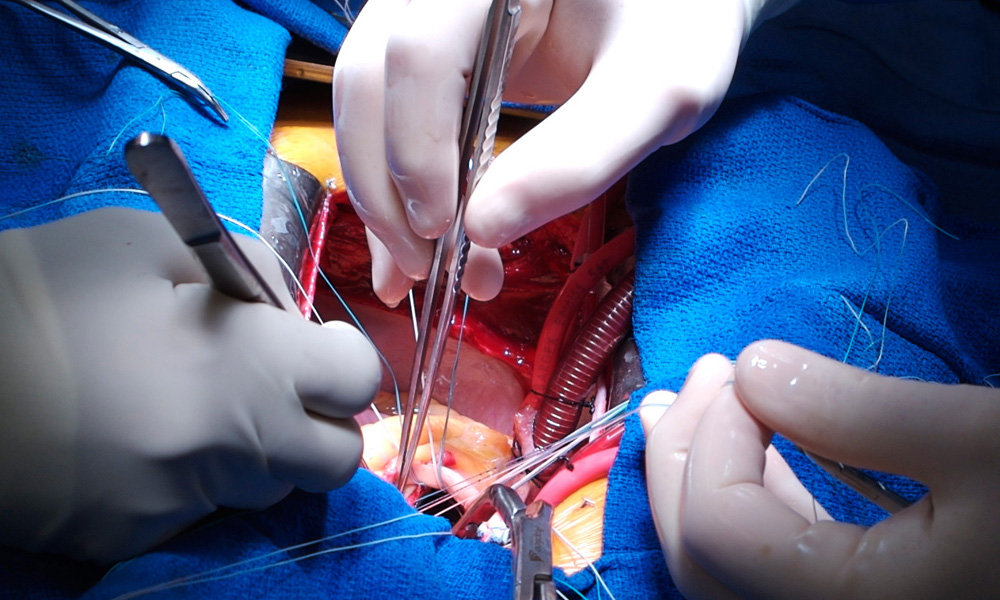
“We are building our capacity. I visited the King Hussein Cancer Centre in Jordan and found that they are far ahead. We want our specialists to undergo training and attachments there so we won’t fall behind in technology-based cancer treatment,” he said.
Although Malaysia has yet to offer treatments such as proton therapy, Dzulkefly noted that advanced imaging technologies such as MRI and low-dose CT scans are already being used in initiatives like the Lung Health Initiative.
Reporting by Shakira Buang, Hariz Mohd, Zarrah Morden
/file/publisher-c1a3f893382d2b2f8a9aa22a654d9c97/2023/04/a6123dff28fc9f23bc03b4a66d6e252b.jpg)
/file/publisher-c1a3f893382d2b2f8a9aa22a654d9c97/2021/07/5ea3d6dd34d6562cdc13da6c893cbfb2.jpg)
/file/publisher-c1a3f893382d2b2f8a9aa22a654d9c97/2025/08/38ee2c795072176fd5b7b8c9bf5814cd.jpg)
/file/publisher-c1a3f893382d2b2f8a9aa22a654d9c97/2021/06/0b595024f4e6960e4c3ba2e602154866.png)
/file/publisher-c1a3f893382d2b2f8a9aa22a654d9c97/2022/10/2a7233d3a013d651805f0271b305b9ec.jpg)
/file/publisher-c1a3f893382d2b2f8a9aa22a654d9c97/2021/07/fd82ae12811fd33b96ebf4acd170dc49.jpg)


Report this comment
Are you sure you want to delete this comment?
This action cannot be undone.