


/file/publisher-c1a3f893382d2b2f8a9aa22a654d9c97/2024/12/d222620f926c46c972ffa58b996002b2.jpg)

'Rebranded junta' plans Myanmar polls with 30 ex-army as civilian candidates
Following Malaysia’s optimism over the Myanmar military regime’s professed “cooperation” in peace talks, and its agreement to an immediate ceasefire, insiders are warning not to fall for what they call the junta’s “ceasefire charm offensive”.
According to the Myanmar Employers Organisation (MEO), the junta’s strategy to rebrand its rule involves fielding at least 30 senior military officers as election candidates and staging participation in a 27-group dialogue to create the illusion of cooperation before the December polls.
Summary
A group says Myanmar junta’s strategy to rebrand its rule involves fielding at least 30 senior military officers as civilian candidates in its planned December polls.
The move is part of a wider effort to project cooperation and legitimacy through ceasefire talks and staged dialogues, insiders warn.
MEO cautions that Asean’s engagement with the regime risks granting it false legitimacy while fighting and air strikes continue across Myanmar.
Following Malaysia’s optimism over the Myanmar military regime’s professed “cooperation” in peace talks, and its agreement to an immediate ceasefire, insiders are warning not to fall for what they call the junta’s “ceasefire charm offensive”.
According to the Myanmar Employers Organisation (MEO), the junta’s strategy to rebrand its rule involves fielding at least 30 senior military officers as election candidates and staging participation in a 27-group dialogue to create the illusion of cooperation before the December polls.
The warning came after it was reported that Prime Minister Anwar Ibrahim told the East Asia Summit (EAS) on Monday that the junta had agreed to Asean’s call for an immediate ceasefire and halt to bombings.
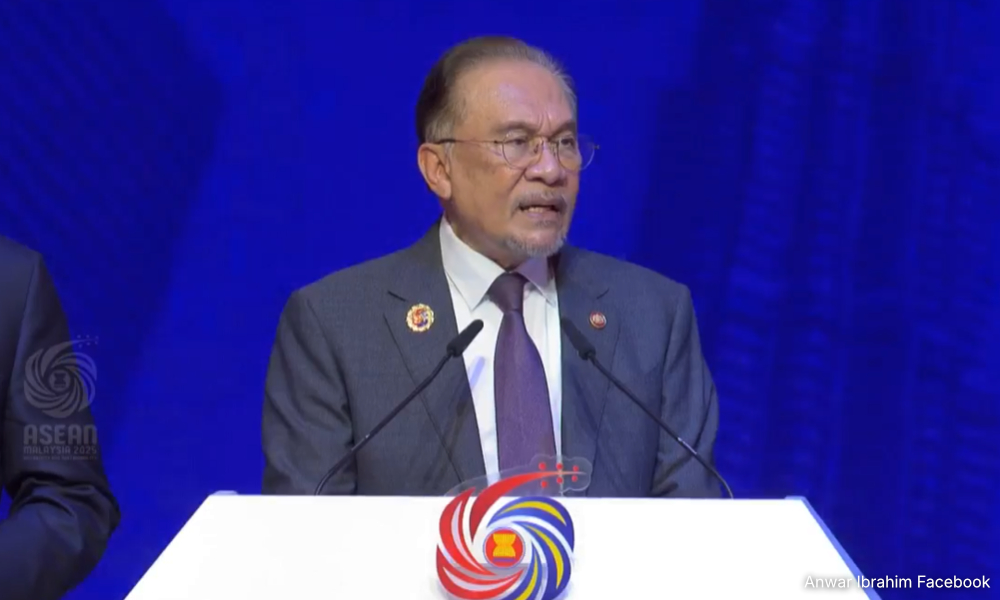
This declaration came even as fierce fighting and persistent air strikes continued across northern and western Myanmar, where resistance forces hold several key territories.
“Never underestimate the junta. Never visit the regime in Myanmar,” a senior MEO representative cautioned diplomats, adding that such visits could become public relations victories for the generals.
“Most people inside Myanmar, cut off from independent media, may believe Asean supports the junta,” said the representative, who spoke to Malaysiakini on condition of anonymity due to security concerns amid heightened scrutiny of Myanmar activists abroad.
Among those reporting on the war is The Ayeyarwaddy Times, an independent Myanmar news outlet operating under military restrictions.
Set up last year, the MEO is a national, independent and non-profit association representing the collective interests of Myanmar’s employers, including small, medium, and large enterprises committed to ethical and sustainable business practices.
Junta not isolated but insulated
The MEO representative said it was important to understand that the junta is not diplomatically isolated but rather strategically insulated - it is not seeking financial aid but values the diplomatic backing of a small, loyal circle of allies.
“Although the junta has been largely isolated by Asean, its military regime still enjoys diplomatic and military backing from Russia, China and a handful of authoritarian or sanction-hit states like Belarus, North Korea, Mali, Libya and, more recently, Kazakhstan.
“So out of the 148 in the world, at least 15 countries will support him and that includes neighbouring giants, India and China,” he explained.
Through junta-aligned media, Myanmar’s de facto leader Min Aung Hlaing’s frequent overseas visits create the impression among locals that he is widely welcomed.
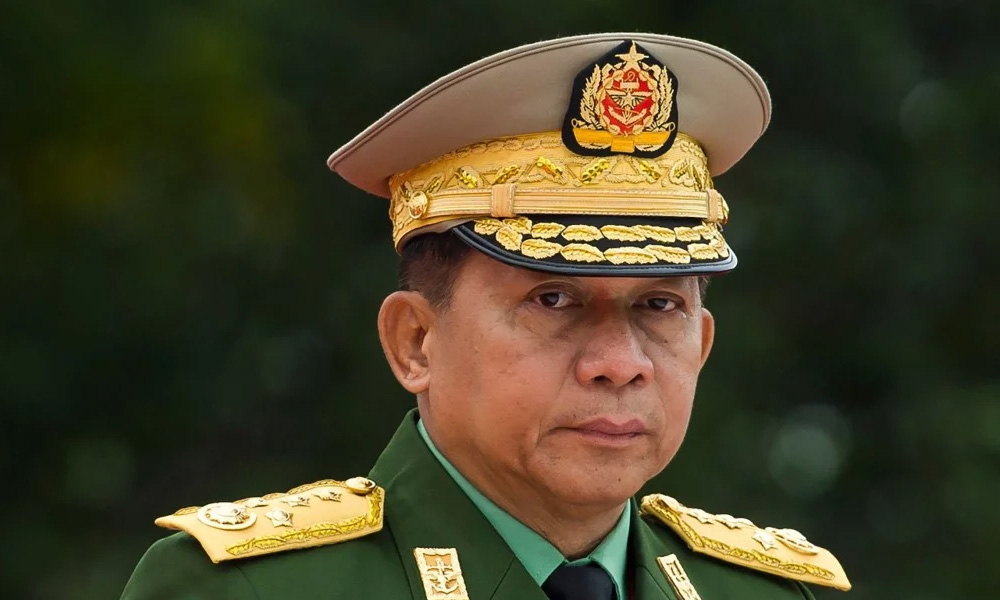
“He is not asking (allies) for money. He's asking them to support him politically and recognise his planned polls.
“This limited, but strategic network of countries aligned with Moscow or Beijing gives the regime enough political cover and arms access to survive without Asean’s support,” he added.
The regime continues to broker deals with its authoritarian partners - the latest being an agreement signed this month for an AI-driven gas project with Russia.
The MEO representative is aware of the risks in speaking to the media, even in Malaysia, given the cross-border surveillance by military spies and the enforced abductions of pro-democracy activist Thuzar Maung and her family from their home in Ampang two years ago.
Peace ‘elusive’ in Myanmar
The representative said a recent misunderstanding that Malaysia might send observers to the junta-run election illustrates how skillfully the regime manipulates perceptions to bolster its legitimacy and prolong its rule.
At the Asean Summit - the umbrella event encompassing related meetings such as the EAS and the Asean Plus One Summits - UN secretary-general Antonio Guterres described peace in Myanmar as “elusive”.
He warned that an election under such conditions risked further instability, while commending the bloc’s humanitarian commitment to Myanmar following the recent earthquake.
Guterres reportedly stressed that restoration of democracy must be rooted in institutions anchored in the rule of law and human rights.
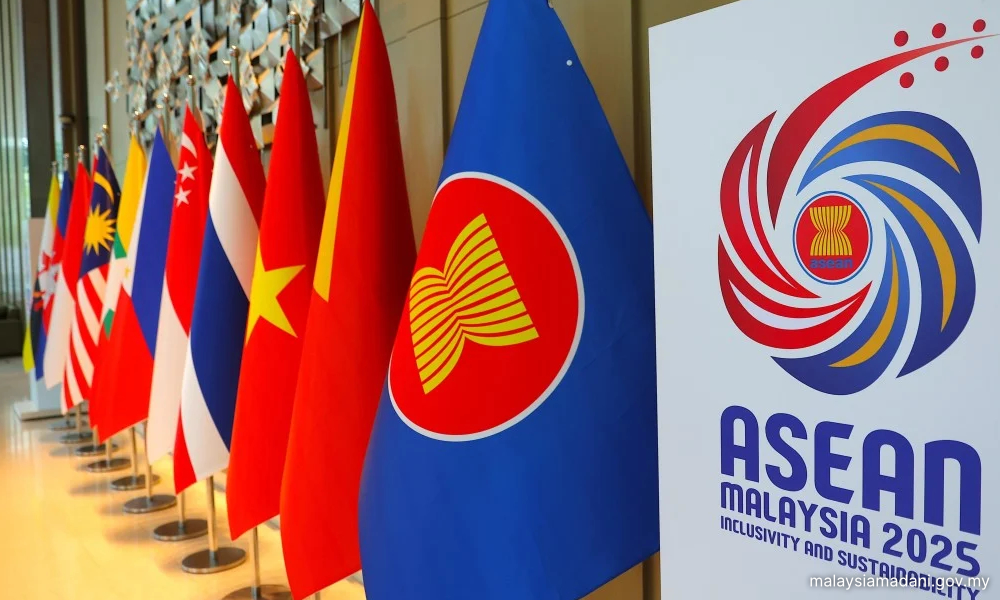
With five million citizens displaced and Asean’s Five-Point Consensus ignored for more than four years, the MEO representative said the election is not the junta’s roadmap to peace but a bid to legitimise its rule.
Camouflage of democracy
“Don’t accept the election. We are not even saying don’t go - we don’t accept it at all,” the representative said, describing a nationwide campaign calling for a total boycott and rejection of the polls.
Like MEO, women’s groups and trade unions are also spreading the word that the election is a trap.
“Leading opposition groups and a substantial portion of the population are expected to boycott the election, but there are pockets of the population who will go to the polls.
“Those who will vote are the wealthy military elite who control major businesses and hold ties with foreign companies, the urban middle class who benefit very well from working with them and the civil servants and private-sector workers earning steady but modest incomes,” he said.
Following the National League for Democracy’s (NLD) November 2020 landslide victory, Min Aung Hlaing, a senior general, seized power in a coup on Feb 1, 2021.
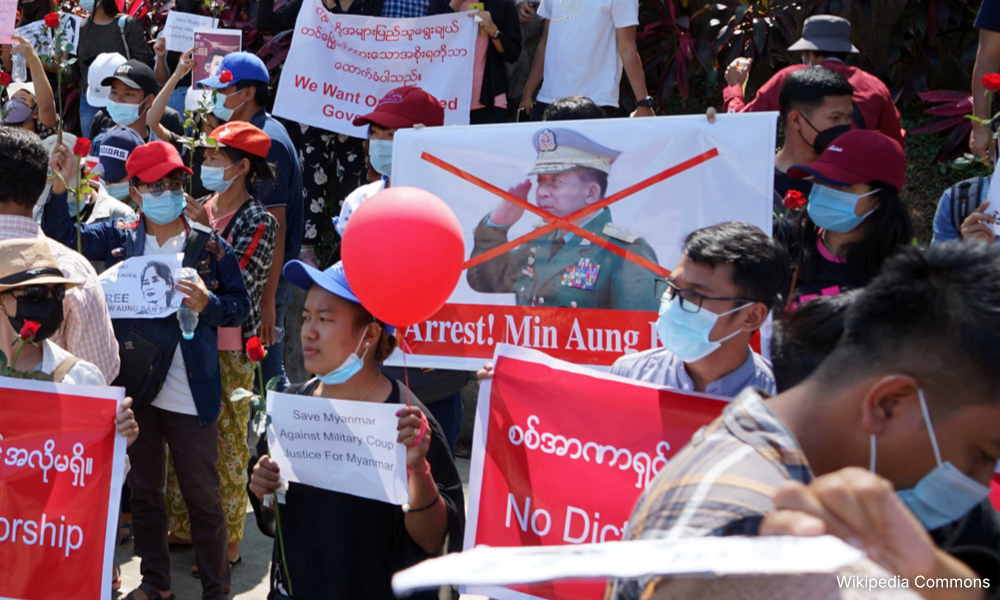
Since then, the regime has extended the state of emergency at six-month intervals to maintain military rule until this July, when the emergency was formally ended and the regime’s governing body, the State Administrative Council (SAC), was dissolved.
However, as the National Defence and Security Council (NDSC) chairperson, Min Aung Hlaing replaced the SAC with an 11-member State Security and Peace Commission (SSPC), which he also chairs.
According to the MEO representative, the NDSC then annulled the 2021 order that had transferred sovereign power to the commander-in-chief of defence services and turned a military general, U Nyo Saw, into a civilian prime minister of a new union government.
Under this manoeuvre, the rebranding of the junta regime began.
“Just like the military origins of the new prime minister, at least 30 senior military officers are now civilian candidates strategically positioned for the election,” he said.
The planned election would allow the coup regime to end emergency rule and claim legitimacy through the ballot, effectively making Min Aung Hlaing president.
Diplomatic blindspot
The MEO representative also warned that declining diplomatic awareness of Myanmar’s political manoeuvring could lead diplomats to mistakenly accept the junta’s planned election as legitimate.
“Diplomatic turnover in Myanmar has led to a new wave of foreign embassy staff who arrived after the 2021 coup, many of whom may lack full historical context about the junta’s takeover,” he said.
Analysts cautioned that this limited institutional memory could cause confusion, leading some to misread the junta’s election as a civilian process.
"Most senior envoys who witnessed the coup, including former ambassadors from the European Union, United States and United Kingdom, have since rotated out and been replaced by new appointees.
"The timing of the proposed Dec 28–29 election, during the Western holiday period, appears calculated to minimise international scrutiny, as many Western governments operate with reduced staffing at that time," he added.
Having followed Myanmar’s political upheavals for more than 20 years, the representative said this reflects a broader pattern — using diplomatic transitions and calendar timing to shape external perceptions and blunt potential criticism.
An unlikely critic emerges
The junta recognises that it still holds too few territories to conduct a national election. However, starting from the capital Naypyitaw, which in English means “the monarch’s reign”, it hopes to secure civil service votes that will bolster diplomatic confidence in its rebranded government.
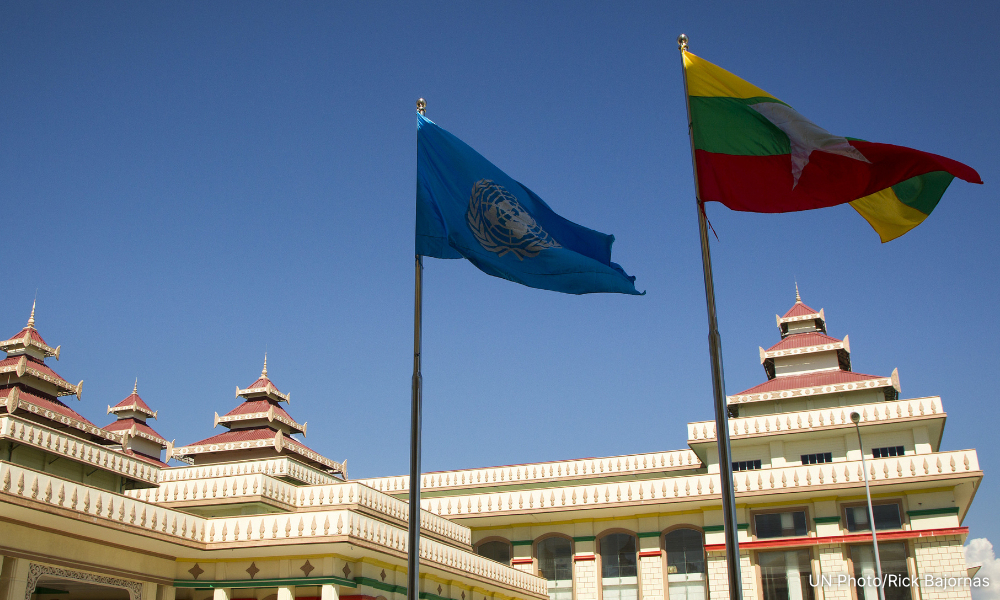
The rest of the election dates have yet to be shared, but are expected to take place in stages across areas under junta control throughout January.
A new election protection law introduced in July allows the junta to prosecute anyone seen as undermining its planned polls with penalties ranging from imprisonment to the death sentence.
Critics have said that the law is being used to silence dissent, as seen in the first case, where a social media user was sentenced to seven years in prison for a post questioning the regime’s control and credibility ahead of the election.
By September, three people were being prosecuted under this law, but an expected critic emerged with damning claims about the junta’s planned election - U Hla Swe, a retired lieutenant colonel known locally as “Bullet”.
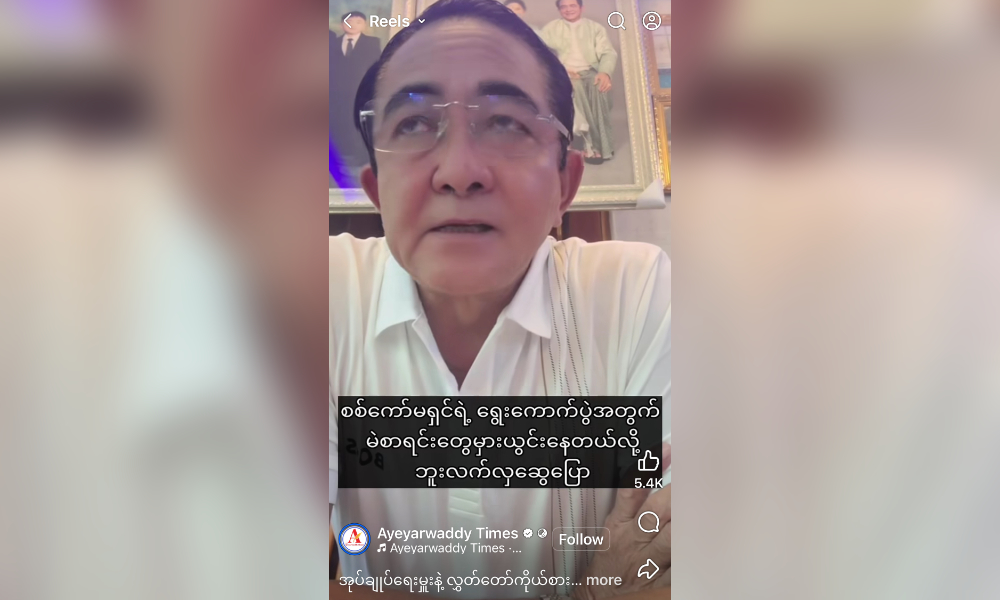
A former army officer who became the Union Solidarity and Development Party’s Naypyitaw branch chief after the 2021 coup, he went live on social media in early October, accusing the junta-controlled Union Election Commission (UEC) of using an outdated 2020 voter list riddled with errors - including names of deceased people and missing eligible voters.
Two days later, he was summoned for military questioning after his comments went viral.
MEO urged neighbouring countries to impose unilateral sanctions immediately instead of waiting for an Asean bloc action, arguing that coordinated state-by-state pressure could have weakened the junta long ago.
/file/publisher-c1a3f893382d2b2f8a9aa22a654d9c97/2025/10/6a90b2e1fc2521bfb2b13cd7d5d7007b.jpg)
/file/publisher-c1a3f893382d2b2f8a9aa22a654d9c97/2025/02/a9c0856153e4adf4af5c9b44cd23b9fa.jpg)
/file/publisher-c1a3f893382d2b2f8a9aa22a654d9c97/2025/10/a2cfcfaeaa68ff1a27d0d78cb0f4c5f2.jpg)
/file/publisher-c1a3f893382d2b2f8a9aa22a654d9c97/2024/12/723516d90b3f3544cb9b41328a1d7e14.jpg)
/file/image/74434729_605.jpg)
/file/publisher-c1a3f893382d2b2f8a9aa22a654d9c97/2025/10/94adbf39ebcd74a469937ad7e4446315.jpg)


Are you sure you want to delete this comment?
This action cannot be undone.