
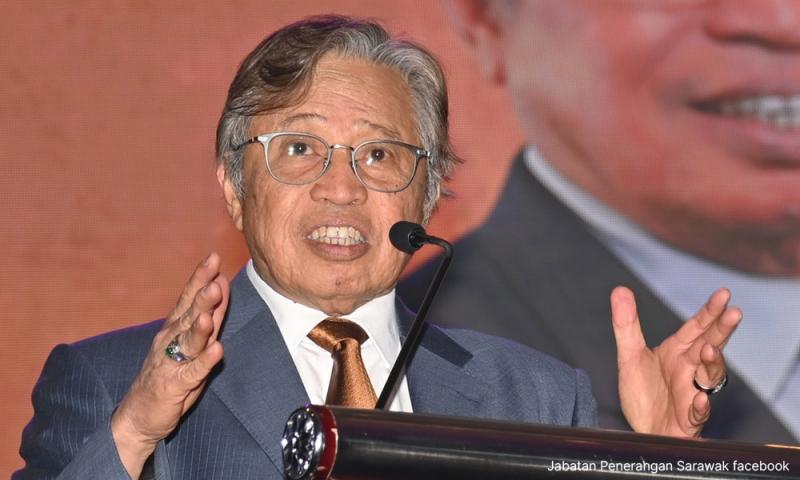
A strong civil service is not measured by its size but by its impact on the public, said Sarawak Premier Abang Johari Openg.

As such, he said the focus should be on building a lean, agile, results-driven service by simplifying processes, eliminating what no longer adds value, and prioritising initiatives that truly make a difference.

“Lean management, digitalisation, and innovation are interconnected. Lean practices streamline processes and enhance efficiency, while digitalisation provides the tools and data to make faster, evidence-based decisions.

“Innovation thrives in this environment, empowering officers to think creatively, improve services, and deliver greater impact for the people,” he said at the Sarawak Public Service Day Celebration 2025 in Kuching, today.

Johari said through the Sarawak Digital Economy Blueprint 2030, the state is modernising governance by integrating systems, strengthening data use, and automating processes.

He said as of today, 59 percent of state government services are available online, marking steady progress toward a fully digital public sector.

“By 2030, I foresee that every sector of Sarawak’s economy, from agriculture and industry, to services and governance, will be digital, making innovation and technology an integral part of how we serve our people,” he said.

Johari also emphasised that capacity building remains a cornerstone in strengthening the Sarawak civil service.

As the state moves towards 2026, he highlighted that the government’s focus is on reinforcing core governance competencies while nurturing emerging capabilities in areas such as digital transformation, data-driven policymaking, climate resilience, and citizen-centric innovation.

“To achieve this vision, the Sarawak government has forged strategic partnerships with renowned global institutions, including Henley, Cambridge, Oxford, and the London School of Economics, providing officers with invaluable exposure to best practices in leadership, governance, and public policy,” he added.

- Bernama