


/file/publisher-c1a3f893382d2b2f8a9aa22a654d9c97/2025/10/47e2e898c3b1fbc37fb4dde7a1ccabaf.jpg)

Social media age ban alone won't protect children, Unicef tells govt
The United Nations Children’s Fund (Unicef) today called on Putrajaya to formulate a comprehensive approach towards ensuring children’s online safety and not to depend solely on its plan to impose social media age bans.
In a statement, the agency said age restrictions alone would not keep children safe online and might have unintended consequences, including pushing children to find other ways online through less regulated platforms.
Such enforcement action...
The United Nations Children’s Fund (Unicef) today called on Putrajaya to formulate a comprehensive approach towards ensuring children’s online safety and not to depend solely on its plan to impose social media age bans.
In a statement, the agency said age restrictions alone would not keep children safe online and might have unintended consequences, including pushing children to find other ways online through less regulated platforms.
Such enforcement action, Unicef stressed, must be part of a broader approach.
“Families are overwhelmed. Children are encountering bullying, grooming, and sexual exploitation online, and the status quo is clearly failing them.
“But simply banning younger users from social media will not solve the problem.
“Many children will still find ways to go online, often through less regulated platforms, where it is harder to protect them, and they will be less likely to seek help when something goes wrong,” said Sanja Saranovic, who is Unicef deputy representative to Malaysia.
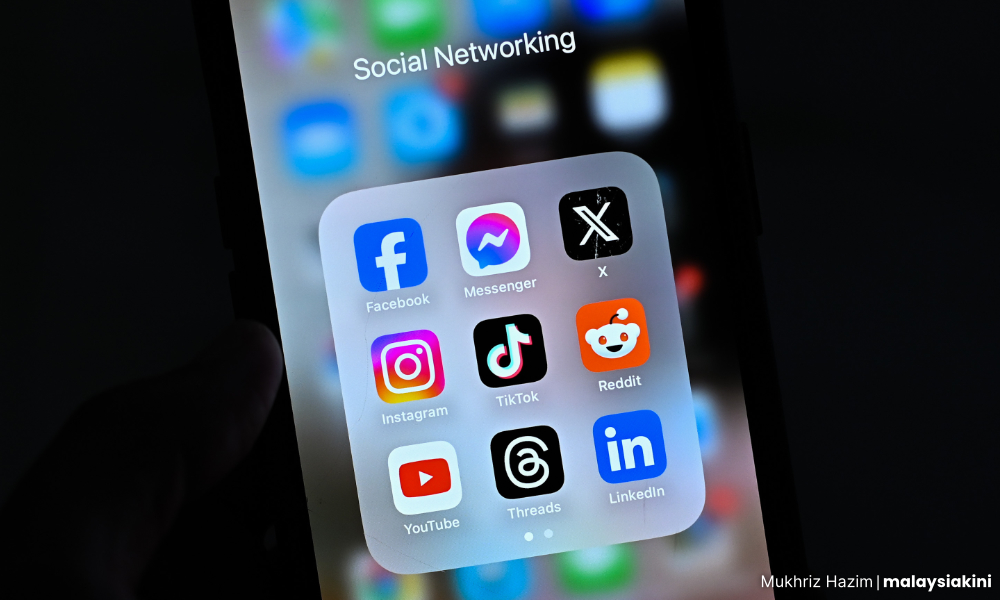
The UN agency’s response came just weeks before the government is set to ban social media use for children under 16 as part of broader protections under the Online Safety Act, effective Jan 1.
Communications Minister Fahmi Fadzil, in announcing the decision last month, said Malaysians below 16 will not be allowed to sign up for social media accounts from next year as part of the government’s efforts to strengthen online safety for children.
Comprehensive approach needed
Unicef said social media is not a luxury for many children, especially those who are isolated, marginalised, or living with disabilities.
Digital platforms can provide vital opportunities for learning, connection, play, and self-expression, it said, adding that any measure to protect children must therefore balance safety with their rights to participation, information and privacy.

Unicef called on the government to come up with an approach that is comprehensive and child rights-based, including pushing for stronger responsibility on social media platforms, using right-respecting age-appropriate designs and tools, and providing support for parents, caregivers and schools.
“Online safety cannot rely on enforcement alone.
“Platforms, regulators, families, schools, and communities must work together to create digital environments that are safe, inclusive and rights-respecting for every child,” said Saranovic.
/file/publisher-c1a3f893382d2b2f8a9aa22a654d9c97/2025/10/47e2e898c3b1fbc37fb4dde7a1ccabaf.jpg)
/file/publisher-c1a3f893382d2b2f8a9aa22a654d9c97/2025/12/b2224f13734217efe16aac152b94ce1b.jpg)
/file/publisher-c1a3f893382d2b2f8a9aa22a654d9c97/2023/10/829ebe2997eba0bec3a4ea20c031ee15.jpg)
/file/publisher-c1a3f893382d2b2f8a9aa22a654d9c97/2024/11/fe35970561c23c81671a1614e28ecbee.jpg)
/file/publisher-c1a3f893382d2b2f8a9aa22a654d9c97/2025/12/f5c7053d9ef11f363daa3cc66a878312.jpg)
/file/image/73757996_605.jpg)


Are you sure you want to delete this comment?
This action cannot be undone.