


/file/publisher-c1a3f893382d2b2f8a9aa22a654d9c97/2025/10/47e2e898c3b1fbc37fb4dde7a1ccabaf.jpg)

Social media age limit reduces internet addiction, bullying - experts
Universiti Teknologi Mara (UiTM) senior lecturer at the Faculty of Communication and Media Studies, Hamizah Sahharon, said enforcing the proposal could also curb cyberbullying and sexual harassment.
She said this would be in line with...
Technology and human communication experts said internet addiction and other adverse effects can be reduced if those under-16 are prevented from having social media accounts.
Universiti Teknologi Mara (UiTM) senior lecturer at the Faculty of Communication and Media Studies, Hamizah Sahharon, said enforcing the proposal could also curb cyberbullying and sexual harassment.
She said this would be in line with the objectives of the Online Safety Act 2025 (Act 866), to create a safer internet ecosystem for children and adolescents
“The government’s move will have a positive impact by reducing adolescents’ exposure to toxic content and the risk of digital exploitation,” she told Bernama.
Act 866 was gazetted on May 22 and is expected to come into force on Jan 1, 2026.
It aims to strengthen online safety in Malaysia through regulating harmful content, establishing responsibilities for application and network service providers, and implementing specific safety standards.
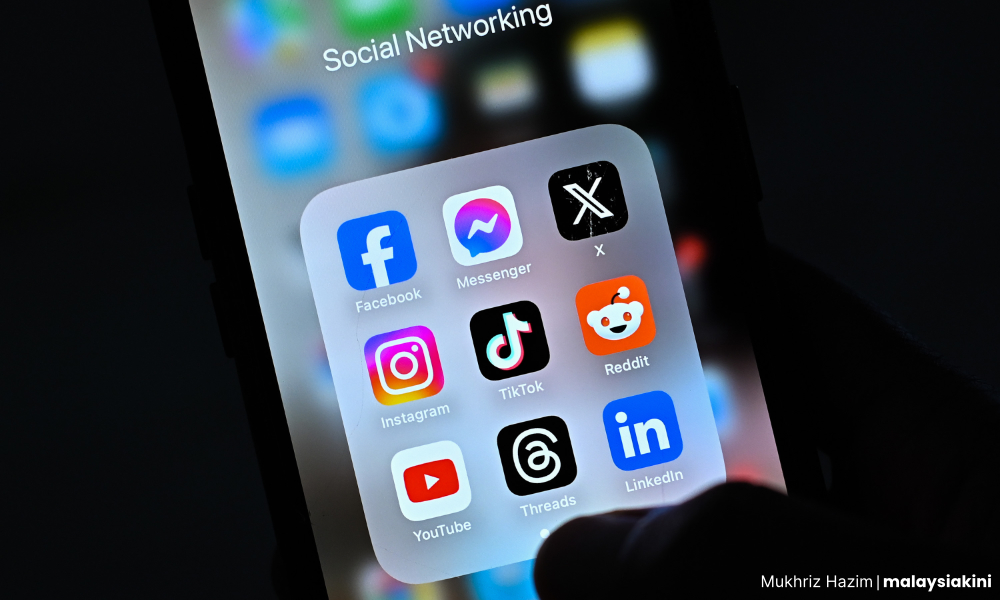
Previously, Communications Minister Fahmi Fadzil emphasised the need to implement a 16-year age limit for social media use to protect children and adolescents from the risk of exploitation and exposure to inappropriate content.
Elaborating further, Hamizah said if the policy is implemented correctly, it will also open up space for more controlled digital education, strengthen the role of parents in monitoring their children, and increase the accountability of social media platforms under the online safety plan.
Data privacy issues
However, she expressed concern that young users might migrate to the digital “underground” using fake accounts to bypass age verification, exposing them to extreme content without algorithmic control, in addition to privacy and data security issues.
Thus, she suggested that social media platforms implement age verification without compromising privacy, in addition to ensuring their online safety plans are audited regularly to comply with the Online Safety Act.
“To ensure the success of this policy, the most critical elements are the digital platform’s compliance with security audits and age verification, as well as the implementation of a national digital education plan involving parents, schools, and communities, thus child protection can be achieved without creating a digital divide or unwanted side effects,” she added.

Knowledge to identify risks
Meanwhile, Malaysian Cyber Consumers Association (MCCA) president Siraj Jalil said allowing 17-year-olds to have social media accounts might encourage them to spend excessive time on these platforms, thus affecting their focus when taking the SPM exam.
He suggested that the government strengthen various aspects of this policy, particularly digital literacy among parents and children, such as practising the Unesco Digital Literacy Framework drafted in 2018.
“Among its main components, it emphasises the correct use of operating devices. Additionally, it includes information literacy, which is how someone should understand and evaluate information received through the internet.
“That’s why threats to children occur when they fail to understand the content. Things like paedophilia, for example, require knowledge to identify the risks. Awareness alone is not enough because criminals are always looking for ways to trap victims,” he said.
However, Siraj said 16-year-olds in Malaysia are considered less mature and still need guidance compared to their peers in Australia after that country implemented a policy limiting the age for social media account ownership, starting Dec 10.
Focus on real routines
From a mother’s perspective, Izzati Ismail, 35, agrees that if the government limits children under 16 from using social media, this can help protect their emotions and development, as they are not yet mature enough to manage digital stress.
The mother of two said limiting social media use can also bring positive changes to children’s development, including allowing them to focus more on learning, physical activities, and direct social interaction.
“When social media access is limited, children can focus on their real routines and avoid the pressure of strange trends.
“However, as parents, we are still worried that they will find a way around it because there are many videos now that are not suitable for their age, so we ourselves need to monitor them more closely,” she added.
- Bernama
/file/publisher-c1a3f893382d2b2f8a9aa22a654d9c97/2025/12/b2224f13734217efe16aac152b94ce1b.jpg)
/file/publisher-c1a3f893382d2b2f8a9aa22a654d9c97/2021/05/d5e6ac159e47acc3c2e99603de3a51a8.jpg)
/file/publisher-c1a3f893382d2b2f8a9aa22a654d9c97/2023/10/829ebe2997eba0bec3a4ea20c031ee15.jpg)
/file/publisher-c1a3f893382d2b2f8a9aa22a654d9c97/2024/11/fe35970561c23c81671a1614e28ecbee.jpg)


Are you sure you want to delete this comment?
This action cannot be undone.