


/file/publisher-c1a3f893382d2b2f8a9aa22a654d9c97/2021/01/885beacd463c43195ae13650aeb781f2.jpg)

Court sets May 21 to decide on bid against unilateral conversion laws
Judge Aliza Sulaiman fixed the date at the end of today’s proceeding, after hearing submissions from all parties...
The Kuala Lumpur High Court has fixed May 21 to decide on the originating summons application filed by M Indira Gandhi and 13 others, who are seeking to strike down the unilateral conversion laws of seven states.
Judge Aliza Sulaiman fixed the date at the end of today’s proceeding, after hearing submissions from all parties.
She said that the verdict would be delivered at 2.30pm, via online proceedings.
The plaintiffs had filed the originating summons on March 3, 2023, seeking to rely on the landmark Federal Court ruling in 2018 linked to the case of Indira’s Muslim convert ex-husband, who had unilaterally converted their three children without her consent.
In the landmark ruling, the Federal Court held that the definition of "parent" should be plural when it comes to religious conversion, rendering her children’s conversion to Islam invalid.
The plaintiffs seek a court declaration to nullify the unilateral conversion laws contained in the state enactments of the Federal Territories - as well as Perlis, Kedah, Malacca, Negeri Sembilan, Perak, and Johor.

Apart from Indira, the 13 other plaintiffs are NGOs Malaysia Hindu Sangam, its former chairperson S Mohan, Indira Gandhi Action Team chairperson Arun Dorasamy, two alleged victims of unilateral conversions, and eight residents from the states mentioned.
The two purported unilateral conversion victims are Aisyah Muhammad Ali (26) and Mimi Mastura Abdullah (33) - while the states’ residents are P Sathesh Kumar from Perlis (45), S Puveneshwaran from Kedah (46), A Krishnan from Malacca (57), R Sentul Kumaran from Negeri Sembilan (43), S Sathy Vel Naidu from Pahang (61), M Selvaraj from Perak (69), S Sivaprakash from Johor (48), and M Ranjeet Kumar from Kuala Lumpur (44).
The plaintiffs contended that the state enactments are invalid as it contravened Articles 12(4) and 75 of the Federal Constitution, as well as the 2018 Federal Court ruling regarding unilateral conversion.
Meanwhile, the Federal Territory Islamic Religious Council (Maiwp) and the Johor Islamic Religious Council appeared as interveners in the originating summons.
‘State laws inconsistent with Constitution’
The plaintiff’s lawyer, Rajesh Nagarajan, submitted that a child’s conversion to Islam is unlawful if it is done unilaterally, as Article 12(4) of the Federal Constitution outlined that both mother and father must decide the religion of a person under the age of 18 years old.
He further submits that any legislation inconsistent with this principle would be unconstitutional.
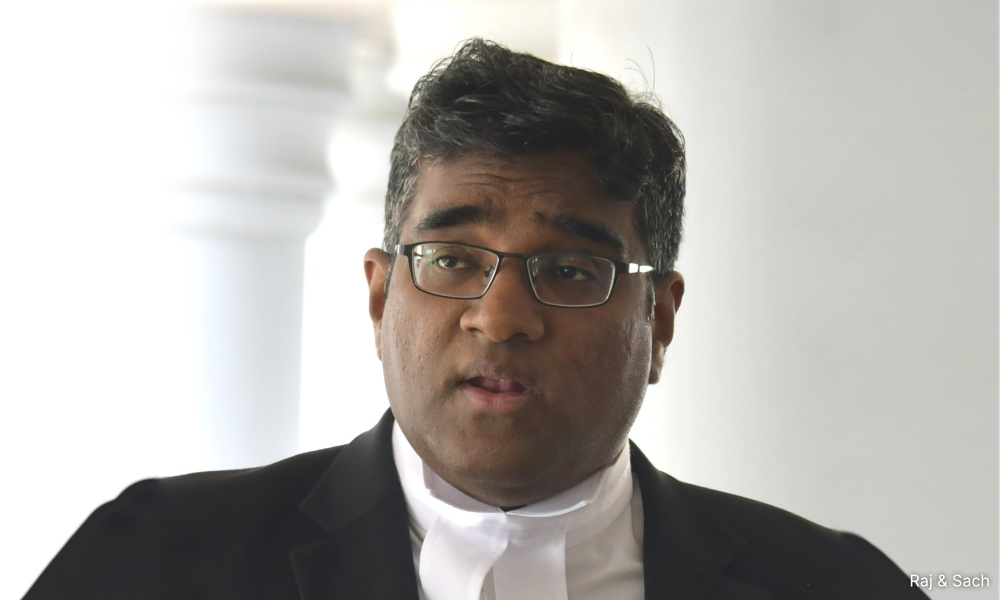
“Accordingly, any legislative provision that sanctions unilateral conversion is inconsistent with Article 12(4) and ought to be struck down.
“It is trite and constitutionally entrenched, as per Article 74 of the Constitution, that where there exists any inconsistency between a state law and a federal law, the federal law shall prevail, and the state law shall, to the extent of such inconsistency, be rendered void.
“Any state enactment that conflicts with or deviates from the Federal Constitution must be struck down to the extent of that inconsistency.”
‘2018 court ruling not legally binding’
Senior federal counsel Ahmad Hanir Hambaly, appearing for the Federal Territories, argued that the 2018 ruling, which the plaintiffs mainly relied on in this case, is not legally binding.
“In Indira’s 2018 decision, she was not attacking the constitutionality of Section 106 of the Perak Enactment, which houses the provision allowing the unilateral conversion of minors.
“The issues at heart of (Indira’s 2018 case) were the constitutionality of the registrar of the convert’s actions, of issuing the certificate of conversion (to Indira’s children) without firstly satisfying the statutory requirements for a valid conversion provided in the Perak enactment.
“It is trite that the constitutionality of a statute cannot be challenged collaterally.
“Subsequently, (we) submitted that Indira’s 2018 verdict cannot be equated to a proper binding authority for the unconstitutionality of Section 106 of the Perak enactment and its inter-states counterpart provisions, including Section 95 of the Administration of Islamic Law (Federal Territories) Act 1993 (Act 505),” he said.
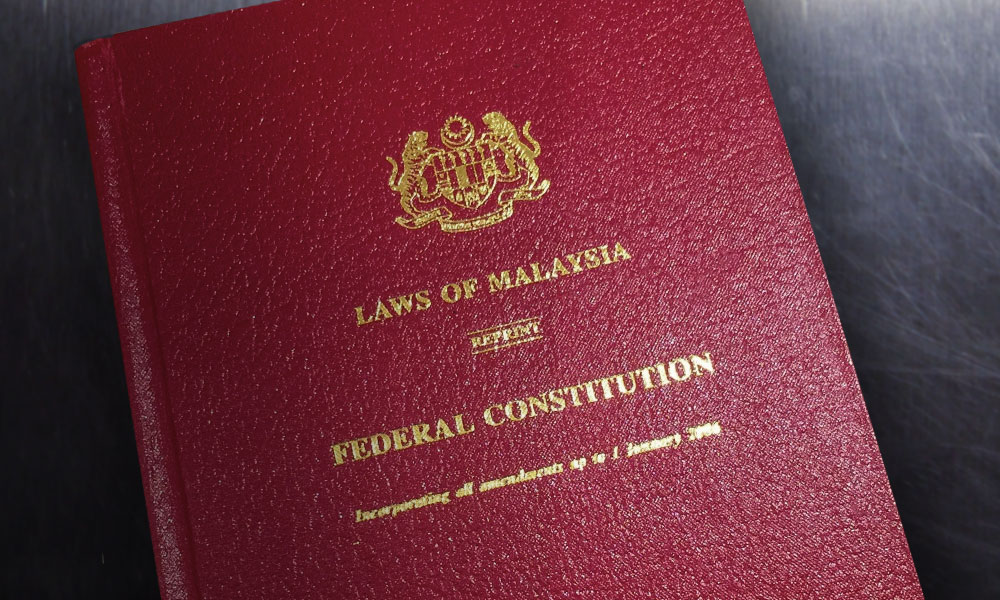
He added that Section 95, which was included in the provisions challenged by plaintiffs, was validly enacted and is constitutional.
“(The Section) did not breach Article 12(4) of the Federal Constitution or any other provisions thereof.
“At the outset, it must be stressed that it is trite that all provisions within an Act of Parliament, including Section 95 of Act 505, are cloaked with a strong presumption of constitutionality.
“We are of the firm view that presently, there is a strong presumption that Section 95 of Act 505 is constitutional.
“Unless the plaintiffs are able to show that Section 95 is truly repugnant to any provision in the Federal Constitution, the presumption of constitutionality persist and the provision prevails,” he said.
/file/publisher-c1a3f893382d2b2f8a9aa22a654d9c97/2025/11/de25395b5880a83e348b99a0b17f71a0.jpg)
/file/publisher-c1a3f893382d2b2f8a9aa22a654d9c97/2025/06/adb319895ecb3602bece66e05f3d62c6.jpg)
/file/publisher-c1a3f893382d2b2f8a9aa22a654d9c97/2024/02/3c265f3ff40ae15309b44683a27a9e31.jpg)
/file/publisher-c1a3f893382d2b2f8a9aa22a654d9c97/2025/11/7ea06e708eedc55d443af4c188a86852.jpg)
/file/publisher-c1a3f893382d2b2f8a9aa22a654d9c97/2024/02/a03dc68f1f5e5ffc0efae4b31f7009a6.jpg)
/file/publisher-c1a3f893382d2b2f8a9aa22a654d9c97/2023/02/857cca8cc4d4a9d76783e82fd7abb1b9.jpg)


Report this comment
Are you sure you want to delete this comment?
This action cannot be undone.