


/file/publisher-c1a3f893382d2b2f8a9aa22a654d9c97/2026/04/52352765d99de736717e8f6e6c10d11a.jpg)

Breast cancer awareness group empowers survivors and communities
For many diagnosed with breast cancer, healing extends far beyond hospital walls - some are found in communities that carry them through and beyond the disease.
At the Breast Cancer Welfare Association (BCWA), survivors like Suzanne Ting and Sandy Au Yong have found not just support, but a renewed sense of purpose.
Three years after...
For many diagnosed with breast cancer, healing extends far beyond hospital walls - some are found in communities that carry them through and beyond the disease.
At the Breast Cancer Welfare Association (BCWA), survivors like Suzanne Ting and Sandy Au Yong have found not just support, but a renewed sense of purpose.
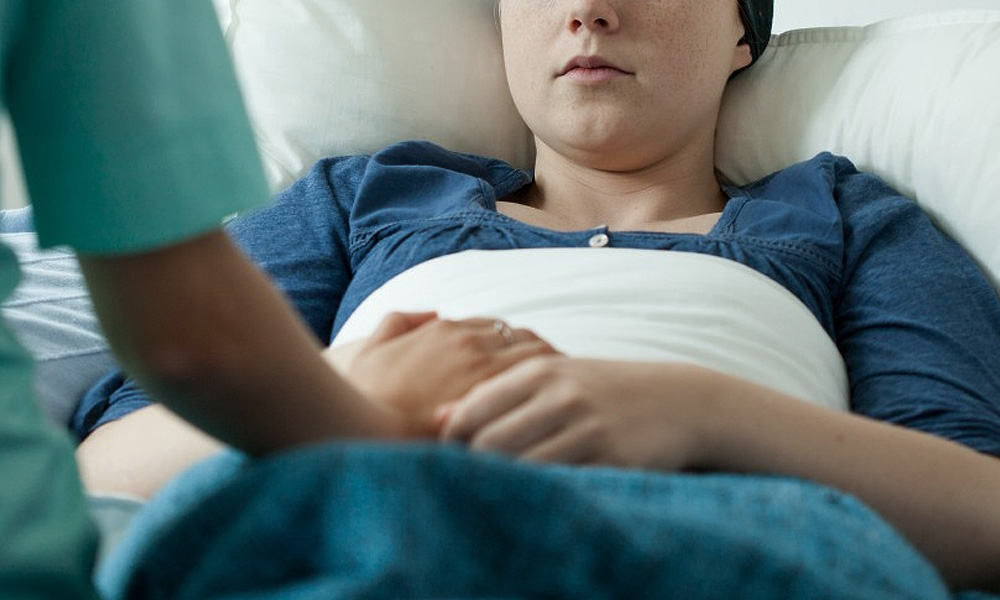
Three years after she began volunteering with the BCWA, Ting shared that it was the association’s wide array of events that helped her emerge from isolation following her diagnosis in late 2018.
“(After being diagnosed) I was scared. I did not go out of the house. But when my mother passed away in 2022, I had more time to myself and was introduced to BCWA by a friend.
“(And since then) I saw quite a lot of differences. All the friends here (at BCWA), the majority are survivors.
“That way, I find it more comfortable and confident sharing my story. It’s like we share the same language,” she said.
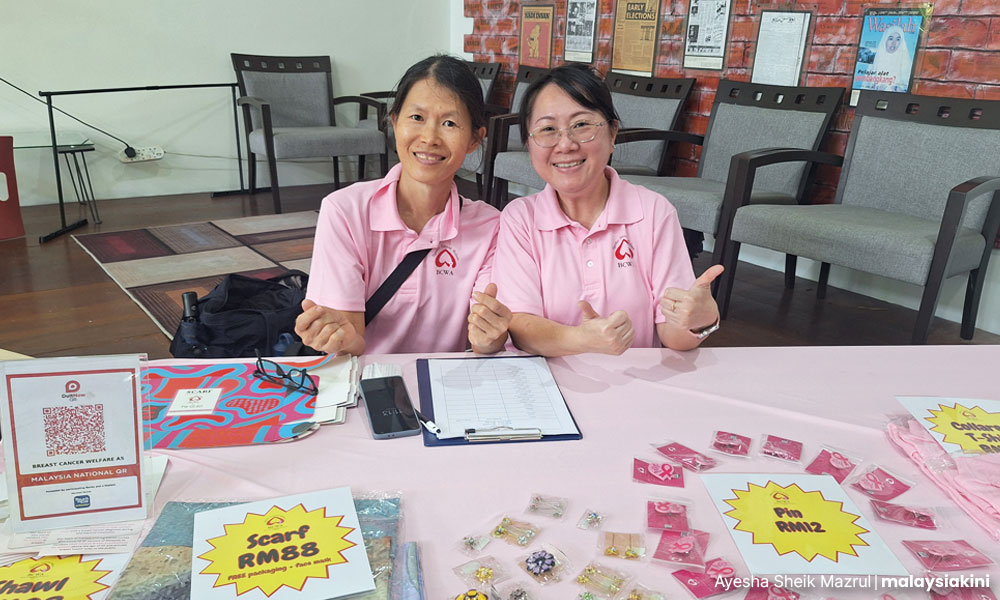
Meanwhile, Au Yong, who has been with BCWA for 13 years, said that participating in the group’s choir, Pink Melody, brings her joy.
“When we sing in a group, it’s like we’re supporting each other, like we’re a community,” she remarked.
Since joining the organisation, Au Yong has become increasingly active, even taking on personal challenges such as climbing Mount Kinabalu - a testament to how far she has come since her diagnosis.
Pioneering Malaysia’s breast cancer awareness
Celebrating its 40th anniversary this year, the BCWA is Malaysia’s oldest NGO promoting breast cancer awareness and supporting breast cancer patients from all walks of life.
Its mission is to assist newly diagnosed breast cancer patients, foster survivorship and advocacy, and raise public awareness about the importance of early detection.
Part and parcel of BCWA’s programme is peer counselling by trained breast cancer survivors who visit patients in hospitals to offer emotional support and guidance.
In addition, the group provides psychosocial support materials both online and offline, as well as subsidised prostheses and mastectomy bras, with full assistance available for those from lower-income groups.
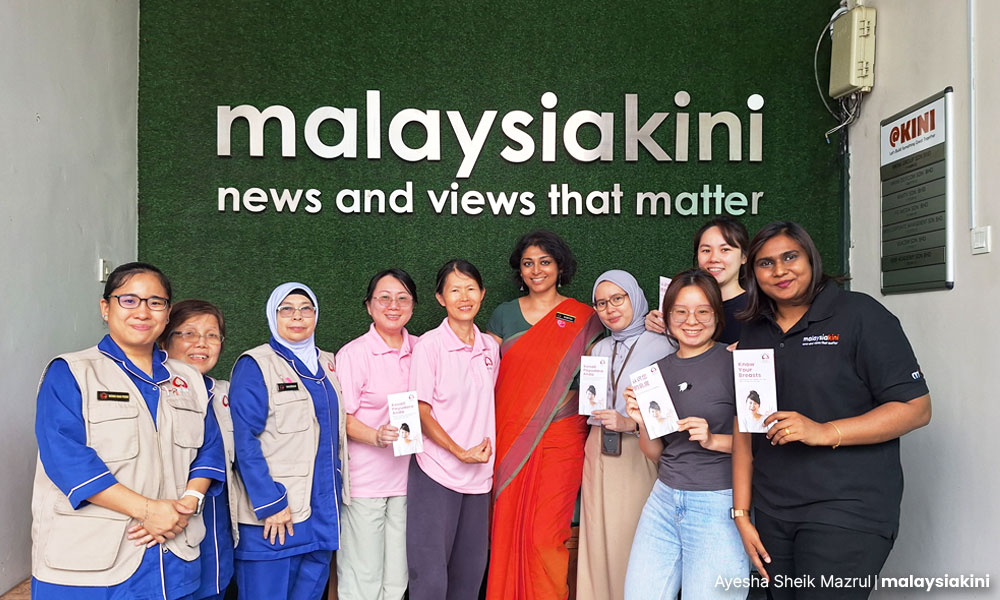
Another essential pillar of BCWA’s activities is awareness programmes, such as the one being held at Malaysiakini on April 8.
Malaysiakini hosts Breast Cancer Awareness Day
Conducted in conjunction with International Women’s Day last March, Malaysiakini’s Breast Cancer Awareness Day goes beyond raising awareness to providing direct access to care and information.
Attendees, comprising Malaysiakini staff and the public, took part in a health talk on reducing breast cancer risk factors, where they were guided on recognising early symptoms and performing self-examinations.
Free clinical breast examinations and health consultations were also offered to women of all ages at the event.
The programme also featured a merchandise sale, with proceeds fully going towards the association’s ongoing efforts to support breast cancer patients.
During the session, BCWA general manager Sumitra Selvaraj emphasised that while the causes of breast cancer are not fully understood, adopting healthier lifestyles and staying vigilant can help reduce risk.
Early detection, she said, leads to higher survival rates compared to late-stage diagnoses.
“When you catch breast cancer at its earliest stages, outcomes are excellent,” she explained.
Participants were encouraged to undergo regular screenings, including monthly self-examinations and annual clinical checks, to take charge of their own breast health.
Sumitra also highlighted a health screening initiative by the Social Security Organisation that offers free health screenings to eligible workers.
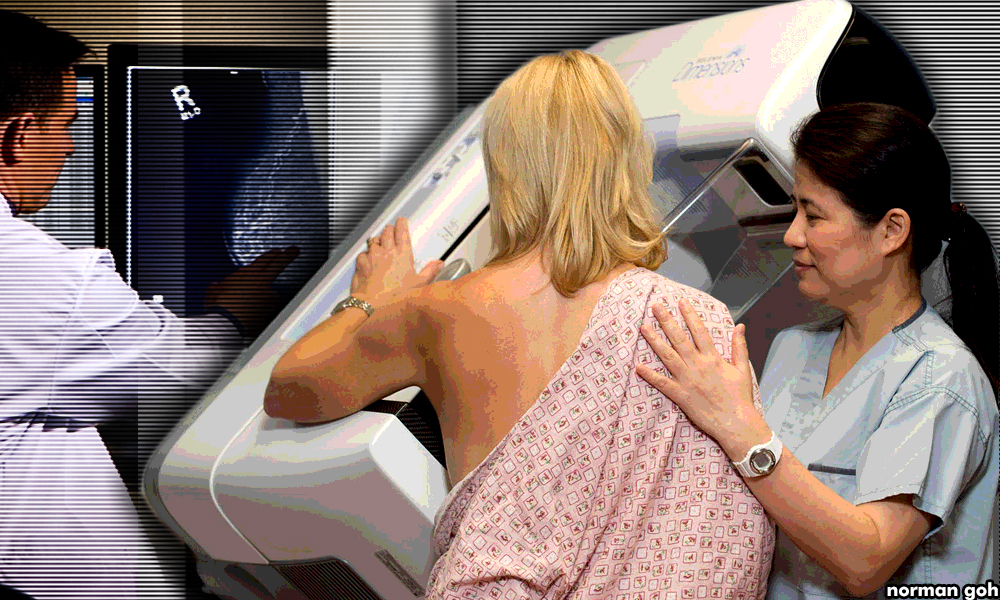
Under the programme, women aged 40 to 59 can apply for mammogram screenings for early detection and preventive healthcare.
However, this programme is not yet available for 2026.
From screenings to empowering communities
While the BCWA has done extensive work since its establishment, Sumitra noted that the approach of sending medical teams into communities to conduct screenings, while effective, relies heavily on resources and trained healthcare workers.
She acknowledged that such programmes depend significantly on trained and motivated staff, particularly nurses, who are already in short supply in Malaysia.
“At the moment, we have 12 employees in BCWA, and we are trying to provide a nationwide service,” she said.
“So it’s really hard. We are also 100 percent publicly funded, which means every year we have to raise about RM1.4 million just to keep our operations running.”
Sumitra added that most of the services provided by the association are offered free of charge.
Instead, she said BCWA hopes to expand its outreach efforts in the future by focusing on community empowerment and health literacy.
An ideal scenario is when women within communities become advocates for breast health awareness, Sumitra said.
With this approach, women themselves would encourage others around them to conduct regular breast self-examinations and seek medical attention when necessary.
“We want women in the community to be the ones asking others: ‘Have you done your breast health examination this year? Have you checked this month?” she said.
Even though the association faces a long journey ahead, Sumitra said her commitment to the cause remains strong.
“I’m excited because I believe in this cause. I believe in women’s health, and I believe no woman should be left behind,” she added.
Those interested in supporting BCWA’s work or seeking more information about its programmes can visit the association’s website or contact the organisation directly through email.
Donations help fund its outreach, patient support services and breast health awareness initiatives.
/file/publisher-c1a3f893382d2b2f8a9aa22a654d9c97/2024/02/253da4694d16d3cfed9004d1adf2c6e4.jpg)
/file/publisher-c1a3f893382d2b2f8a9aa22a654d9c97/2023/09/1ab69eddbe97f565107bb43c26cf5793.jpg)


Are you sure you want to delete this comment?
This action cannot be undone.