


/file/publisher-c1a3f893382d2b2f8a9aa22a654d9c97/2026/06/f8ebc39f446206b4e9174e41cedc38a8.jpg)

Rafizi's 'kancil' targets southern Johor - what lies ahead
Making its electoral debut, Parti Bersama Malaysia has unveiled its list of 15 seats for the Johor state election.
Malaysiakini takes a quick look at what the “kancil” (mousedeer) faces on the ground.
Making its electoral debut, Parti Bersama Malaysia has unveiled its list of 15 seats for the Johor state election.
Malaysiakini takes a quick look at what the “kancil” (mousedeer) faces on the ground.
The party is focusing its firepower in southern Johor, with 13 of its 15 seats clustered in the greater Johor Bahru area.
It is contesting just one seat each in the northern and central regions, while bypassing potential strongholds such as Ledang and Segamat.
Of its chosen seats, eight are held by Umno incumbents, five by DAP, and one each by PKR and Muda.
The eight Umno seats are Bukit Naning near Muar; Mahkota in Kluang; and Permas, Larkin, Kempas, Kota Iskandar, and Bukit Permai in the south.

All share one common thread: they were once Umno or BN strongholds, lost to Pakatan Harapan in 2018, before being reclaimed in 2022 amid low voter turnout during the Covid-19 pandemic.
All eight seats fall within parliamentary constituencies won by Harapan in the 15th general election in November 2022, suggesting that higher turnout tends to favour more progressive voting patterns and away from BN.
Non-Malay frustration
In all the seats contested, non-Malay voters make up at least 30 percent of the electorate.
Once seen as a Harapan vote bank, this demographic is increasingly disenchanted with the coalition over perceptions of neglect of their interests.
In Mahkota, which saw a by-election in 2024, BN retained the seat, but there was a noticeable drop in Chinese support.
If Bersama can secure both the non-Malay vote and support from progressive Malays, it could be in contention to win or at least place in the top three.
This comes amid a fragmentation of Malay votes between BN, PAS-Parti Wawasan Negara, Bersatu, and Harapan.
In an interview with Malaysiakini in May, Bersama co-leader Rafizi Ramli said polling data suggests BN, Perikatan Nasional and Harapan each command around 30 percent Malay support, with the remainder made up of undecided or disaffected voters.
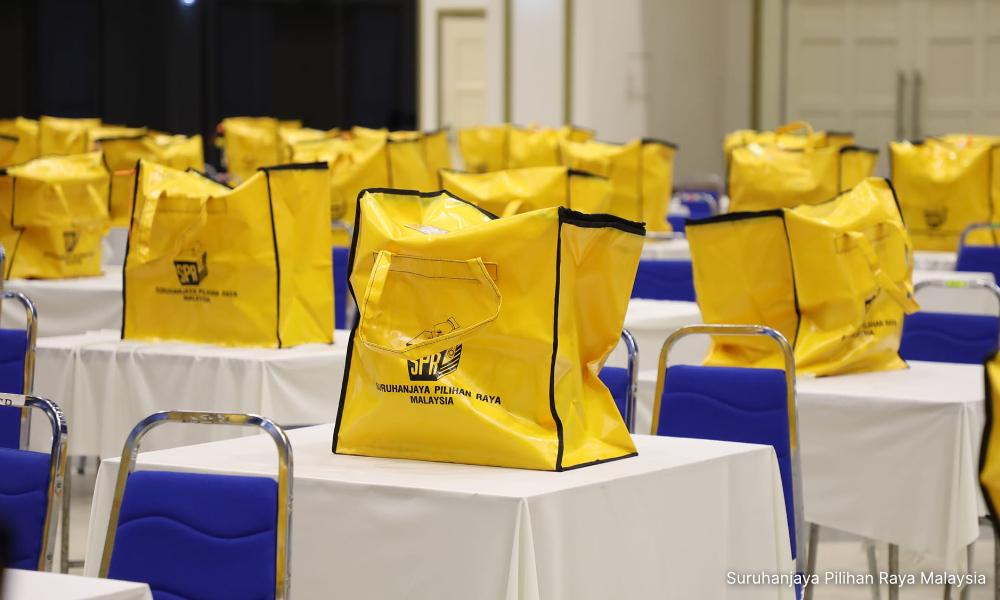
With Johor shaping up for four- to five-cornered contests in many seats, victories could be secured with as little as 35 percent of the vote.
While it is still too early to predict the outcome, Bersama appears to be positioning itself to exert influence over Johor politics.
Its 15-seat contest may not be enough to form a government in a landscape where hung assemblies are increasingly common, but it could still give the party bargaining power if it wins enough seats.
This includes potential leverage in coalition negotiations on legislation requiring two-thirds support, although such a scenario remains rare. Its influence would be stronger still in the unlikely event of a minority government in Johor.
/file/publisher-c1a3f893382d2b2f8a9aa22a654d9c97/2026/06/39d9561dc2f46df01b6d13e62924ab1e.png)
/file/publisher-c1a3f893382d2b2f8a9aa22a654d9c97/2026/06/509efd9a32ec67ac8109fc127000d128.jpg)
/file/publisher-c1a3f893382d2b2f8a9aa22a654d9c97/2024/10/29d841f173c48d885e168e02ba4d6149.jpg)
/file/publisher-c1a3f893382d2b2f8a9aa22a654d9c97/2019/04/41b9b5c92f7f1235ce16e12029587b79.jpg)
/file/publisher-c1a3f893382d2b2f8a9aa22a654d9c97/2026/05/1902f9521411b07fe09f2dd3466f796b.jpg)
/file/publisher-c1a3f893382d2b2f8a9aa22a654d9c97/2026/06/2f7a1b3c97bf6a493d12a3fe455b97bc.jpg)
/file/publisher-c1a3f893382d2b2f8a9aa22a654d9c97/2024/12/331c3b1b264d43d903649e30ac746bde.jpg)


Report this comment
Are you sure you want to delete this comment?
This action cannot be undone.